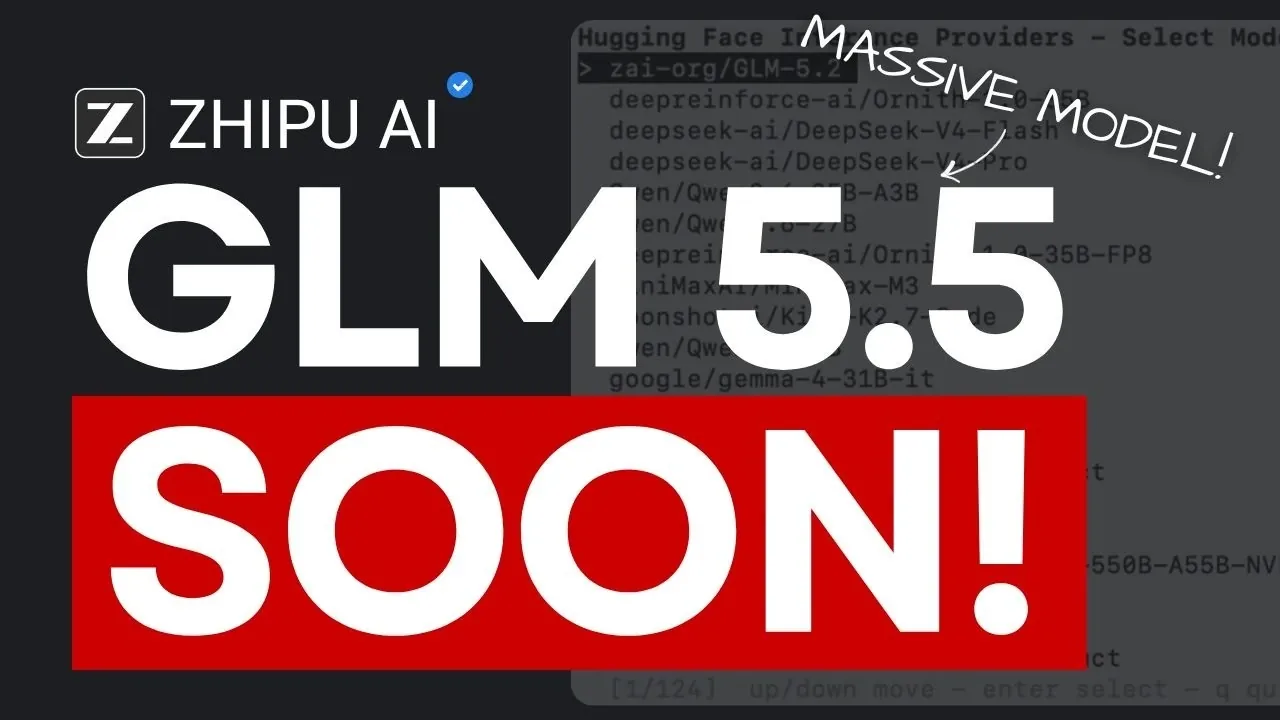
The upcoming release of Z.AI’s GLM 5.5 is set to introduce significant advancements in artificial intelligence, boasting over 1 trillion parameters and an extended token context window of 1 million tokens. These features position it as a direct competitor to U.S.-based proprietary models like OpenAI’s GPT-4 and Anthropic’s Claude. At the same time, the U.S. government is reportedly considering restrictions on Chinese open source AI models, citing concerns over national security and economic competition. As Universe of AI explores, these dual developments highlight the growing intersection of technological innovation and geopolitical strategy, with potential implications for developers and businesses worldwide.
Dive into this comprehensive breakdown to understand how GLM 5.5’s capabilities could reshape AI-driven applications, from autonomous coding to enterprise automation. You’ll also gain insight into the potential impact of U.S. restrictions, including how they might affect access to affordable open source models, innovation dynamics and the broader AI ecosystem. This deep dive unpacks the challenges and opportunities ahead, offering a clear lens into the shifting global AI landscape.
Features of GLM 5.5
TL;DR Key Takeaways :
- Z.AI’s GLM 5.5, set for release in August 2026, introduces new advancements with 1 trillion parameters and a 1 million token context window, allowing superior performance in complex tasks like autonomous coding and natural language understanding.
- The U.S. government is considering restrictions on Chinese open source AI models, citing national security and economic competition concerns, which could reshape the global AI industry and limit access to affordable, high-performing tools.
- Chinese AI labs, including Z.AI and Kimi K3, are emerging as strong competitors to U.S. dominance, driving rapid innovation and offering cost-effective alternatives to proprietary AI solutions.
- Potential U.S. restrictions on Chinese AI models may increase costs for developers, reduce access to open source tools and hinder innovation, particularly for smaller organizations and independent developers.
- Z.AI is pursuing self-reliance by investing in domestic infrastructure, including a new data center powered by Chinese chips, to ensure continued innovation amid growing geopolitical tensions and a fragmented AI ecosystem.
Z.AI’s GLM 5.5, scheduled for release in August 2026, represents a substantial advancement in AI technology. Building on the success of its predecessor, GLM 5.2, this model introduces significant improvements in scale, functionality and performance. With over 1 trillion parameters and an extended token context window of 1 million tokens, GLM 5.5 is designed to excel in complex tasks such as autonomous coding, natural language understanding and agent-based operations. Key highlights of GLM 5.5 include:
- Unmatched Scale: The model’s 1 trillion parameters enable it to deliver enhanced accuracy and performance, making it suitable for tackling intricate and resource-intensive tasks.
- Extended Token Context Window: With the ability to process up to 1 million tokens, GLM 5.5 is ideal for handling large datasets, supporting applications in research, enterprise automation and software development.
- Competitive Positioning: GLM 5.5 directly challenges U.S.-based proprietary models like OpenAI’s GPT series and Anthropic’s Claude, offering a viable alternative to Western AI solutions.
For developers, these features translate into a powerful toolset capable of addressing demanding applications. The model’s scalability and efficiency provide a competitive edge, particularly for organizations seeking cost-effective alternatives to proprietary solutions.
Global AI Competition Intensifies
The global AI sector is witnessing heightened competition, with Chinese labs like Z.AI and Kimi K3 emerging as strong contenders against U.S. dominance. These labs are not only pushing the boundaries of technological innovation but also offering cost-effective solutions that appeal to developers worldwide.
The rapid adoption of models like Kimi K3 underscores the ability of Chinese AI labs to innovate at a pace comparable to their U.S. counterparts. This competitive environment is driving shorter development cycles and accelerating advancements in AI technology. For developers, this translates into access to more sophisticated tools, but it also highlights the growing geopolitical tensions shaping the industry.

Browse through more resources below from our in-depth content covering more areas on Kimi K3.
- Leaked Kimi K3 Reportedly Beats GPT 5.6 Sol in Early Tests
- New Moonshot Kimi K3 AI Challenges Fable 5 and ChatGPT 5.6
- Kimi K3 Open Source AI Rivals GPT 5.6 Sol with 2.8T Parameters
- Critics Say Kimi K3 Struggles with Complex Code Debugging
- Claude Opus 5 is Poised to Challenge GPT-5.6 in Token Efficiency
- New Claude Opus 5 Leaks Detail High Reasoning Mode Features
- Kimi K3 a 2.8 Trillion Parameter Open Source ChatGPT 5.6 and Fable 5 Rival
- An OLED iPad Mini is Reportedly Arriving but Includes a Catch
- Google Gemini 3.5 Pro is Reportedly Delayed by Coding Issues
Potential U.S. Restrictions on Chinese AI Models
Amid this competitive landscape, the U.S. government is reportedly considering measures to restrict access to Chinese open source AI models. These measures could include placing Chinese AI labs on the entity list, effectively limiting U.S. developers’ ability to use these models. The primary justification for such restrictions revolves around concerns over national security and maintaining a competitive edge in the global AI race.
However, these restrictions could have far-reaching consequences:
- Reduced Access: Developers may lose access to affordable and high-performing open source models, forcing them to rely on more expensive proprietary solutions.
- Innovation Challenges: Open source models have historically driven experimentation and collaboration, both of which are essential for advancing AI technologies.
- Increased Costs: Smaller organizations and independent developers may face financial barriers, limiting their ability to innovate and compete effectively.
For developers, particularly those in the U.S., these restrictions could create significant challenges. Many rely on Chinese open source models for their affordability and advanced capabilities, especially in fields requiring substantial computational resources.
Implications for Developers and Businesses
The potential restrictions on Chinese open source AI models could reshape the landscape for developers and businesses. Shifting to proprietary models from companies like OpenAI and Anthropic may lead to higher costs and reduced flexibility. This shift could disproportionately impact smaller organizations and independent developers, limiting their ability to innovate and compete in the market.
Additionally, the restrictions could reduce the diversity of tools available to developers. Open source models have long been a cornerstone of collaborative innovation, allowing experimentation and the exchange of ideas across borders. A fragmented AI ecosystem could hinder this progress, slowing the pace of technological advancement and reducing opportunities for global collaboration.
Z.AI’s Strategy for Self-Reliance
In response to these challenges, Z.AI is intensifying its efforts toward self-reliance. The company has announced plans to establish a new data center powered by domestically produced Chinese chips. This facility will support the training of future AI models, making sure that Z.AI can continue to innovate without relying on U.S. hardware or technology.
This initiative reflects a broader trend among Chinese AI labs to reduce dependence on foreign technologies. By investing in domestic infrastructure, these organizations are preparing to thrive in a global market that is increasingly fragmented by geopolitical tensions. For Z.AI, this strategy reinforces its position as a leader in the global AI industry, capable of navigating the challenges posed by international restrictions.
Shifting Trends in Global AI Innovation
The rise of Chinese AI labs marks a significant shift in the global AI landscape. Once dominated by U.S. firms, the industry is now seeing substantial contributions from other regions, particularly China. This diversification is fostering innovation, as different approaches and perspectives drive new breakthroughs.
However, this shift also raises concerns about the future of collaboration in AI development. As geopolitical tensions influence policy decisions, the risk of a fragmented AI ecosystem becomes more pronounced. For developers, businesses and policymakers, navigating this complex environment will require balancing security concerns with the need for open, collaborative innovation.
The release of GLM 5.5 and the potential U.S. restrictions on Chinese open source AI models underscore the intersection of technological progress and geopolitical strategy. These developments present both opportunities and challenges, shaping the future of AI innovation and accessibility.
Media Credit: Universe of AI
Disclosure: Some of our articles include affiliate links. If you buy something through one of these links, Geeky Gadgets may earn an affiliate commission. Learn about our Disclosure Policy.
