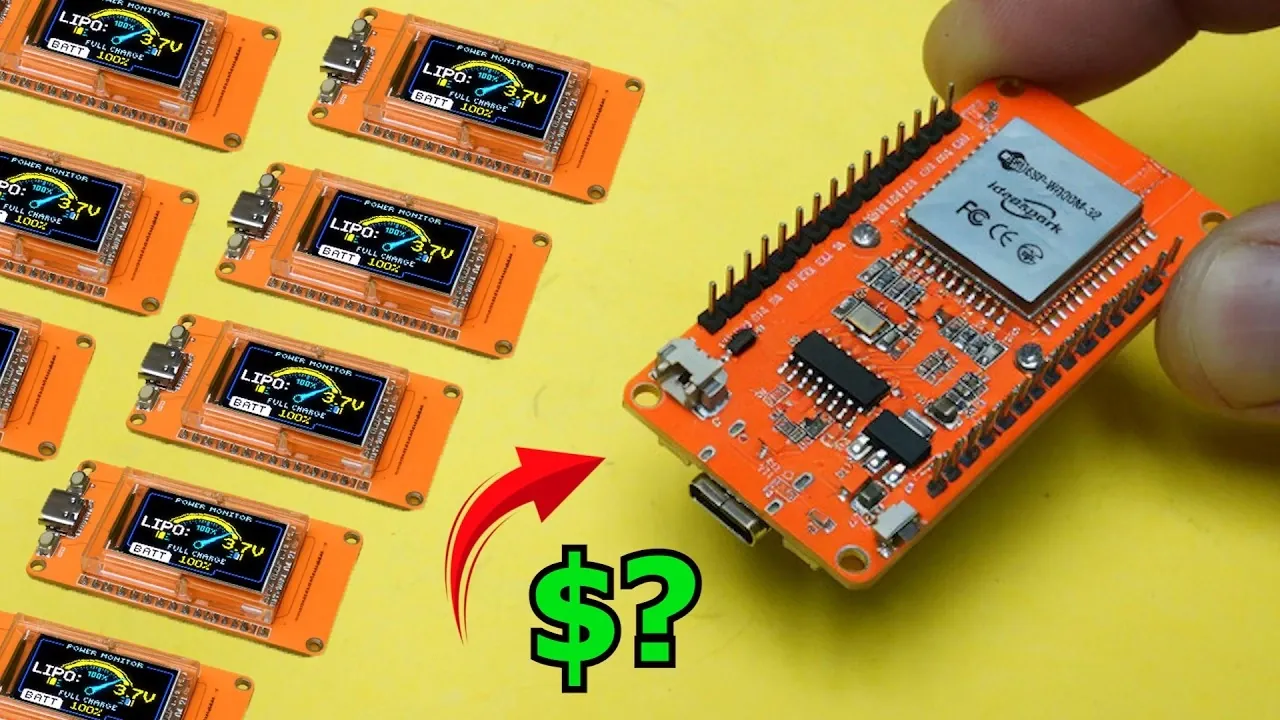
The ESP32 module, equipped with a 1.14-inch TFT screen and built-in Wi-Fi and Bluetooth, offers a compact platform for a variety of electronics projects. Hacktuber highlights its USB Type-C interface and onboard lithium battery charging as key features that simplify the development of portable, battery-powered systems. For example, the module can be used to create devices capable of displaying real-time weather updates or tracking cryptocurrency data, making it a practical choice for both hobbyists and professionals.
Explore how to use the ESP32 to implement dynamic visual effects, connect external sensors and design custom digital clocks. Gain insight into its customization options, including modifying pre-written code and incorporating programmable push buttons to expand functionality. This feature provides a clear path for enhancing your electronics projects with the ESP32’s versatile capabilities.
1.14-Inch TFT Screen ESP32 Board
TL;DR Key Takeaways :
- The ESP32 development board features a 1.14-inch TFT screen with a 135×240 resolution, ideal for displaying real-time data, animations and user interfaces in compact projects.
- It includes built-in Wi-Fi, Bluetooth connectivity and a USB Type-C interface, allowing seamless wireless communication, reliable data transfer and easy integration into various setups.
- The onboard lithium battery charging system supports efficient power management, making it suitable for portable and battery-powered applications.
- The module is highly versatile, supporting applications such as real-time weather updates, cryptocurrency tracking, visual effects and digital clocks, showcasing its adaptability for creative and practical projects.
- Customization and expandability options, such as free downloadable code, external push buttons and peripheral integration, make the ESP32 a flexible tool for developers of all levels.
The ESP32 module is packed with features that cater to both technical functionality and user convenience. These attributes make it a standout choice for a wide range of applications:
- 1.14-inch TFT Screen: The vibrant display, with a resolution of 135×240 pixels, is ideal for showcasing real-time data, animations, or user interfaces. Its compact size ensures it fits seamlessly into portable projects.
- Wi-Fi and Bluetooth Connectivity: The module supports seamless wireless communication, allowing connections to networks or Bluetooth-enabled devices for data exchange, remote control, or internet access.
- USB Type-C Interface: This modern connection standard ensures reliable data transfer and charging. Its compatibility with a wide range of devices simplifies integration into existing setups.
- Onboard Lithium Battery Charging: The integrated charging circuit supports efficient power management, making the module an excellent choice for portable and battery-powered applications.
These features collectively make the ESP32 a versatile and reliable platform for both beginners and experienced developers.
Practical Applications of the ESP32 Module
The ESP32 module is not just a development board, it is a gateway to a wide array of practical and creative applications. Its versatility allows developers to explore numerous possibilities, including:
- Real-Time Weather Updates: By configuring location-specific coordinates, the module can fetch and display current weather conditions. This makes it a valuable addition to smart home systems or personal weather stations.
- Cryptocurrency Tracking: The module can connect to online APIs to monitor live cryptocurrency prices, offering a compact and portable solution for financial tracking and analysis.
- Visual Effects: Developers can create engaging animations, such as Matrix rain or the Game of Life, to demonstrate the module’s graphical capabilities. These applications are particularly useful for educational or entertainment purposes.
- Digital Clock: The module can display the current time, date and even Wi-Fi signal strength, combining utility with aesthetics in a compact and functional format.
These examples highlight the module’s ability to bridge the gap between creativity and practicality, making it a valuable tool for a wide range of projects.

Find more information on ESP32 by browsing our extensive range of articles, guides and tutorials.
- $5 ESP32-S3 Super Mini Packs Wi-Fi and Bluetooth
- The $4 ESP32 S3 Super Mini Packs a 240 MHz Dual-Core Chip
- How an $8 ESP32 S3 Microcontroller Runs a 28.9M Parameter Local LLM
- 5 ESP32 Projects Worth Building in 2026: Such as an Apple HomeKit Controller
- $4 ESP32 Module Brings Wi-Fi and Bluetooth to IoT Projects
- Replacing Security Cameras with Three $10 ESP32S3 Wi-Fi Boards
- ESP32-S3 Super Mini Costs $5 and Packs Wi-Fi and Bluetooth
- ESP32-S3 Super Mini Brings 240 MHz Dual-Core Power For $4
- ESP32 S31 Devkit Hands-on: 320 MHz RISC-V Chip Adds Wi-Fi 6
- Build a DIY Open source Flipper Zero Using a ESP32-DIV
Customization and Expandability
One of the most appealing aspects of the ESP32 module is its flexibility, allowing developers to adapt it to their specific needs. The module’s design encourages customization and expandability, allowing users to tailor it for unique applications:
- Free Downloadable Code: Developers can access and modify pre-existing applications or create entirely new ones. For example, Wi-Fi credentials or weather settings can be adjusted to match specific locations or preferences.
- External Push Buttons: Programmable buttons can be added to trigger additional functions, enhancing interactivity and expanding the module’s capabilities for DIY projects.
- Peripheral Integration: The module supports integration with external sensors, actuators and other components, allowing for the creation of complex systems tailored to specific use cases.
This level of customization ensures that the ESP32 module remains a valuable and adaptable tool for developers, regardless of the complexity of their projects.
Portability and Compatibility
The ESP32 module’s compact design and efficient power management make it an ideal choice for portable applications. Its onboard charging system works seamlessly with small lithium batteries, making sure reliable performance even in mobile setups. This portability is further enhanced by its compatibility with other ESP32 variants, such as the ESP32-C3 Super Mini, which offers additional flexibility for projects requiring different hardware configurations.
Moreover, the module’s compatibility with a wide range of development environments and programming languages ensures that it can be easily integrated into existing workflows. Whether you are working on a standalone project or incorporating the ESP32 into a larger system, its adaptability and ease of use make it a practical choice for developers at all levels.
The ESP32: A Versatile Tool for Innovation
The ESP32 development board, with its 1.14-inch TFT screen and robust feature set, is a powerful and adaptable tool for DIY electronics and IoT projects. Its combination of connectivity, portability, and customization options makes it suitable for a wide range of applications, from weather monitoring and cryptocurrency tracking to visual effects and digital clocks. Whether you are a hobbyist exploring new ideas or a seasoned developer building advanced systems, the ESP32 module provides a compact, efficient and versatile platform for innovation. Its ability to balance functionality with ease of use ensures that it remains a valuable asset for anyone looking to push the boundaries of what is possible in modern electronics.
Media Credit: Hacktuber
Disclosure: Some of our articles include affiliate links. If you buy something through one of these links, Geeky Gadgets may earn an affiliate commission. Learn about our Disclosure Policy.
