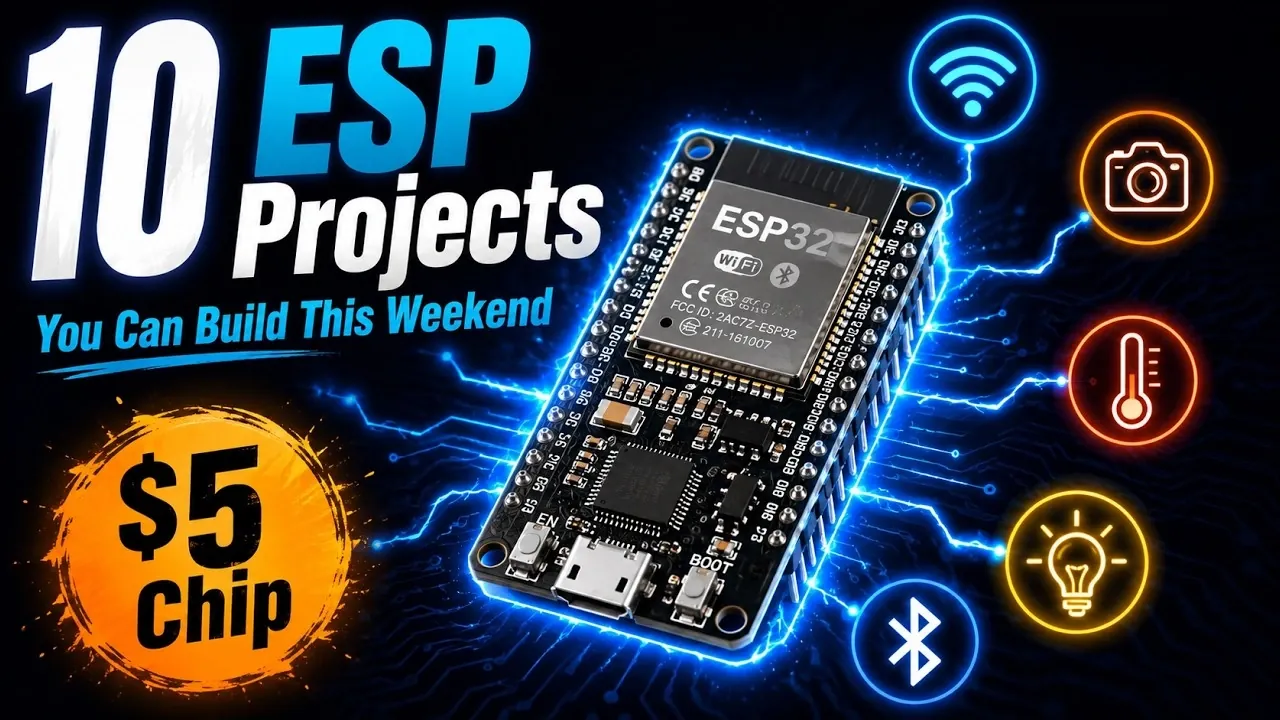
The ESP8266 and ESP32 microcontrollers have become essential components for IoT enthusiasts, offering built-in Wi-Fi, Bluetooth capabilities and a wide range of applications. In this deep dive, IoT Journal explores how these compact devices can be used to create practical and engaging projects over a single weekend. For example, a beginner-friendly project like the Wi-Fi Weather Station introduces key concepts such as sensor integration and web interfaces, making it an ideal starting point for those new to IoT development.
From this guide, you’ll gain insight into building projects like an MQTT Dashboard for real-time data visualization, a Bluetooth Media Remote using the ESP32’s HID functionality and even an Automated Plant Watering System powered by a soil moisture sensor. Each project is designed to help you develop specific skills, whether it’s mastering wireless communication, automating everyday tasks, or exploring advanced IoT architectures. With a mix of beginner, intermediate and advanced challenges, this breakdown offers something for every level of expertise.
TL;DR Key Takeaways :
- The ESP microcontroller family, including ESP8266 and ESP32, is widely used for IoT projects due to its affordability, built-in Wi-Fi/Bluetooth and versatility.
- ESP8266 is ideal for beginners with basic IoT needs, while ESP32 offers advanced features like dual-core processing and Bluetooth for more complex applications.
- Essential tools for starting projects include an ESP development kit, sensors (e.g., DHT22, MQ135), Arduino IDE and necessary libraries for seamless development.
- The article outlines 10 weekend projects, ranging from beginner-friendly (Wi-Fi Weather Station) to advanced (ESP32-CAM Security Camera, LoRa Communication Module).
- Additional resources like tutorials, official documentation and community forums are recommended for learning and troubleshooting ESP microcontroller projects.
What Are ESP Microcontrollers?
ESP microcontrollers are small yet powerful devices designed specifically for IoT development. They are known for their affordability, ease of use and ability to handle a wide range of applications. Here’s a closer look at the two most popular models:
- ESP8266: A single-core microcontroller with built-in Wi-Fi. It’s an excellent choice for beginners due to its simplicity and cost-effectiveness, making it ideal for basic IoT projects.
- ESP32: A dual-core microcontroller that supports both Wi-Fi and Bluetooth. It offers more GPIO pins, higher processing power and greater versatility, making it suitable for more complex and demanding applications.
If you’re just starting out, the ESP8266 is a great entry point. For projects requiring Bluetooth functionality or advanced features, the ESP32 is the better option.
What You’ll Need to Get Started
Before diving into the projects, it’s essential to gather the necessary tools and software. Having the right setup ensures a smoother development process and allows you to focus on building your projects.
- Hardware: You’ll need an ESP8266 or ESP32 development kit, a breadboard, jumper wires, LEDs, resistors and sensors such as the DHT11 or DHT22 for temperature and humidity measurements. Depending on the project, you may also require additional components like relay modules, OLED displays, or pumps.
- Software: Install the Arduino IDE and the ESP board package. The Arduino IDE is a user-friendly platform that allows you to write, compile and upload code to your microcontroller. Ensure you have the necessary libraries for your chosen sensors and modules.
Once you’ve gathered these essentials, you’re ready to start exploring the potential of ESP microcontrollers.

Here are more guides from our previous articles and guides related to ESP32 that you may find helpful.
- $5 ESP32-S3 Super Mini Packs Wi-Fi and Bluetooth
- How an $8 ESP32 S3 Microcontroller Runs a 28.9M Parameter Local LLM
- $4 ESP32 Module Brings Wi-Fi and Bluetooth to IoT Projects
- ESP32 S31 Devkit Hands-on: 320 MHz RISC-V Chip Adds Wi-Fi 6
- $4 ESP32-S3 Super Mini Packs a 0.96-Inch IPS TFT Screen
- Build a DIY Open-Source Flipper Zero Using a ESP32-DIV
- $9 CYD ESP32 Module Includes a 2.88-Inch LCD Screen
- ESP32-S3 Automation System Packs 16 Relays for Smart Homes
- $5 ESP32 S3 Board Packs a 240 MHz Dual-Core Chip
- $20 ESP32 Paired with Claude Code to Automate Programming, Tasks and Projects
10 Weekend ESP Projects
Here’s a curated list of projects that demonstrate the versatility of ESP microcontrollers. Each project is designed to be completed in a weekend, offering a mix of beginner, intermediate and advanced challenges.
1. Wi-Fi Weather Station
Use a DHT22 sensor to measure temperature and humidity, then display the data on an OLED screen or host it on a web server accessible via Wi-Fi. This beginner-friendly project introduces you to sensor integration and web interfaces, providing a solid foundation for more complex IoT applications.
2. Smart Home Controller
Automate household appliances using a relay module and a simple web interface. This project demonstrates how to remotely control devices, adding convenience and functionality to your home environment.
3. MQTT Dashboard
Publish sensor data to an MQTT broker and visualize it using Node-RED. This intermediate-level project is perfect for learning about IoT architecture, real-time data monitoring and creating interactive dashboards.
4. Bluetooth Media Remote (ESP32 Exclusive)
Transform your ESP32 into a Bluetooth Human Interface Device (HID) to control media playback on your smartphone or computer. This project highlights the Bluetooth capabilities of the ESP32 and is ideal for those looking to explore wireless communication.
5. ESP32-CAM Security Camera
Stream live video using the ESP32-CAM module. Pair it with a PIR sensor to detect motion and send alerts. This project is an excellent introduction to video streaming and home security applications.
6. Air Quality Monitor
Monitor air pollutants using an MQ135 sensor and send notifications when pollutant levels exceed safe thresholds. This project emphasizes environmental monitoring and raises awareness about air quality and public health.
7. Automated Plant Watering System
Combine a soil moisture sensor with a pump to create an irrigation system that waters plants automatically. This practical project is perfect for gardening enthusiasts and demonstrates how IoT can simplify everyday tasks.
8. Telegram Bot Controller
Integrate the Telegram API to control devices via chat messages. This project showcases how to connect IoT devices with popular communication platforms, offering a unique way to manage your smart devices.
9. LoRa Communication Module
Transmit data over long distances without relying on Wi-Fi using LoRa technology. This project is ideal for outdoor applications such as remote monitoring in agriculture or wildlife tracking, highlighting the potential of low-power, long-range communication.
10. Web Scraper
Build a web scraper to monitor product prices or other online data. Send alerts when specific conditions, such as price drops, are met. This project introduces you to data extraction, automation and integrating IoT with online services.
Where to Start: A Learning Path
If you’re new to ESP microcontrollers, it’s best to start with a beginner-friendly project like the Wi-Fi Weather Station. This will help you understand the basics of working with sensors, coding and setting up web servers. Once you’ve mastered the fundamentals, move on to intermediate projects like the MQTT Dashboard to explore IoT data flow and visualization. For advanced users, projects such as the ESP32-CAM Security Camera or LoRa Communication Module offer specialized applications that challenge your skills and expand your knowledge.
Additional Resources for Learning
To enhance your understanding and troubleshoot any issues, consider exploring the following resources:
- Tutorials: Websites like Randomnerd.com provide detailed guides and step-by-step instructions for a wide range of ESP projects.
- Documentation: Espressif Systems, the creators of ESP microcontrollers, offer official documentation for both the ESP8266 and ESP32, covering everything from hardware specifications to software libraries.
- Community Support: Join forums, subreddits and online communities dedicated to ESP microcontrollers. These platforms are excellent for connecting with other developers, sharing insights and finding solutions to common challenges.
Unlock the Potential of ESP Microcontrollers
The ESP8266 and ESP32 microcontrollers open up endless possibilities for IoT innovation. Whether you’re a beginner exploring basic projects or an experienced developer tackling advanced applications, these 10 weekend projects provide a practical way to harness their potential. With the right tools, resources and a bit of creativity, you can bring your ideas to life and make the most of your weekend.
Media Credit: IoT Journal
Disclosure: Some of our articles include affiliate links. If you buy something through one of these links, Geeky Gadgets may earn an affiliate commission. Learn about our Disclosure Policy.
