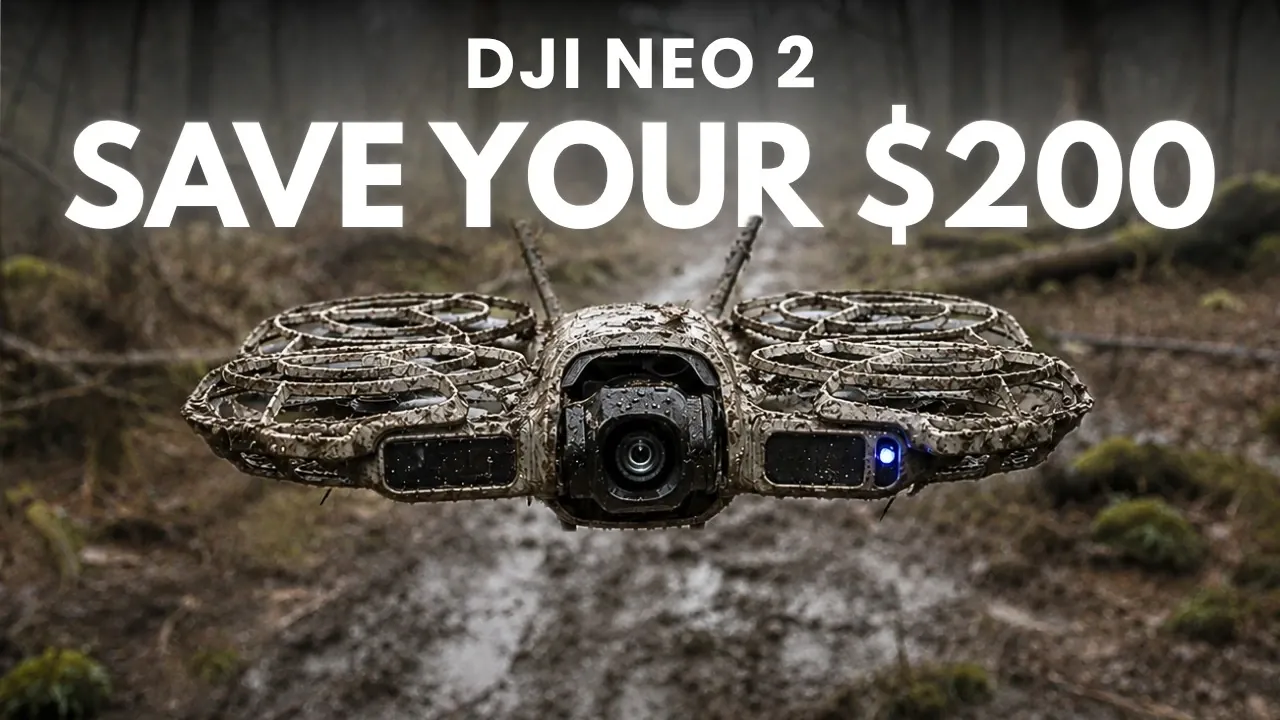
The DJI Neo 2 is often praised for its beginner-friendly design, but many first-time pilots find themselves crashing due to avoidable mistakes. As Tech Court explains, one common issue is overconfidence in the drone’s stability and obstacle avoidance systems, which can lead to risky maneuvers or reliance on features that aren’t foolproof. For example, the Neo2’s sensors may struggle with reflective surfaces like water, causing unexpected descents. Recognizing these limitations and flying with caution, especially in challenging environments, is key to preventing accidents and protecting your investment.
In this guide, you’ll explore practical strategies to improve your flying skills and reduce the risk of crashes. Learn how to manage wind conditions and battery life effectively to ensure safe returns and discover why using the dedicated RC controller can provide greater reliability than phone-only controls. By understanding these essential practices, you’ll be better equipped to handle the DJI Neo 2 responsibly and enjoy a smoother, more confident flying experience.
Stop Crashing Your DJI Neo 2 Drone
TL;DR Key Takeaways :
- The DJI Neo 2 is beginner-friendly but can foster overconfidence, leading to risky maneuvers and crashes; cautious flying and respecting operational limits are essential.
- Flying over water can confuse the drone’s sensors, causing unexpected descents; maintain a safe altitude and monitor behavior closely in such environments.
- Obstacle avoidance and gesture controls are helpful but not foolproof; pilots must remain vigilant and avoid over-reliance on these features in complex scenarios.
- Battery life and wind conditions are often underestimated; plan conservatively to avoid emergency landings and ensure safe returns.
- Activate DJI Care Refresh promptly after purchase and manage internal storage proactively to protect your investment and avoid disruptions during flights.
Overconfidence in Stability
The DJI Neo 2’s stability and intuitive controls are designed to make flying easier, but they can also foster a false sense of security. This can tempt new pilots to push the drone beyond its capabilities, treating it more like a toy than a sophisticated piece of technology. Such overconfidence often leads to risky maneuvers and accidents.
To mitigate this risk, approach every flight with caution, especially in unfamiliar environments. Even the most stable drones require careful handling and respect for their operational limits. Always prioritize safety over experimentation.
Flying Over Water
Flying over water is a common challenge for beginners. The Neo2’s downward sensors, which help measure altitude, can struggle with reflective surfaces like calm water. This can cause the drone to descend unexpectedly, often leading to crashes.
If you’re new to drone flying, avoid low-altitude flights over water. When flying near water is unavoidable, maintain a safe altitude and closely monitor the drone’s behavior to prevent mishaps.

Here are additional guides from our expansive article library that you may find useful on drones.
- DJI Neo 2 vs Avata 2, the Honest Test That Flips Our Best Drone Pick Today
- What DJI Actually Changed in the New Neo 2 Drone
- 8+ Big drones capable of carrying large payloads and heavy equipment
- Solar 42 cinematic ambient drone synthesizer
- DJI Neo auto-follow drone for effortless content creation $199
- How the Half-Priced DJI Lito X1 Drone Outperforms the Mini 5 Pro
- DJI Avata 360 vs Antigravity A1: Why the Cheaper Drone Could Actually Cost You More
- Why the DJI Osmo Pocket 4P is Launching Under a Completely Different Name in the U.S.
- DJI’s Sub-250G Lito X1 Drone is Edging Closer to a US Launch
- How to build a drone tracking radar from scratch
Overreliance on Obstacle Avoidance
The Neo2’s obstacle avoidance system is a valuable safety feature, but it is not infallible. Thin branches, power lines and fast-moving objects can evade detection, resulting in collisions. Even in automated tracking modes, the system requires active monitoring by the pilot.
Treat obstacle avoidance as a backup system, not a substitute for situational awareness. Always remain vigilant and prepared to take manual control if necessary.
Risks of Phone-Only Control
Controlling the Neo 2 using a smartphone is convenient, but it comes with inherent risks. Signal drops and connectivity issues are more likely when relying solely on phone controls, especially at greater distances or in areas with interference.
For a safer and more reliable experience, use the dedicated RC controller whenever possible. It provides a stronger connection, better responsiveness and greater control during flights, reducing the likelihood of accidents.
Misjudging Wind Conditions
Wind conditions are often underestimated by beginners. While the Neo 2 is designed to handle moderate winds, it may consume significant battery power to maintain stability. This can lead to rapid battery depletion and difficulty returning to the takeoff point.
Always check wind conditions before flying. Avoid operating the drone in strong or unpredictable winds, and plan your flight path to ensure a safe return even in challenging conditions.
Misunderstanding Battery Life
The Neo 2’s advertised flight time of 18-19 minutes can be misleading. In real-world conditions, factors such as wind resistance and flight speed often reduce this to 11-15 minutes. Misjudging battery life can result in emergency landings or crashes.
To avoid such situations, plan your flights conservatively. Aim to return the drone well before the low battery warning activates, making sure you have a safety margin for unexpected delays.
Delayed Activation of DJI Care Refresh
DJI Care Refresh is an optional insurance plan that covers accidental damage, but it must be activated shortly after purchase. Many beginners overlook this step, only realizing its importance after a crash.
To protect your investment, activate DJI Care Refresh as soon as possible. This provides financial protection and peace of mind, allowing you to focus on improving your flying skills without undue worry.
Internal Storage Limitations
The Neo2 relies on 49GB of internal storage, as it lacks a microSD slot. While this capacity is sufficient for short flights, it can fill up quickly, especially when recording in high resolution.
Before each flight, check the available storage space. Deleting unnecessary files or transferring footage to another device ensures you won’t run out of storage during critical moments.
Improper Use of Gesture Controls
Gesture controls are an innovative feature of the Neo2, allowing for hands-free operation in certain scenarios. However, they work best in controlled environments. Poor lighting, complex backgrounds, or fast-paced situations can confuse the system, leading to errors.
Avoid relying on gesture controls in situations that require precision or quick adjustments. Instead, use the standard controls for greater accuracy and reliability.
Overestimating the Protective Cage
The Neo2’s protective cage is designed to shield the propellers from damage, but it does not make the drone indestructible. Crashes can still damage other components or destabilize the drone, leading to performance issues.
Use the cage as an added layer of protection, not as an excuse for risky flying in tight or cluttered spaces. Always prioritize careful navigation over reliance on protective features.
Maximizing Your DJI Neo 2 Experience
The DJI Neo 2 is a remarkable and user-friendly drone, but its advanced features can sometimes lead to overconfidence and neglect of essential safety practices. By understanding its limitations and adopting disciplined habits, you can avoid common mistakes and enjoy a safer, more rewarding flying experience.
Respect the technology, remain vigilant and take the time to learn the nuances of drone operation. With proper care and attention, you can maximize the Neo 2’s potential and ensure a long-lasting, enjoyable experience.
Media Credit: Tech Court
Disclosure: Some of our articles include affiliate links. If you buy something through one of these links, Geeky Gadgets may earn an affiliate commission. Learn about our Disclosure Policy.
