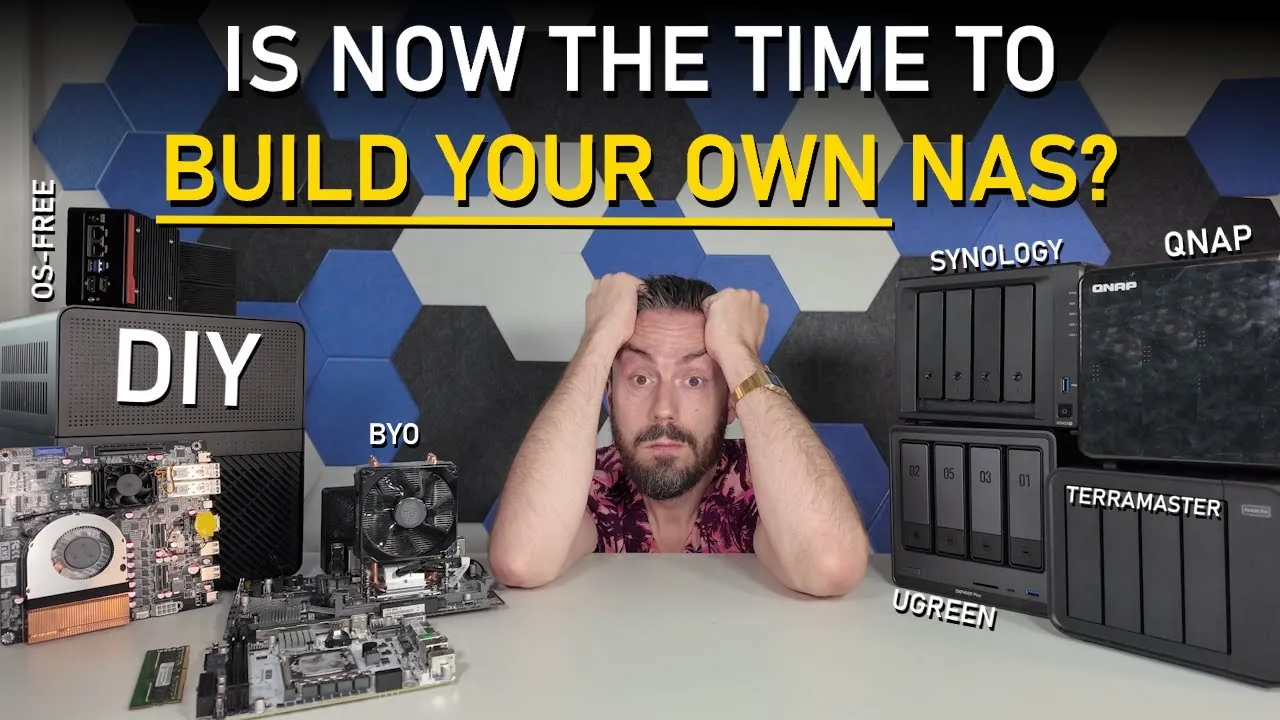
What if managing your growing collection of digital files, photos, videos, work documents, and backups, didn’t feel like such a juggling act? Whether you’re a tech enthusiast or someone looking for a simple, reliable solution, a Network Attached Storage (NAS) system could be the answer to your data woes. But here’s the catch: should you roll up your sleeves and build a DIY NAS tailored to your exact needs, or invest in a turnkey NAS solution that works right out of the box? Each option offers distinct advantages and trade-offs, and the right choice depends on your priorities, budget, and technical comfort level.
In this overview, NAS Compares explores four key reasons to consider either building your own NAS or purchasing a pre-built system. From the customization potential of DIY setups to the user-friendly simplicity of turnkey solutions, you’ll discover how each approach aligns with different goals, whether it’s saving money, maximizing control, or minimizing hassle. By the end, you’ll have a clearer sense of which path suits your needs and why this decision could transform the way you manage your digital life. After all, your data deserves a solution as unique as you are.
DIY vs Turnkey NAS in 2025
TL;DR Key Takeaways :
- Turnkey NAS systems, like those from Synology and QNAP, offer ease of use, pre-installed software, and robust security features but often lack flexibility and come with higher costs due to proprietary ecosystems.
- DIY NAS solutions provide unmatched customization, cost savings, and the ability to select hardware and open source software tailored to specific needs, making them ideal for tech-savvy users.
- Challenges of DIY NAS include the need for technical expertise, making sure hardware/software compatibility, and reliance on community-driven support instead of professional customer service.
- Turnkey NAS is best for users seeking simplicity, minimal setup, and reliable customer support, while DIY NAS suits those prioritizing flexibility, scalability, and budget-conscious solutions.
- The choice between DIY and turnkey NAS depends on individual priorities, technical skills, and budget, with both options offering effective tools for managing and securing digital data.
Why Turnkey NAS Solutions May Fall Short
Turnkey NAS systems, such as those offered by Synology and QNAP, are designed to provide convenience and simplicity. However, these pre-built solutions often come with limitations that may not suit all users. One of the primary drawbacks is the lack of flexibility, as these systems frequently lock you into proprietary ecosystems. For example:
- Many turnkey NAS devices are compatible only with specific hard drive models, restricting your ability to upgrade or replace components.
- The bundled software and proprietary features often result in higher costs, which may not align with the budgets of cost-conscious users.
While turnkey NAS systems excel in ease of use and streamlined setup, their limitations in customization and cost efficiency can be significant drawbacks for users who require more control or scalability.
The Case for DIY NAS: Flexibility and Cost Savings
A DIY NAS offers unparalleled flexibility and the potential for significant cost savings. By building your own system, you have the freedom to select hardware and software that precisely match your requirements. This approach is particularly beneficial for users who want to optimize their system for specific tasks, such as media streaming, backups, or hosting virtual machines. Key advantages of a DIY NAS include:
- Custom hardware selection, allowing you to choose components like high-capacity drives, energy-efficient processors, or advanced cooling systems.
- Access to powerful open source NAS software, such as TrueNAS, Unraid, or OpenMediaVault, which offer extensive customization options and advanced features.
- Lower overall costs, as you avoid paying for proprietary software licenses or brand premiums associated with turnkey systems.
For tech-savvy individuals or those who enjoy experimenting with technology, a DIY NAS provides a highly adaptable solution that can evolve alongside your needs.
4 Reasons to Choose Between DIY and Pre-Built NAS Systems

Below are more guides on Network Attached Storage (NAS) from our extensive range of articles.
- UGREEN NASync DX480T Plus NAS network attached storage
- TerraMaster F2-223 & F4-223 NAS with TRAID
- Building a DIY ARM Network Attached Storage (NAS) solution
- 3 Mini NAS Devices Compared: Speed, Storage, and Performance
- How to build a $100 NAS storage server in 2024
- How to build a NAS storage system using a mini PC
- How to build a NAS from scratch using UnRAID OS
- SSD vs HDD NAS storage compared which is best?
- 3D Printed NAS storage system with HDD dampening
- How to build a DIY NAS – beginners guide
Turnkey NAS: Convenience and Simplicity
Turnkey NAS systems are designed for users who prioritize ease of use and a hassle-free experience. These systems are ready to operate out of the box, with minimal setup required. Leading brands like Synology and QNAP focus on delivering intuitive interfaces and robust features that cater to both beginners and experienced users. Notable benefits of turnkey NAS solutions include:
- Pre-installed, user-friendly software with one-click setups for tasks like file sharing, media streaming, and automated backups.
- Comprehensive security features, including automatic updates, encryption, and built-in safeguards to protect your data from threats.
- Dedicated customer support, offering reliable assistance for troubleshooting and technical issues.
Turnkey NAS systems are ideal for individuals or businesses seeking a reliable, low-maintenance solution without the need to delve into the complexities of hardware assembly or software configuration.
Challenges of a DIY NAS
While the flexibility of a DIY NAS is appealing, it comes with its own set of challenges. Building and maintaining a custom system requires a certain level of technical knowledge and a willingness to troubleshoot issues as they arise. Common challenges include:
- Making sure hardware and software compatibility, which can be time-consuming and may require research and testing.
- Limited native applications, often necessitating the use of third-party tools that may not integrate seamlessly with your system.
- Reliance on community-driven support, which, while helpful, may lack the immediacy and reliability of professional customer service.
If you are not comfortable with technical problem-solving or navigating online forums for assistance, a DIY NAS may feel overwhelming and less practical.
Making the Right Choice
The decision between a DIY NAS and a turnkey solution ultimately depends on your individual priorities, technical expertise, and budget. Consider the following factors to guide your choice:
- If you value customization, cost savings, and the ability to tailor your system to your unique needs, a DIY NAS is likely the better option.
- If you prefer simplicity, reliable customer support, and a ready-to-use system, a turnkey NAS is the more suitable choice.
By carefully evaluating your goals and requirements, you can select the NAS solution that best aligns with your needs. Whether you choose the flexibility of a DIY NAS or the convenience of a turnkey system, both options provide effective tools for managing and securing your data in today’s digital landscape.
Media Credit: NASCompares
Disclosure: Some of our articles include affiliate links. If you buy something through one of these links, Geeky Gadgets may earn an affiliate commission. Learn about our Disclosure Policy.
