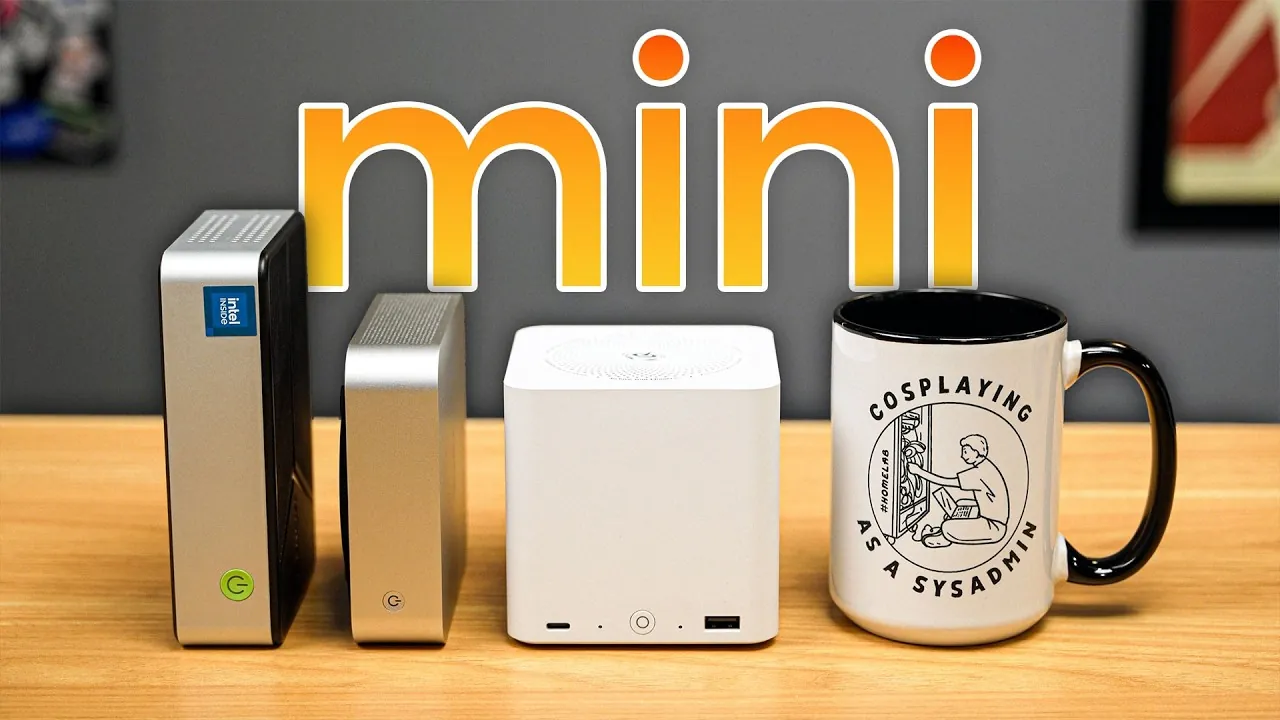
What if your home lab could pack the power of a full-scale server into a device no bigger than a book? With the rise of mini NAS (Network Attached Storage) systems, this vision is now a reality. These compact devices promise to transform how we manage data at home, offering a blend of high-speed network performance, customizable storage, and sleek design. But not all mini NAS devices are created equal. Some excel in cooling efficiency, while others stumble under heavy workloads. If you’re building a home lab or upgrading your current setup, choosing the right device can mean the difference between seamless performance and frustrating bottlenecks.
Jeff Geerling, puts three popular mini NAS models—GMK Techch G9, Aiffro K100, and Beelink Mi Mini—through rigorous testing to uncover their strengths and limitations. From storage expandability to thermal management and network speed, each device brings something unique to the table. Whether you’re a data hoarder, a tech enthusiast, or someone looking for a quiet and reliable solution, this comparison will help you identify the best fit for your needs. As we explore these devices, you’ll discover surprising trade-offs and standout features that may challenge your assumptions about what a mini NAS can deliver. Sometimes, the smallest devices carry the biggest surprises.
Mini NAS Device Comparison
TL;DR Key Takeaways :
- The Aiffro K100 is a compact, all-metal mini NAS with consistent network performance, quiet operation, and improved ventilation, but it lacks built-in eMMC storage.
- The Beelink Mi Mini offers extensive storage options with six NVMe slots, built-in eMMC storage, and effective cooling via a central heat sink tower, though it slightly increases external surface temperatures.
- The GMK Techch G9 features multiple M.2 NVMe slots and 2.5 Gb Ethernet but suffers from poor cooling, leading to performance instability and reduced reliability for demanding workloads.
- All three devices support 2.5 Gb Ethernet, with the Aiffro K100 delivering the most consistent network speeds, while the Beelink Mi Mini and GMK Techch G9 face limitations due to PCIe bandwidth and overheating, respectively.
- The Aiffro K100 is recommended for users prioritizing compactness and reliability, the Beelink Mi Mini for those with extensive storage needs, and the GMK Techch G9 is not recommended due to significant cooling and stability issues.
Key Features and Performance Overview
Mini NAS devices are becoming increasingly popular for home labs due to their compact size and robust functionality. Each of the three models tested offers a distinct approach to balancing storage, network speed, and thermal management, making them suitable for different user requirements.
- GMK Techch G9: Powered by an Intel N100/N150 chip, this device includes 2.5 Gb Ethernet and multiple M.2 NVMe slots. However, its poor cooling system leads to performance instability, making it less reliable for sustained workloads without modifications.
- Aiffro K100: Featuring a compact, all-metal design with improved ventilation, the K100 delivers consistent network performance and operates quietly. However, it lacks built-in eMMC storage, requiring external solutions for the operating system.
- Beelink Mi Mini: With six NVMe slots, built-in eMMC storage, and an internal power supply, this model offers extensive storage options. Its central heat sink tower ensures effective cooling, though it slightly increases external surface temperatures.
Storage and Expansion
Storage capacity and expandability are essential considerations when selecting a mini NAS device. Each model offers varying levels of flexibility to accommodate different storage needs.
- Beelink Mi Mini: Leads the group with six NVMe slots, providing maximum flexibility for storage expansion. This makes it an excellent choice for users with demanding storage requirements.
- Aiffro K100: Offers four NVMe slots, striking a balance between compactness and storage capacity. This design is ideal for users who need moderate storage without sacrificing portability.
- GMK Techch G9: Includes multiple M.2 NVMe slots, but its cooling issues limit its ability to handle heavy storage loads effectively, reducing its reliability for long-term use.
Mini NAS testing and comparison (mini homelab)

Here are more guides from our previous articles and guides related to NAS storage systems that you may find helpful.
- How to build a NAS storage system using a mini PC
- Terramaster 4-bay NAS F4-424 Pro
- Simply NUC Onyx Intel i9 Windows 11 small form factor PC review
- How to add Plex hardware transcoding to your Synology NAS
- Backup a Synology NAS to an external USB drive storage
- Building a DIY ARM Network Attached Storage (NAS) solution
- Build a Petabyte NAS: How to Store 1 Million GB at Home
- Building a NAS using a RISC-V BPI-F3 and OpenMediaVault
- Turn your USB HDD into a NAS Device with the Addonics NAS
- DIY Raspberry Pi NAS Storage Solution Equipped With Dual Drives
Network Performance
All three devices are equipped with 2.5 Gb Ethernet, allowing fast data transfers suitable for home lab environments. However, their network performance varies based on design and thermal management.
- Aiffro K100: Delivers the most consistent network speeds, averaging 280 MB/s. This makes it a reliable choice for users who prioritize stability and smooth data transfers.
- Beelink Mi Mini: Achieves slightly lower speeds, averaging around 230 MB/s, due to PCIe bandwidth limitations. Despite this, it maintains strong read performance, making it suitable for most home lab setups.
- GMK Techch G9: Struggles with overheating, which negatively impacts its ability to sustain reliable network speeds during prolonged use or under heavy workloads.
Cooling and Thermal Management
Efficient cooling is vital for maintaining performance and preventing hardware degradation. The three models employ different strategies to manage heat, with varying levels of success.
- Beelink Mi Mini: Features a central heat sink tower that effectively manages internal temperatures, making sure stable performance. However, this design causes the device’s external surface to feel warmer during operation.
- Aiffro K100: Uses improved ventilation to maintain stable operation with minimal noise. This makes it an excellent choice for users who value quiet environments.
- GMK Techch G9: Suffers from inadequate cooling, leading to overheating and performance instability. This significantly limits its usability in demanding scenarios without additional modifications.
Design and Usability
Compactness, durability, and ease of use are essential factors for home lab setups. Each device offers unique design features that cater to different user preferences.
- Aiffro K100: Its all-metal construction and small footprint make it highly portable and durable. This design is ideal for users with limited space or those who frequently relocate their setups.
- Beelink Mi Mini: Offers built-in eMMC storage and an internal power supply, reducing the need for external components. These features enhance convenience and streamline the overall setup process.
- GMK Techch G9: While compact, its design flaws—particularly its poor cooling system—detract from its overall usability, making it less suitable for demanding or long-term applications.
Recommendations
Selecting the right mini NAS device depends on your specific requirements and priorities. Based on the testing and evaluation, here are the recommendations:
- Aiffro K100: Best suited for users seeking a compact, reliable device with consistent performance and low noise levels. Its higher price is justified by its balanced feature set and durable design.
- Beelink Mi Mini: Ideal for users with extensive storage needs and those who value additional features like built-in eMMC storage and an internal power supply. Its effective cooling and quiet operation make it a strong contender for demanding setups.
- GMK Techch G9: Not recommended in its current form due to significant cooling and stability issues. A design revision is necessary to address these shortcomings before it can be considered a viable option.
Media Credit: Jeff Geerling
Disclosure: Some of our articles include affiliate links. If you buy something through one of these links, Geeky Gadgets may earn an affiliate commission. Learn about our Disclosure Policy.
