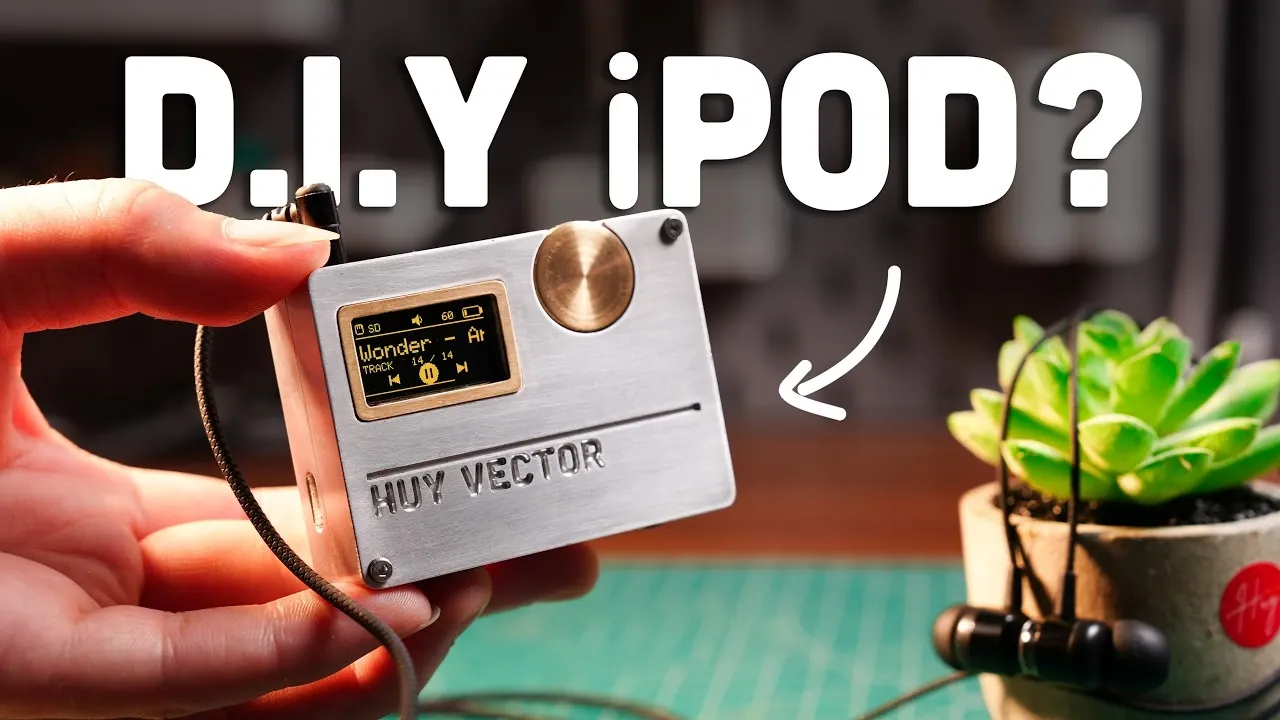
HVT Lab presents a custom-built ESP32-based music player encased in CNC-machined aluminum, blending technical functionality with a polished appearance. The project utilizes the ESP32 microcontroller to handle Bluetooth streaming and audio playback from a micro SD card. Notable features include a PCM5102A audio module for high-quality sound, a 0.96-inch OLED display for user interface and a brass rotary encoder knob that adds both tactile control and visual appeal.
Discover the assembly process, from soldering components to programming the ESP32 with custom firmware. Learn how to design and fabricate the enclosure, comparing approaches like 3D printing and CNC machining. Gain insight into integrating Bluetooth functionality and fine-tuning settings to create a fully customized music player.
Components That Power the Music Player
TL;DR Key Takeaways :
- The music player is powered by the versatile ESP32 microcontroller, allowing audio playback from a micro SD card or Bluetooth streaming, with custom code support for seamless functionality.
- Key components include a PCM5102A audio module for high-quality sound, a 0.96-inch OLED display for navigation, a rotary encoder for precise control and a rechargeable battery for portability.
- The enclosure can be customized using 3D printing for affordability or CNC aluminum machining for a premium finish, with options for AI-powered CAD design and a brass rotary encoder knob for enhanced aesthetics.
- The assembly process involves careful soldering, wiring and insulation, along with uploading custom code to ensure reliable operation and personalized functionality.
- Features include Bluetooth connectivity, customizable settings and a retro-inspired design, making the music player a unique blend of modern technology and DIY craftsmanship.
The ESP32 microcontroller is the cornerstone of this music player, chosen for its adaptability and ability to execute custom code. It manages core functions such as audio playback and Bluetooth connectivity, making sure seamless performance. To deliver high-quality sound, the system incorporates the PCM5102A audio module, which is well-regarded for its superior audio output.
A 0.96-inch OLED display provides a compact yet clear interface, allowing you to navigate menus and playback options effortlessly. User interaction is facilitated by a rotary encoder, which offers precise control over volume and playback settings. Music files are stored on a micro SD card, eliminating the dependency on internet connectivity or streaming services. The device is powered by a rechargeable battery, supported by a charging module for enhanced portability and convenience.
Designing and Crafting the Enclosure
The enclosure is more than just a protective housing, it is a defining element of the music player’s overall design. You have the flexibility to choose between two manufacturing methods: 3D printing, which is cost-effective and accessible, or CNC machining, which offers a premium aluminum finish for a more polished look. Using AI-powered 3D CAD software, you can customize the dimensions and features of the case to align with your preferences.
To further enhance the device’s aesthetics and functionality, a brass rotary encoder knob is included. This detail not only improves the tactile experience but also complements the aluminum enclosure, creating a cohesive and professional appearance. The combination of durable materials and thoughtful design ensures that the enclosure is both visually appealing and long-lasting.

Become an expert in ESP32 with the help of our in-depth articles and helpful guides.
- $5 ESP32-S3 Super Mini Packs Wi-Fi and Bluetooth
- The $4 ESP32 S3 Super Mini Packs a 240 MHz Dual-Core Chip
- How an $8 ESP32 S3 Microcontroller Runs a 28.9M Parameter Local LLM
- 5 ESP32 Projects Worth Building in 2026: Such as an Apple HomeKit Controller
- $4 ESP32 Module Brings Wi-Fi and Bluetooth to IoT Projects
- Replacing Security Cameras with Three $10 ESP32S3 Wi-Fi Boards
- ESP32-S3 Super Mini Costs $5 and Packs Wi-Fi and Bluetooth
- ESP32-S3 Super Mini Brings 240 MHz Dual-Core Power For $4
- ESP32 S31 Devkit Hands-on: 320 MHz RISC-V Chip Adds Wi-Fi 6
- Build a DIY Open-Source Flipper Zero Using a ESP32-DIV
Step-by-Step Assembly Process
Building the music player requires careful attention to detail and precision. Below is an overview of the assembly process:
- Apply insulation to protect the circuitry and prevent short circuits during operation.
- Carefully solder and wire the components to establish secure and reliable connections.
- Upload custom code to the ESP32 microcontroller to enable the desired functionality.
Soldering is a particularly critical step, as it ensures stable communication between the components. Proper wiring techniques and insulation are essential to safeguard the system from electrical issues, making sure smooth and reliable operation. By following these steps, you can assemble a fully functional music player that is both robust and efficient.
Features and Personalization Options
This music player is designed with a range of features to enhance your listening experience and allow for personalization:
- Bluetooth Connectivity: Pair the device with wireless headphones or speakers for a seamless, cable-free audio experience.
- Rotary Encoder: Use the intuitive rotary encoder to control playback, adjust volume and navigate menus with precision.
- Customizable Settings: Personalize the device by modifying settings such as the Bluetooth name, making it uniquely yours.
These features make the music player highly versatile, whether you are using it at home, during travel, or as a unique gift. The ability to customize various aspects of the device ensures that it meets your specific needs and preferences.
The Finished Product
The completed music player is a remarkable blend of DIY craftsmanship and advanced technology. Its retro-inspired design, paired with modern features like Bluetooth connectivity and a premium aluminum case, makes it a standout device. Whether you choose a 3D-printed enclosure for a more accessible approach or a CNC-machined aluminum case for a professional finish, the result is a highly personalized music player that reflects your creativity and technical expertise.
This project not only provides a functional and stylish device but also serves as a testament to the possibilities of combining traditional craftsmanship with modern innovation. By building this music player, you create a one-of-a-kind device that is as enjoyable to use as it is to build.
Media Credit: HVT Lab
Disclosure: Some of our articles include affiliate links. If you buy something through one of these links, Geeky Gadgets may earn an affiliate commission. Learn about our Disclosure Policy.
