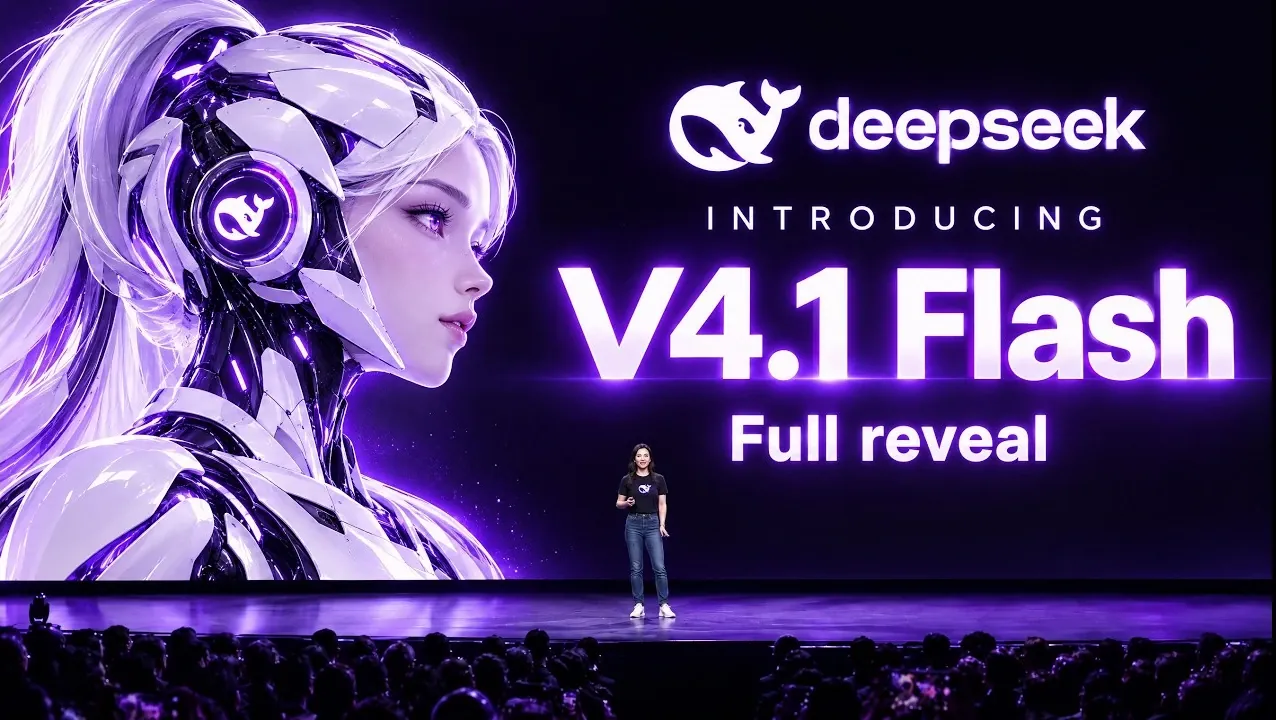
DeepSeek’s recent release of its V4.1 Flash 1017 model has sparked significant debate within the AI industry, particularly among American companies. Launched on October 17, 2026, this open source model combines affordability with high performance, offering features like a large context window for handling both text and images. However, its accessibility under the MIT license has raised concerns about cybersecurity risks and potential misuse. AI Grid highlights how the model’s ability to rival older flagship systems like Claude Opus 5 has intensified competition, while its vulnerabilities, such as reasoning errors and susceptibility to hallucinations, continue to draw scrutiny.
Gain insight into how DeepSeek’s pricing strategy, up to 20 times lower than many U.S. models, has forced American companies to rethink their market approach. Explore the broader implications of open source AI, including its role in providing widespread access to technology and the challenges it presents in terms of security and regulation. Finally, understand the strategic responses from both industry leaders and governments as they navigate the balance between fostering innovation and mitigating risks in an increasingly competitive global landscape.
DeepSeek V4.1 Flash 1017
TL;DR Key Takeaways :
- DeepSeek V4.1 Flash 1017, released on October 17, 2026, is an open source AI model celebrated for its speed, efficiency and affordability, but it raises concerns about cybersecurity and data privacy.
- The model’s affordability, priced up to 20 times lower than leading American AI models, has disrupted market dynamics but sparked debates over trade-offs in reliability and security.
- Its open source nature democratizes access to advanced AI but also introduces risks of misuse, including cyberattacks and disinformation campaigns, prompting calls for balanced regulations.
- The U.S. government has banned DeepSeek models in federal systems due to security concerns, highlighting vulnerabilities such as data storage in China and potential misuse by hackers.
- The release has intensified global AI competition, particularly between the U.S. and China, forcing American companies to reassess pricing and innovation strategies to maintain competitiveness.
DeepSeek V4.1 Flash 1017 is designed with a focus on speed, efficiency and accessibility, making it a standout in the AI domain. Released under the MIT license, it allows developers to freely use, modify and commercialize the model, significantly lowering barriers to entry for smaller players in the AI space. Its ability to process both text and images with a large context window makes it versatile for a wide range of applications, including coding, content generation and agent-based operations.
Benchmark tests indicate that the model rivals or even surpasses older flagship models like Claude Opus 5 in several performance metrics. However, it is not without flaws. Reasoning errors and susceptibility to hallucinations remain notable limitations, highlighting areas where further refinement is needed. Despite these shortcomings, the model’s accessibility and performance have positioned it as a disruptive force in the AI market.
Affordability: Redefining Market Dynamics
One of the most striking aspects of the V4.1 Flash 1017 is its unprecedented cost efficiency. Priced up to 20 times lower than many leading American AI models, it has become an attractive option for businesses and developers seeking high performance without incurring significant expenses. This affordability has forced established U.S. AI companies to reconsider their pricing strategies, as they face mounting pressure to remain competitive.
However, the cost advantage comes with trade-offs. Critics argue that the model’s reliability and security may not match those of its more expensive counterparts. These concerns have sparked debates about whether affordability should come at the expense of robustness, particularly in applications where security is paramount.

Learn more about DeepSeek V4 with other articles and guides we have written below.
- DeepSeek V4.1 Flash Reaches 427 Tokens per Second in Tests
- New DeepSeek V4.1 Flash 1017 Hits 300 Tokens per Second in Tests
- DeepSeek V4 Pro Launches at $0.435 per Million Input Tokens
- DeepSeek V4.1 Flash Outperforms Opus 5 in New AI Benchmarks
- DeepSeek V4.1 Flash Reportedly Launching Soon with Native Vision
- DeepSeek V4 Flash Hits 82.7 on Terminal Bench to Beat Pro
- DeepSeek V4 Flash GA Costs Just $0.28 per Million Tokens
- DeepS V4 Flash Vision EXP AI Model Processes Images For $0.00008
- DeepSeek Version 4 Flash Vision Excels on Apex Bench Tests
- Google Confirms Gemini 4 Replaces Gemini 3.5 Pro Entirely
Open source Accessibility: Opportunity and Risk
The open source nature of DeepSeek’s latest model has been both a helpful and a challenge for the AI community. On one hand, it democratizes access to advanced AI technology, empowering smaller developers and fostering innovation across diverse industries. By lowering the barriers to entry, the model has the potential to accelerate technological progress and expand the range of AI applications.
On the other hand, this openness introduces significant risks. The model’s unrestricted availability makes it vulnerable to misuse, including applications in cyberattacks, disinformation campaigns and other malicious activities. These risks have ignited heated debates among policymakers, industry leaders and cybersecurity experts about the ethical and strategic implications of open source AI. Striking a balance between accessibility and security remains a pressing challenge.
Security Concerns and Government Response
The U.S. government has taken decisive action in response to the security risks posed by DeepSeek V4.1 Flash 1017. The Department of Homeland Security has banned the use of DeepSeek models in federal civilian systems, citing concerns over data storage in China, cybersecurity vulnerabilities and the potential for generating harmful content. This restriction extends to third-party products built on DeepSeek implementations, reflecting the government’s cautious approach to safeguarding sensitive information.
Reports of hackers using AI agents, including DeepSeek models, to breach over 100 companies have further underscored the dangers of accessible, high-performing open source models falling into the wrong hands. These incidents highlight the urgent need for robust safeguards to prevent misuse while preserving the benefits of open source innovation.
Global Competition and Strategic Implications
The release of DeepSeek V4.1 Flash 1017 has intensified the global competition between the United States and China in the AI sector. By offering a cost-effective alternative to high-priced American models, DeepSeek has positioned itself as a disruptive force in the global market. This development has raised strategic concerns about China’s growing influence in shaping the future of AI technology.
For the U.S. AI industry, the rise of DeepSeek underscores the need to reassess pricing models and innovation strategies to maintain a competitive edge. The challenge lies in balancing the pursuit of technological advancements with the imperative to address security risks and ethical considerations. As the competition heats up, the stakes for both nations continue to rise.
Charting the Path Forward
The emergence of DeepSeek V4.1 Flash 1017 has reignited discussions about the ethical, strategic and security challenges of open source AI. While the model fosters innovation and accessibility, it also introduces significant risks that cannot be ignored. Policymakers and industry leaders face the daunting task of crafting regulations that protect against misuse without stifling progress.
The future of AI will likely hinge on achieving a sustainable balance—one that encourages technological innovation while making sure robust safeguards against potential threats. As the industry navigates this fantastic period, several critical questions remain:
- How can the U.S. AI sector adapt to the disruption caused by cost-effective alternatives like DeepSeek?
- What regulatory frameworks can effectively address security concerns without hindering innovation?
- How will global competition shape the ethical and strategic direction of AI development?
As these questions linger, the release of DeepSeek V4.1 Flash 1017 serves as a powerful reminder of the complex interplay between innovation, security and global competition. The decisions made today will shape the trajectory of AI for years to come, influencing not only technological progress but also the ethical and strategic foundations of the industry.
Media Credit: TheAIGRID
Disclosure: Some of our articles include affiliate links. If you buy something through one of these links, Geeky Gadgets may earn an affiliate commission. Learn about our Disclosure Policy.
