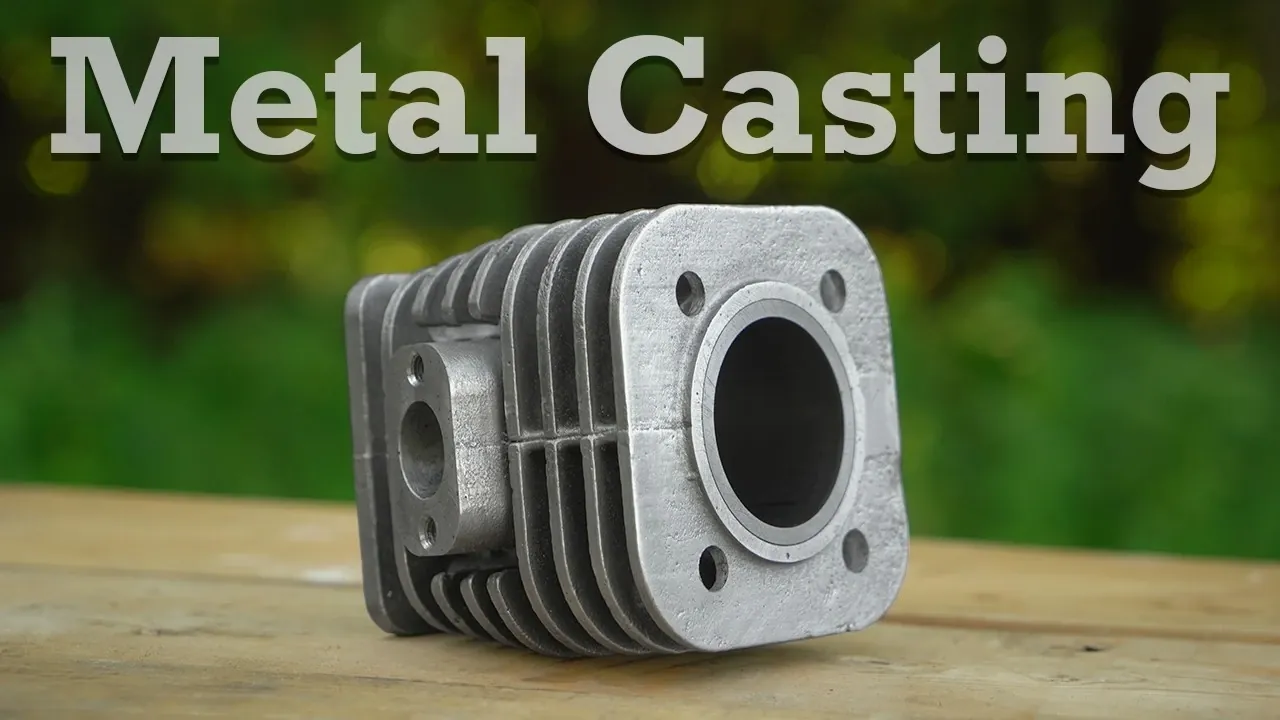
Casting engine parts from 3D prints merges additive manufacturing with traditional casting methods to produce functional metal components. Camden Bowen demonstrates the lost PLA investment casting process, where a 3D-printed PLA model is encased in a plaster mold, burned out to create a cavity and filled with molten aluminum. This method allows for the creation of detailed parts, such as engine cylinders, with the strength and thermal properties of cast metal. A key step involves reinforcing the mold to prevent cracking during the burnout and casting phases, making sure a successful outcome.
Explore how to set up a small-scale metal foundry, prepare aluminum alloys for casting and address common issues like material shrinkage or surface imperfections. Learn techniques to enhance casting accuracy, such as using vertical pouring methods and optimizing mold design. Gain insight into refining engine part designs with features like improved cooling fins or tighter dimensional tolerances. This overview provides practical steps to help you achieve consistent and reliable results in your casting projects.
Building a Homemade Metal Foundry
TL;DR Key Takeaways :
- The integration of 3D printing with traditional metal casting enables the creation of custom, high-performance engine components with improved thermal efficiency and durability.
- A homemade metal foundry, constructed with refractory mortar, insulation and a propane burner, is essential for melting and casting metals effectively and cost-efficiently.
- The lost PLA investment casting process allows for precise and intricate engine components by using 3D-printed PLA molds that are burned out to create casting cavities.
- Proper preparation of aluminum alloys, including recycling materials and refining molten metal, ensures strong, defect-free castings for reliable engine parts.
- Future advancements in materials, foundry efficiency and integrated cooling systems could expand the applications of this hybrid manufacturing approach across various industries.
A well-constructed homemade metal foundry is the cornerstone of this process, allowing you to melt and cast metals effectively. Here’s how to build one:
- Start with a steel bucket or drum, lining it with refractory mortar to create a heat-resistant furnace capable of withstanding extreme temperatures.
- Insulate the furnace using perlite or ceramic wool to retain heat and improve fuel efficiency.
- Ensure the refractory mortar is fully cured before use to prevent cracking or structural failure under high heat.
- Install a propane burner, such as the Frosty Tea design, which can reach temperatures of up to 1,300°C, sufficient for melting aluminum alloys.
This setup is both cost-effective and efficient, making it accessible for small-scale projects. Proper construction, insulation and curing are critical to ensure safety, durability and consistent performance during operation.
Preparing Aluminum Alloys for Casting
Aluminum alloys are widely used for engine components due to their lightweight nature, excellent thermal conductivity and resistance to corrosion. Preparing the material properly is essential for achieving high-quality castings:
- Source recyclable aluminum, such as alloy wheels or scrap engine parts, to reduce costs and promote sustainability.
- Melt the aluminum in your foundry, carefully skimming off impurities like dross to ensure a clean and pure pour.
- Cast the molten aluminum into ingots before use to improve material consistency and minimize contamination risks during the final casting process.
By following these steps, you can ensure that the aluminum used in your castings is strong, durable and free from defects, resulting in reliable engine components.

Deep dive into the latest in 3D Printing by exploring our other resources and articles.
- ELEGOO OrangeStorm Giga large volume 3D printer
- DIY 3D print recycler and filament maker : Artme3D MK2
- Mcor Arke Desktop 3D Printer Creates Full Colour Objects Using Paper For $6,000
- Hi3D Builds the AI 3D Platform Designed for Real-World 3D Printing
- How to 3D print traditional woodworking joints
- Ultimate Toolkit for Flawless 3D Prints – 11 Essential Tools for 3D Printing
- Staples Preparing To Offer Low Cost 3D Printing
- UK Supermarket Asda To Trial 3D Printing And Scanning (Video)
- How to Design and 3D Print Projects with Tinkercad : Beginner Friendly
- Instadungeon DIY 3D printed dungeon tiles
Implementing the Lost PLA Investment Casting Process
The lost PLA investment casting process serves as the critical link between 3D printing and traditional casting. This method allows for the creation of intricate and precise engine components. Here’s how it works:
- Design your engine component using 3D modeling software and print it using PLA filament, a material that burns out cleanly during the casting process.
- Encapsulate the PLA print in a mold made from plaster of Paris, reinforced with sand to enhance its strength and thermal resistance.
- Burn out the PLA by heating the mold in a kiln or furnace, leaving behind a cavity that mirrors the original 3D print.
- Pour molten aluminum into the mold, using vertical casting techniques to improve material flow and reduce the risk of defects such as trapped air or incomplete fills.
This process demands precision and attention to detail. Common issues, such as mold cracking or incomplete castings, can be mitigated by refining the burnout process, making sure proper mold reinforcement and maintaining consistent pouring temperatures.
Optimizing Engine Component Design
The design phase is crucial for maximizing the performance and functionality of your engine components. Using advanced 3D modeling software, you can achieve the following:
- Incorporate features such as enhanced cooling fins or optimized airflow channels to improve thermal management and efficiency.
- Ensure precise dimensions and tolerances to guarantee compatibility with your engine system.
- After casting, perform machining and surface finishing to achieve a polished appearance and precise fit.
Additionally, post-casting adjustments, such as fine-tuning ignition timing or modifying exhaust systems, can further enhance the overall performance of your engine.
Addressing Challenges in the Casting Process
Casting engine parts is a complex process that presents several challenges. Common issues include:
- Mold failures caused by cracking or insufficient reinforcement during the burnout phase.
- Defects in the castings, such as trapped air bubbles, incomplete fills, or uneven material flow.
- Difficulty maintaining consistent melting temperatures in the foundry, which can affect the quality of the final product.
To overcome these challenges, consider the following strategies:
– Reinforce molds with additional sand or alternative materials to improve their structural integrity.
– Refine the burnout process by making sure even heating and adequate ventilation to prevent mold damage.
– Optimize flame control in your propane burner to maintain consistent and precise temperatures.
Through iterative improvements and careful troubleshooting, you can achieve more reliable and consistent results in your casting projects.
Exploring Future Advancements and Applications
The potential for innovation in casting engine parts from 3D prints is vast. Future advancements could include:
- Improving foundry efficiency through enhanced insulation materials or more advanced burner designs.
- Experimenting with alternative alloys, such as magnesium or titanium, to achieve specific performance characteristics like reduced weight or increased strength.
- Integrating advanced cooling systems directly into engine designs to improve thermal management and overall efficiency.
These custom components have practical applications in various fields, including motorcycles, go-karts and other small vehicles. With continued experimentation and refinement, this manufacturing approach has the potential to expand into other industries, offering cost-effective and customizable solutions for a wide range of engineering challenges.
Media Credit: Camden Bowen
Disclosure: Some of our articles include affiliate links. If you buy something through one of these links, Geeky Gadgets may earn an affiliate commission. Learn about our Disclosure Policy.
