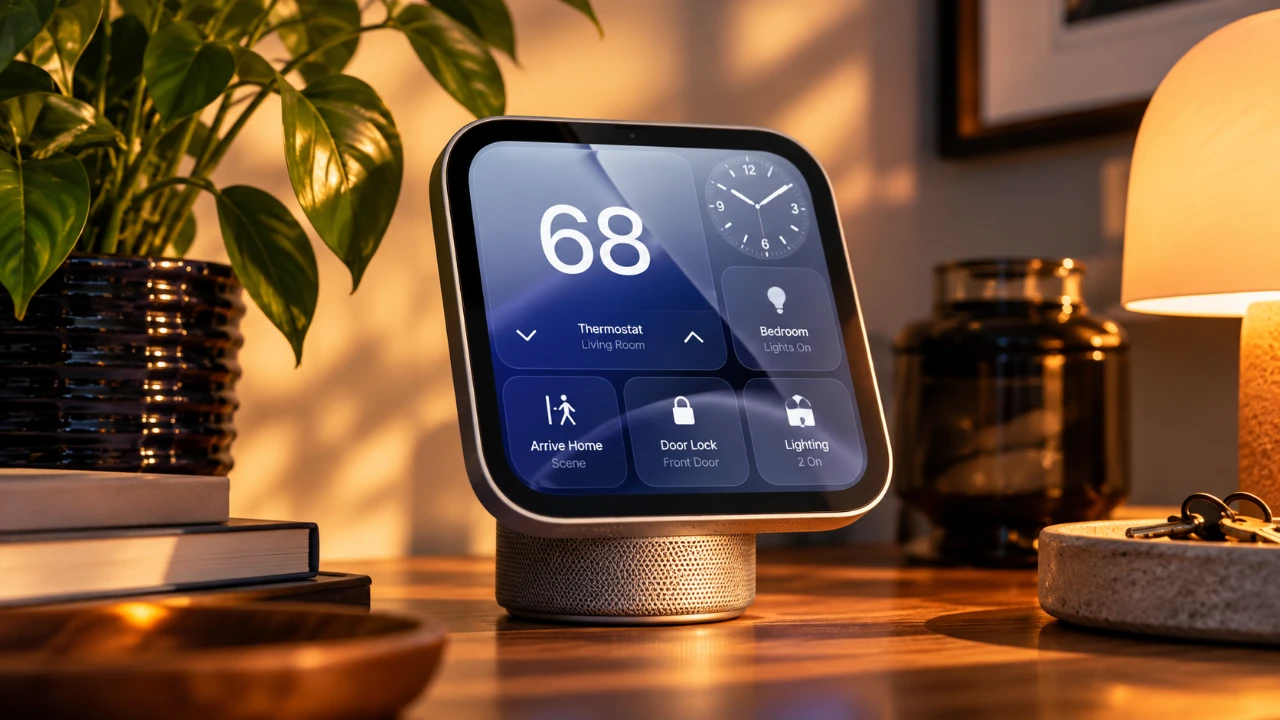
The Apple HomeView is a sophisticated smart home hub designed to seamlessly integrate into your living space. With its advanced features, sleek design, and focus on enhancing the smart home experience, it is available in two distinct models: tabletop and wall-mounted. However, before committing to a purchase, it’s crucial to evaluate its features, limitations, and compatibility to ensure it aligns with your specific needs. The video below from ZONEofTECH gives us more details.

Two Models, One Price
The Apple HomeView offers two configurations: a tabletop model and a wall-mounted version, both priced at $299. The tabletop model includes a 30W power adapter and cable, providing a complete setup out of the box. In contrast, the wall-mounted version does not include these accessories, requiring an additional purchase. This distinction is significant, particularly if you prefer a straightforward, plug-and-play setup. Understanding the included components can help you make an informed decision based on your installation preferences.
Display: Retina Quality with True Tone Technology
Both models feature a 7-inch Retina LCD display, delivering a brightness range from 500 nits at maximum to 0.3 nits at minimum. True Tone technology adjusts the display’s color temperature to match the surrounding environment, making sure optimal viewing conditions at all times. The screen is also coated with a fingerprint-resistant layer, maintaining clarity and reducing smudges. While the display quality is undeniably impressive, the relatively small screen size may feel restrictive for users accustomed to larger smart displays, particularly for tasks like video calls or media consumption.
Design and Build: Balancing Aesthetics and Functionality
The design of the Apple HomeView emphasizes both aesthetics and practicality. The tabletop model features a stainless steel dome speaker base with a tilting hinge, allowing you to adjust the screen angle for improved visibility. This flexibility makes it ideal for placement on desks, countertops, or bedside tables. On the other hand, the wall-mounted version is lighter and more compact, designed for fixed installations. However, it lacks the tilting feature and offers fewer color options. Depending on your intended use and placement, these design differences could significantly influence your choice.
Audio Performance: Different Models, Different Experiences
Audio quality is a key differentiator between the two models. The tabletop version is equipped with a woofer and passive radiators, delivering a richer and more immersive sound experience. This makes it well-suited for music playback, voice commands and video calls. In contrast, the wall-mounted model features two full-range drivers, resulting in less robust audio performance. If sound quality is a priority, the tabletop model is the better option, particularly for users who value high-quality audio in their smart home devices.
Power Options: Flexibility Comes with Trade-Offs
The tabletop model includes a 30W power adapter, offering a complete and ready-to-use setup. The wall-mounted version, however, provides multiple power options, including Power over Ethernet (PoE). PoE can simplify cable management by combining power and data into a single connection, but it requires additional hardware, which increases the overall cost. This trade-off between convenience and flexibility highlights the importance of evaluating your power setup and installation preferences before purchasing.
Hardware: Advanced Connectivity for the Future
The Apple HomeView is powered by the A18 chip, likely paired with 8GB of RAM, making sure smooth and responsive performance. Connectivity options include Wi-Fi 6E, Bluetooth 6 and Thread support, making it compatible with the latest smart home technologies. These advanced hardware features position the HomeView as a future-ready device, capable of integrating seamlessly with evolving smart home ecosystems.
Camera and Microphones: Optimized for Communication
The 12MP Center Stage camera is a standout feature, designed to enhance video calls by keeping you centered in the frame, even as you move. This functionality is particularly useful for virtual meetings or family calls. Additionally, the HomeView is equipped with four voice recognition microphones, making sure accurate audio input for seamless interactions with Siri and other voice-controlled features. These communication-focused capabilities make the HomeView an excellent choice for users who prioritize connectivity and smart assistant functionality.
Software Features: Siri Integration and Beyond
The Apple HomeView uses Siri AI to provide a personalized experience for up to six users. Each user can have tailored profiles, allowing the device to deliver customized responses and recommendations. The HomeView also supports intercom functionality, allowing communication across multiple Apple devices within your home. However, native support for third-party apps is limited. For instance, popular apps like YouTube require casting from an iPhone, which may frustrate users seeking a more versatile smart hub. This limitation in app support is an important consideration for those who rely on a wide range of applications.
Compatibility and Regional Availability
To use the Apple HomeView, you’ll need an iPhone 11 or newer, or an iPad 9th generation or newer, running iOS/iPadOS 27.2 or higher. However, the device is not currently available in the European Union, which restricts its accessibility for international users. These compatibility and availability constraints are critical factors to consider, particularly if you live outside supported regions or use older Apple devices.
Key Limitations to Keep in Mind
While the Apple HomeView offers a range of innovative features, it is not without its drawbacks. Key limitations include:
- The wall-mounted version lacks certain features found in the tabletop model, despite being priced the same.
- Limited native support for popular third-party apps, which may hinder its versatility as a smart hub.
- Regional availability issues, particularly for users in the European Union, restrict its accessibility.
These factors may deter users seeking a more comprehensive and universally compatible smart home solution.
Is the Apple HomeView Right for You?
The Apple HomeView is a thoughtfully designed smart home hub that excels in areas such as display quality, communication features and Siri AI integration. Its advanced hardware and connectivity options make it a forward-thinking choice for smart home enthusiasts. However, limitations such as restricted app support, hardware differences between models and regional availability issues may impact its appeal. Carefully weigh these factors to determine whether the HomeView aligns with your specific needs and expectations.
Explore further guides and articles from our vast library that you may find relevant to your interests in Apple HomeView.
- Apple TV and HomeView Release Dates Leaked Ahead of Today’s Event
- New $299 Apple HomeView Packs a 7-Inch Liquid Retina Display
- Bypass Apple CarPlay Restrictions: How to Stream YouTube in Your Car
Source: ZONEofTECH
Disclosure: Some of our articles include affiliate links. If you buy something through one of these links, Geeky Gadgets may earn an affiliate commission. Learn about our Disclosure Policy.
