
What if you could teach a computer to recognize a zebra without ever showing it one? Imagine a world where object detection isn’t bound by the limits of endless training data or high-powered hardware. Enter YOLOE, the new evolution in computer vision that flips the script on how machines “see.” Unlike traditional models that demand hours of training and mountains of labeled images, YOLOE uses pre-trained visual concepts to identify objects it has never encountered before. This isn’t just an upgrade—it’s a paradigm shift, making advanced object detection accessible to anyone, even on low-power devices like the Raspberry Pi 5.
In this piece, Core Electronics explore how YOLOE is redefining the boundaries of computer vision. You’ll discover how its zero-training approach opens doors for developers, researchers, and hobbyists alike, allowing faster, smarter, and more adaptable detection tasks. From its ability to recognize objects based on attributes like shape and color to its seamless integration with diverse hardware, YOLOE is more than just a tool—it’s a vision of what’s possible when innovation meets simplicity. Could this be the key to unlocking the next wave of AI-driven creativity? Let’s find out.
YOLOE: Transforming Object Detection
TL;DR Key Takeaways :
- YOLOE transforms computer vision by using pre-trained visual concepts, eliminating the need for extensive retraining to detect new objects, making it faster and more accessible.
- It introduces features like promptable vision, allowing object detection through text or image-based prompts, and recognizes objects based on attributes like shape, color, and texture.
- YOLOE is optimized for low-power devices, such as the Raspberry Pi 5, and supports formats like ONNX and NCNN, making sure compatibility across diverse hardware configurations.
- Practical applications include DIY robotics, home automation, object tracking, and custom detection tasks, showcasing its versatility in real-world scenarios.
- Despite challenges with obscure objects or complex scenes, YOLOE remains a highly effective tool for general-purpose detection, offering adaptability and efficiency for developers and researchers.
How YOLOE Stands Apart from Traditional YOLO Models
Traditional YOLO (You Only Look Once) models rely heavily on large datasets of labeled images to learn how to recognize specific objects. This training process is resource-intensive, requiring advanced hardware and hours of computation. As a result, accessibility is often limited to those with substantial technical resources.
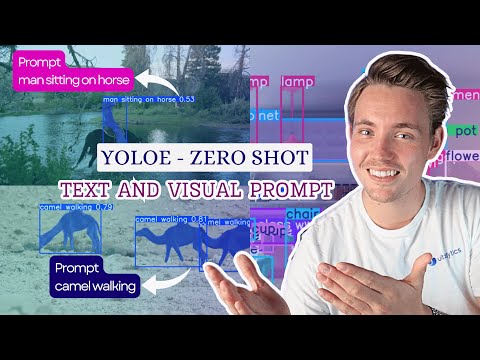
YOLOE introduces a paradigm shift by using pre-trained visual concepts. Instead of learning from scratch, it identifies objects based on their attributes, such as shape, color, and texture. For example, YOLOE can recognize a zebra by analyzing its “striped” and “four-legged” features, even if it has never encountered a zebra before. This approach significantly reduces the need for retraining, making object detection faster, more accessible, and adaptable to a wider range of applications.
Key Features and Innovations
YOLOE offers a range of features that enhance its usability and effectiveness in object detection tasks. These include:
- Promptable Vision Model: YOLOE allows users to detect objects using text or image-based prompts. For instance, you can specify “red car” or upload an image of a car to guide the model’s detection process.
- Visual Concept Understanding: The model breaks down objects into recognizable attributes, allowing detection without the need for retraining on new datasets.
- Custom Prompts: Users can tailor detection tasks by providing specific prompts, making YOLOE adaptable to diverse scenarios and requirements.
- Extensive Object Recognition: With its pre-trained knowledge, YOLOE can identify thousands of objects, offering unparalleled versatility for various applications.
These features make YOLOE a powerful tool for developers, researchers, and hobbyists, providing flexibility and efficiency in object detection tasks.
YOLOE Computer Vision for Developers and Hobbyists
Here are more guides from our previous articles and guides related to Computer Vision that you may find helpful.
- Meta SAM 2 computer vision AI model shows impressive results
- Affordable spatial AI computer vision kit
- Aris advanced open source, computer vision bipedal robot
- Meta SAM 2 Computer Vision AI deep dive
- Microsoft Azure Kinect Developer Kit cloud mini PC $399
- Read analogue gauges electronically with Nicla Vision
- Raspberry Pi alternative mini PCs by UDOO
- LuckFox Pico Ultra designed for headless computing apps
- Awesome robotic foosball table features AI, Vision and Machine
- Arduino OpenMV Cam Open Source Advanced Machine Vision
Performance and Adaptability Across Platforms
YOLOE is designed to deliver robust performance across a variety of platforms, including resource-constrained devices like the Raspberry Pi 5. Its adaptability is evident in several key areas:
- Format Compatibility: YOLOE supports ONNX and NCNN formats, making sure seamless integration with diverse hardware configurations.
- Resolution and Model Size Optimization: Users can adjust resolution and model size to balance detection accuracy and processing speed, allowing real-time performance when required.
- Low-power Applications: The lightweight architecture of YOLOE makes it ideal for scenarios where energy efficiency is a priority, such as IoT devices and portable systems.
These capabilities make YOLOE suitable for a wide range of use cases, from high-performance computing environments to low-power, edge-based applications.
Challenges and Limitations
While YOLOE offers significant advancements, it is not without its limitations. The model may encounter difficulties when dealing with obscure or highly specific objects that lack clear visual attributes. Additionally, in complex scenes with overlapping or ambiguous objects, false positives can occur. Despite these challenges, YOLOE remains highly effective for general-purpose detection tasks, thanks to its broad recognition capabilities and adaptability.
Practical Applications of YOLOE
The versatility of YOLOE makes it well-suited for a variety of real-world applications, particularly in scenarios requiring real-time detection and adaptability. Some notable examples include:
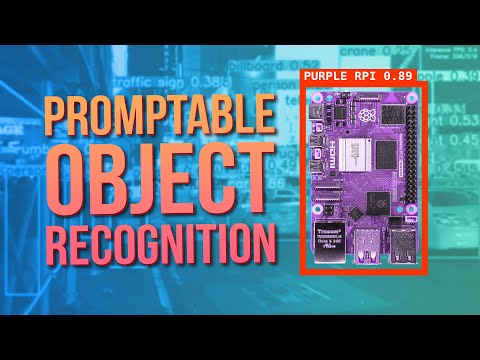
- Raspberry Pi 5 Projects: When paired with a camera module, YOLOE enables object detection for DIY robotics, home automation, and surveillance systems, making it a valuable tool for makers and hobbyists.
- Object Counting and Tracking: YOLOE can be used to count objects or track their locations in real time, which is particularly useful for inventory management, traffic monitoring, and event analysis.
- Custom Detection Tasks: By using text or image-based prompts, users can adapt YOLOE to identify specific objects relevant to their projects, enhancing its utility across diverse fields.
These applications highlight the practical benefits of YOLOE, demonstrating its potential to streamline workflows and improve efficiency in various domains.
Getting Started with YOLOE
Setting up YOLOE is a straightforward process, making it accessible to users with varying levels of technical expertise. To begin, install the YOLO Ultralytics package and configure Python scripts for your detection tasks. The model supports both text and image-based prompts, allowing you to define detection parameters with flexibility. Additionally, tools for resolution tuning and model size adjustments enable you to optimize performance for your specific hardware and use case. Whether you’re working on a high-performance system or a low-power device, YOLOE provides the tools you need to get started quickly and effectively.
Advancing Object Detection with YOLOE
YOLOE represents a significant advancement in computer vision technology. By eliminating the need for extensive retraining, it simplifies custom object detection and makes it accessible to users with limited resources. Its ability to operate efficiently on low-power devices, combined with its adaptability and broad recognition capabilities, positions YOLOE as a valuable tool for a wide range of applications. Whether you’re exploring real-time detection projects or developing innovative solutions on platforms like the Raspberry Pi 5, YOLOE offers a powerful, efficient, and user-friendly approach to meet your needs.
Media Credit: Core Electronics
Disclosure: Some of our articles include affiliate links. If you buy something through one of these links, Geeky Gadgets may earn an affiliate commission. Learn about our Disclosure Policy.
