![[ALT 41] A high-speed drone designed with 3D-printed materials and advanced cooling systems](https://www.geeky-gadgets.com/wp-content/uploads/2025/10/img-44-drone-aerodynamics-testing_optimized.webp)
What does it take to create the world’s fastest drone? For one determined father-son duo, the answer lies in a mix of relentless ambition, innovative technology, and a refusal to accept limits. Their latest creation, an engineering marvel unofficially clocked at a staggering 585 km/h (363 mph), is not just a machine, it’s a statement. A statement that records are meant to be broken, and boundaries are meant to be pushed. This isn’t just about speed; it’s about redefining what drones can achieve and inspiring a new era of aerial innovation. Imagine a quadcopter so fast it could outpace a Formula 1 car, yet so precise it’s a testament to human ingenuity. That’s the story behind the V3, a drone designed not just to compete, but to dominate.
In this feature, Luke Maximo Bell takes you inside the journey of reclaiming a Guinness World Record, exploring how advanced materials, innovative cooling systems, and aerodynamic mastery came together to create a drone unlike any other. From the painstaking design decisions to the adrenaline-pumping test flights, every detail of this project reveals the extraordinary potential of modern drone engineering. But this isn’t just a tale of technology, it’s a story of passion, perseverance, and the pursuit of excellence. As you read on, you’ll discover how this father-son team turned an ambitious dream into a high-speed reality, and why their work could shape the future of unmanned aerial systems.
Record-Breaking Drone Innovation
TL;DR Key Takeaways :
- The father-son team achieved an unofficial top speed of 585 km/h (363 mph) with their quadcopter drone, aiming to reclaim the Guinness World Record for the fastest drone.
- The drone’s innovative design features a 3D-printed body made from Fibbron PA6 CF nylon, offering superior heat resistance, durability, and design flexibility.
- Advanced cooling systems, including water cooling, aluminum heat sinks, thermal padding, and 3D-printed water pumps, were developed to manage heat during high-speed operations.
- Aerodynamic optimization, including virtual wind tunnel analysis and a closed canopy design, minimized drag and enhanced stability at extreme speeds.
- The team’s iterative testing and refinement process, including adjustments to propellers, motors, and electronics, highlights their commitment to pushing the boundaries of drone engineering.
Chasing the Record
The journey began with a clear and ambitious goal: to surpass the current Guinness World Record for the fastest quadcopter drone. Having previously held the title, the father-son duo was determined to reclaim their position after another engineer broke their record. Their mission extended beyond personal achievement; it became a quest to push the boundaries of drone engineering and demonstrate what is possible when innovation meets determination.
Their efforts were driven by a deep understanding of aerodynamics, material science, and propulsion systems. By using their expertise and passion, they embarked on a journey that would not only challenge existing records but also inspire advancements in drone technology. This relentless pursuit of excellence highlights the potential of collaborative engineering and the drive to achieve extraordinary results.
Innovative Drone Design
The foundation of their success lies in the drone’s innovative and unconventional design. Departing from traditional carbon fiber builds, they opted for a 3D-printed body, a decision that allowed for greater customization and design flexibility. The material they selected, Fibbron PA6 CF nylon, offered exceptional heat resistance and durability, making it ideal for the extreme conditions of high-speed flight. This choice exemplifies how advancements in material science can unlock new possibilities in engineering.
The 3D-printed approach enabled the team to experiment with intricate designs that would have been difficult or impossible to achieve using traditional manufacturing methods. By tailoring the drone’s structure to optimize weight distribution and durability, they created a platform capable of withstanding the intense stresses of high-speed operation. This innovative use of materials and manufacturing techniques underscores the importance of adaptability and creativity in engineering.
World’s FASTEST Drone V3 2025
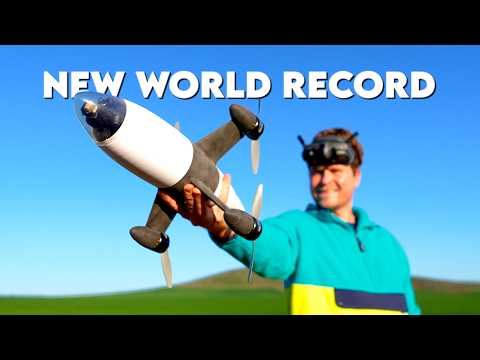
Gain further expertise in drone design by checking out these recommendations.
- Drones capable of 3D printing in flight will transform construction
- 8+ Big drones capable of carrying large payloads and heavy
- How to build a drone tracking radar
- New Interceptor drones being created by Oculus co-founder Palmer
- 1,500 drones flying in formation set two Guinness World Records
- How Morphing Wing Drones Are Revolutionizing Aerial Robotics
- Swarm of drones demonstrated flying through heavily wooded area
- New Futurama Mobile Game : Game of Drones Announced
- Aerial Drones Programmed To Build Rope Bridge
- Drones To Replace Waiters In Singapore Restaurant
Testing and Refining Performance
Achieving record-breaking speeds required a rigorous process of testing and refinement. During initial tuning flights, the drone reached an impressive 420 km/h. However, the team recognized that there was significant room for improvement. By experimenting with new propellers, adjusting motor configurations, and fine-tuning the drone’s electronic systems, they gradually increased its speed to an astonishing 520 km/h.
Each test flight provided critical data that informed subsequent modifications. The team carefully analyzed performance metrics, identifying areas where efficiency could be improved. This iterative approach allowed them to push the drone’s capabilities further, ultimately achieving an unofficial top speed of 585 km/h. Their commitment to continuous improvement highlights the importance of perseverance and attention to detail in achieving engineering breakthroughs.
Innovative Cooling Systems
Managing heat is one of the most significant challenges in high-speed drone operation, particularly for the electronic speed controllers (ESCs) that regulate motor performance. To address this issue, the team developed an advanced cooling system that combined multiple technologies to ensure consistent performance during prolonged high-speed flights. Key components of this system included:
- Water cooling for efficient heat transfer
- Aluminum heat sinks to dissipate heat effectively
- Thermal padding for insulation and protection
- 3D-printed water pumps for precise and reliable cooling
This innovative approach to thermal management allowed the drone to maintain optimal performance under extreme conditions, making sure that heat buildup did not compromise its speed or reliability.
Perfecting Aerodynamics
Aerodynamics played a pivotal role in the drone’s ability to achieve and sustain high speeds. Stability issues at extreme velocities were a significant challenge, requiring meticulous adjustments to the drone’s center of gravity. The team also used advanced virtual wind tunnel software, such as Air Shaper, to analyze airflow patterns and identify areas where drag could be minimized.
These efforts culminated in a closed canopy design that reduced air resistance while enhancing stability. By optimizing the drone’s aerodynamic profile, the team was able to achieve a balance between speed and control, allowing the drone to perform reliably at unprecedented velocities. This focus on aerodynamics underscores the importance of precision engineering in pushing the limits of performance.
Achieving Unofficial Records
The culmination of the team’s efforts was an unofficial top speed of 585 km/h. While this achievement has yet to be officially recognized by Guinness World Records, it represents a significant milestone in the field of drone engineering. The accomplishment highlights the importance of minimizing drag, optimizing stability, and using advanced materials and technologies to achieve extraordinary results.
This unofficial record serves as a testament to the team’s dedication and ingenuity. It also underscores the potential for further advancements in drone technology, as engineers continue to explore new ways to enhance performance and efficiency. The father-son duo’s success is a reminder of what can be achieved through innovation, collaboration, and a relentless pursuit of excellence.
What Lies Ahead
The journey is far from over for this father-son team. They are now preparing for an official Guinness World Record attempt, with plans to further refine the drone’s design and performance. Their work not only pushes the boundaries of high-speed drone technology but also serves as an inspiration for innovation in the broader field of unmanned aerial systems.
As they continue to explore new possibilities, their efforts are likely to influence the development of drones for a wide range of applications, from competitive racing to industrial and scientific use. By demonstrating the incredible potential of modern drone technology, they are paving the way for future advancements and inspiring the next generation of engineers and innovators.
Media Credit: Luke Maximo Bell
Disclosure: Some of our articles include affiliate links. If you buy something through one of these links, Geeky Gadgets may earn an affiliate commission. Learn about our Disclosure Policy.
