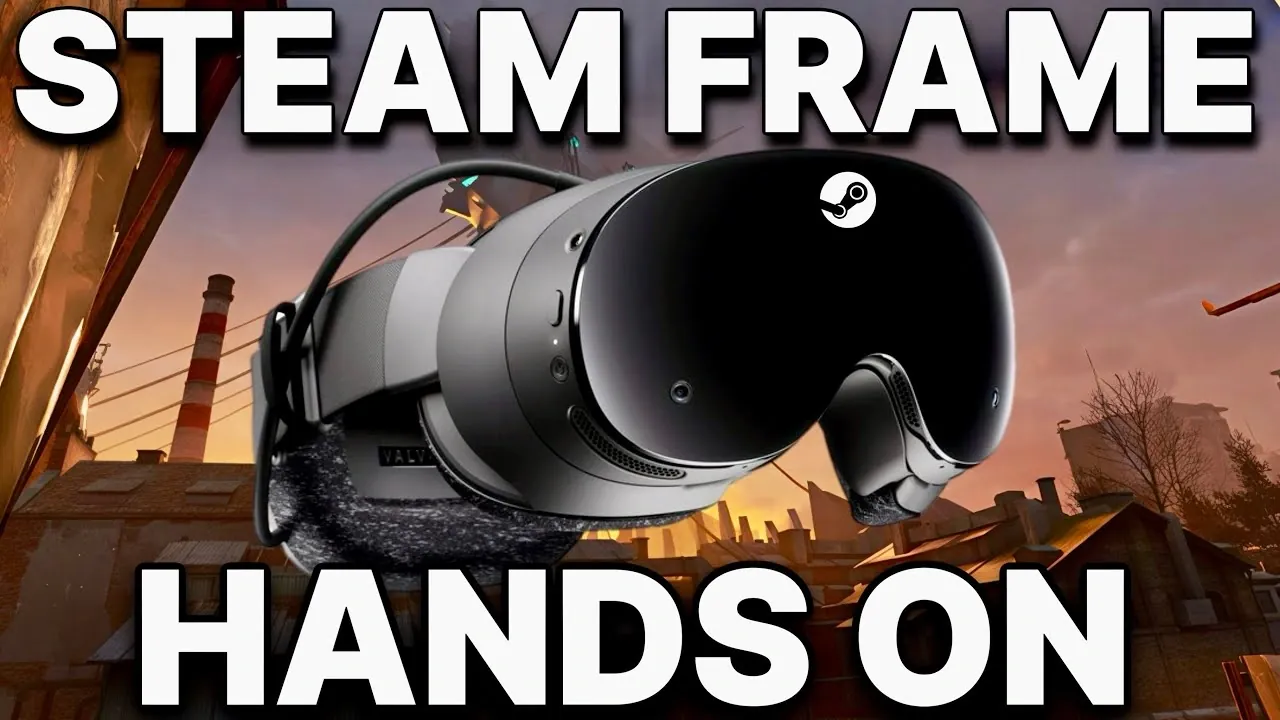
Valve’s Steam Frame offers a standalone VR experience that bridges the gap between wireless PCVR and independent gaming. In a hands-on session covered by Gamertag VR, the headset demonstrated its ability to run demanding titles like Half-Life Alyx natively, achieving frame rates of 40-50 FPS on low settings. This performance is supported by features such as dynamic foveated rendering and eye tracking, which optimize visual quality and frame rates based on user focus. Despite its lightweight design and high-resolution display, the device’s limited battery life—lasting only 1.5 to 2 hours, emerged as a key constraint for extended use.
This overview will explore how the Steam Frame balances standalone and wireless PCVR gaming, highlighting its visual fidelity, controller design, and audio performance. You’ll also learn about its ergonomic features, including a rear-mounted battery for improved comfort and the trade-offs involved in its mixed reality capabilities. Whether you’re considering the headset for immersive gaming or curious about its potential for future updates, this breakdown offers a clear look at its strengths and limitations.
Valve Steam Frame Overview
TL;DR Key Takeaways :
- The Valve Steam Frame is a standalone VR headset capable of running demanding games like Half-Life Alyx natively, with support for both standalone and wireless PCVR gaming.
- It features a high-resolution display, dynamic foveated rendering and eye tracking, offering immersive visuals and improved performance.
- The ergonomic design includes a lightweight build and rear-mounted battery for balance, but the battery life is limited to 1.5-2 hours, requiring external solutions for extended sessions.
- Controller design and haptics are outdated, with noisy rumble motors and basic feedback, falling short compared to competitors like the Meta Quest 3.
- Mixed reality capabilities are basic, offering only black-and-white passthrough, which lags behind higher-end devices with color passthrough functionality.
Standalone Gaming Performance
The Steam Frame supports standalone gaming, allowing users to play graphically intensive titles like Half-Life Alyx directly on the headset without requiring a PC. During testing, the game ran at 40-50 FPS on low settings, which, while not optimal, underscores the headset’s capability to handle demanding games natively. This performance is bolstered by advanced features such as dynamic foveated rendering and eye tracking, which adjust rendering quality based on the user’s gaze. These technologies have the potential to improve both frame rates and visual fidelity in future updates, making the Steam Frame a promising option for standalone gaming enthusiasts.
Comfort and Ergonomics
The Steam Frame is designed with user comfort in mind, featuring a lightweight build and a rear-mounted battery for improved balance. Two head strap options, a circular strap and an overhead strap, offer flexibility to accommodate individual preferences. Despite its compact design, the headset houses powerful hardware, including more RAM and a faster processor than the Meta Quest 3. These features make it suitable for extended gaming sessions. However, the limited battery life—lasting only 1.5 to 2 hours, may be a drawback for users seeking longer play sessions without interruptions.
Valve Steam Frame Hands On Gameplay

Expand your understanding of SteamOS with additional resources from our extensive library of articles.
- Budget SteamOS Mini PC for Living Room Gaming and Streaming
- SteamOS Update Boosts Performance for Older Games on Steam Deck
- MinisForum V3 Gaming Tablet Running SteamOS 3.8 with 165Hz Display
- Full Guide to Installing SteamOS 3.8 on Legion Go S
- Worlds Smallest DIY Steam Machine : Ryzen 7840U for Steady 1080p Play
- Compact Steam OS Gaming PC with RX 7600 Benchmarks
- ROG Flow Z13 Tablet Loaded with SteamOS 3.9, 1440p Gaming & More
- MSI Claw A8 Review : Linux Gaming with Ryzen Z2 Extreme
- Steam Machine Pricing Tipped at $600 to $650 with Supply Tight
- Build a Budget Steam Machine That Easily Hits 1440p
Visual Quality and Display
The Steam Frame delivers an immersive visual experience with its high-resolution display, offering vibrant colors and deep blacks. Its field of view, comparable to the PSVR 2 at approximately 110 degrees, enhances the sense of immersion, while the lens clarity ensures minimal glare and a large sweet spot for consistent sharpness across the display. These features make the Steam Frame an appealing choice for users who prioritize visual quality in their VR experiences.
Audio Performance
The built-in speakers provide clear and balanced audio, though the maximum volume may feel insufficient in noisy environments. In quieter settings, the sound quality is adequate for an immersive experience. For users seeking a more robust audio experience, external headphones may be necessary. While the audio performance is functional, it does not stand out compared to other devices in the same category.
Controller Design and Feedback
The Steam Frame’s controllers are larger than expected, featuring a D-pad, four buttons, shoulder buttons, and triggers. While they include basic haptic feedback, the rumble motors feel outdated and are noticeably loud, which detracts from the overall experience. Competing devices, such as the Meta Quest 3, offer more refined controllers with advanced haptics, making this an area where the Steam Frame could see significant improvement.
Battery Life Limitations
Battery life remains one of the Steam Frame’s most notable weaknesses. With only 1.5 to 2 hours of use on a full charge, the headset may not meet the needs of users who prioritize longer, uninterrupted gaming sessions. For extended play, connecting the headset to an external battery pack is necessary, which can limit mobility and detract from the wireless experience. Addressing this limitation in future iterations could significantly enhance the device’s appeal.
Wireless PCVR Gaming
The Steam Frame excels in wireless PCVR gaming, offering superior image quality and performance compared to the Meta Quest 3. Streaming PCVR games is enhanced by dynamic foveated rendering, which improves visuals while reducing latency. This results in a smooth and immersive experience, making the headset particularly appealing for users who prioritize wireless PCVR functionality. The ability to seamlessly transition between standalone and PCVR gaming further adds to its versatility.
Mixed Reality Features
The Steam Frame’s mixed reality capabilities are limited, offering only black-and-white passthrough. While this feature allows users to see their surroundings while wearing the headset, it falls short of the color passthrough available on higher-end devices like the Apple Vision Pro. Future updates, such as the addition of an OLED display or a color passthrough add-on, could significantly enhance its mixed reality functionality. For now, the Steam Frame’s mixed reality features remain basic and are unlikely to satisfy users seeking advanced AR capabilities.
Strengths and Areas for Improvement
The Valve Steam Frame positions itself as a strong contender in the mid-range VR market, offering a versatile solution for both standalone and wireless PCVR gaming. Its key strengths include:
- High-resolution display with vibrant colors and deep blacks
- Lightweight and ergonomic design for extended use
- Advanced features like dynamic foveated rendering and eye tracking
However, several areas need improvement:
- Short battery life that limits extended gaming sessions
- Outdated and noisy controller haptics
- Limited mixed reality functionality with black-and-white passthrough
Final Thoughts
The Valve Steam Frame is a promising mid-range VR headset that excels in wireless PCVR and standalone gaming. Its ergonomic design, high-resolution display and advanced features make it a compelling option for users seeking a versatile device. However, limitations such as short battery life, outdated controllers, and basic mixed reality features may deter some users. With future updates and refinements, such as improved battery performance, enhanced controllers and better mixed reality capabilities, the Steam Frame could solidify its position as a competitive option in the evolving VR landscape. For now, it offers a compelling experience for those looking to explore VR without the need for a high-end PC.
Media Credit: Gamertag VR
Disclosure: Some of our articles include affiliate links. If you buy something through one of these links, Geeky Gadgets may earn an affiliate commission. Learn about our Disclosure Policy.
