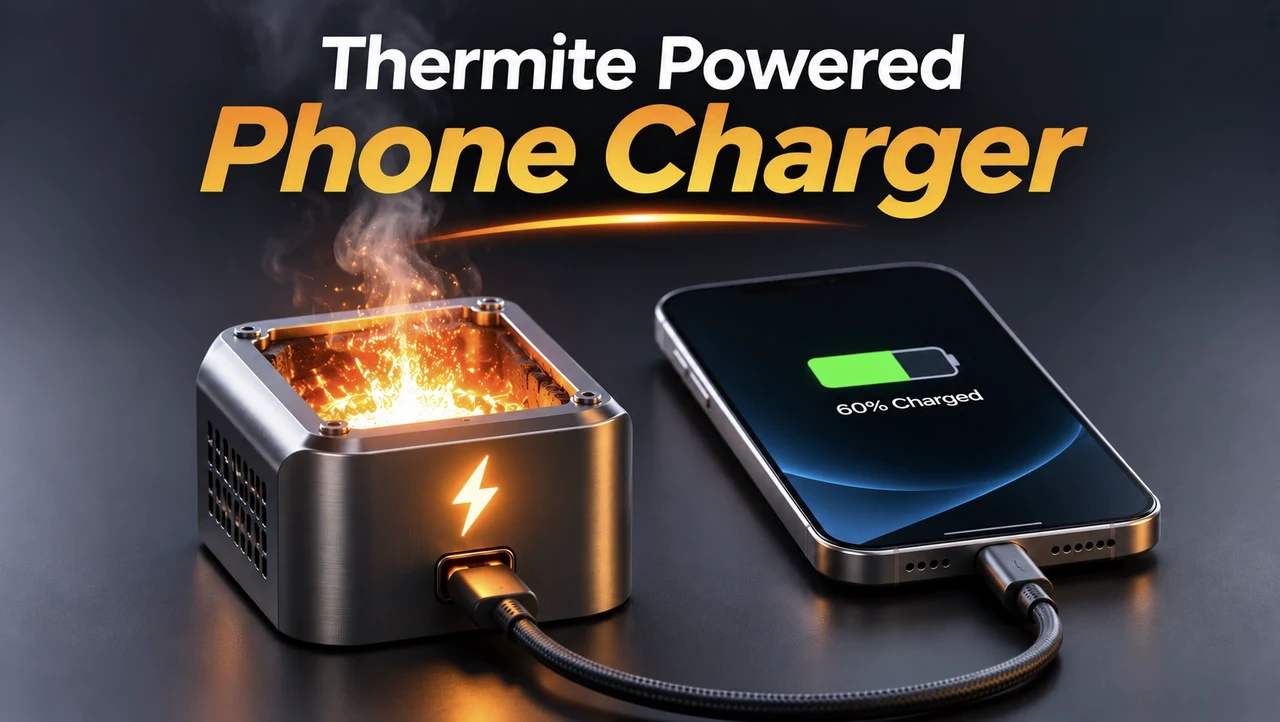
The Thought Emporium’s Thermite Thermal Generator can charge a phone using heat from a chemical reaction, with no moving parts. It produced an estimated one or two watts, so charging was slow. In the demonstration, a modified thermite mixture heated the generator, and plates converted the resulting temperature difference into electricity. The experimental device is not available to buy and needs a fresh thermite charge for each run. Take a closer look at how it works and why the heat took time to reach the plates.
The image is AI generated and is for illustration purposes only. Watch the video below to see the real device in action.
Thermite Thermal Generator: Heat for Phone Charging
TL;DR Key Takeaways :
- The generator uses a modified thermite mixture containing about 40% quartz sand by weight to slow heat release.
- Peltier plates convert heat into electricity, with an estimated efficiency of 1% to 2% at an approximately 140° temperature difference under optimal conditions.
- The thermite burn lasted two to three minutes, while voltage climbed over about 10 minutes.
- A regulator boosted the voltage to 5 V, and a connected phone displayed its charging icon.
- Electrical output was estimated at one or two watts from a few kilowatts of thermite heat, making charging slow.
The Thermite Thermal Generator, or TTG as The Thought Emporium calls it, uses a modified thermite mixture to generate electricity without moving parts. It follows the same principle as a radioisotope thermoelectric generator, or RTG, turning a temperature difference into electricity. Thermite stands in for weapons-grade plutonium in this comparison, but the generator is not a bomb.
An RTG uses heat from radioactive decay, whereas the TTG produces heat through a short chemical reaction. RTGs can last for decades; the thermite generator needs a fresh charge after use. The plutonium cores on the Voyager probes have operated longer than most of Earth’s population has been alive.
Sand Slows the Transfer of Heat
Ordinary thermite, normally made from aluminum powder and iron oxide, releases its energy in a rapid burst of heat, sparks, molten iron and slag. The generator instead uses a modified mixture containing quartz sand, which slows the release of heat, though the mixture still burns at a few thousand degrees. Developed for the earlier hot dog cooker, the mixture is about 40% quartz sand by weight.
Quartz can replace iron in the reaction but releases less energy, while the sand also absorbs energy as it heats and melts. Setting off ordinary thermite in a confined space is dangerous: the earlier cooker could detonate with its lid on, throwing metal and meat.
Inside the generator, the reaction takes place in a crucible surrounded by sand in a metal box. The sand fits tightly around the crucible to carry heat outward and is set into a solid shape so it does not collapse when the crucible is removed. Its high melting point and poor thermal conductivity slow the transfer of heat.
The build used 7 kg of sand, bound into shape with sodium silicate. The binder cures overnight and does not burn like ordinary glue or epoxy, while Parafilm kept the mixture from sticking to the crucible mold. The aluminum crucibles each hold about 300 g of the thermite mixture.
A sparkler ignites the charge, whereas developing the earlier cooker’s electrical igniter took three weeks. The box has vents and a hinged, riveted lid that swings aside so the crucible can be replaced, and bolt-on handles allow the generator to be lifted while it is hot.

Check out more relevant guides from our extensive collection on energy that you might find useful.
- Google Partner Project Red Yields Only 40-60% of Target Power
- Proxima Fusion Plans the Alpha Stellarator for the Early 2030S
- China Stores 1,000 Megawatts in Massive 10-Hour CO2 Battery
- Fraunhofer Small Wind Turbines Top Conventional Output By 83%
- Google Project Suncatcher Uses Space Solar Panels for AI
Peltier Plates Turn Heat Into Electricity
Peltier plates sit between the hot steel box and aluminum cooling fins, with graphite foil between the plates and the surfaces on either side. The temperature difference across each plate generates electricity. When supplied with power, Peltier plates instead move heat from one side to the other. Aluminum flat-stock crossbars hold six aluminum heat sinks on each side of the generator.
Output is much lower than the plates’ 60 W rating might suggest: that figure refers to power supplied to them, not electrical output. At an approximately 140° temperature difference, the plates can recover an estimated 1% to 2% of the energy as electricity under optimal conditions. Tests struggled to reach one volt without a blowtorch.
Five-unit Peltier strips are wired in parallel, each fitting beneath a length of cooling fin, and the columns are wired in series to increase the available voltage and current. A DC regulator then boosts the voltage to 5 V for phone charging.
All the plates must face the same way or they can short and break. Bolts embedded in the cast sand secure the cooling plates and Peltier units with nuts.
The Phone Charged Slowly After a Delay
Thermite burned vigorously at first, then settled into a gentler burn lasting two to three minutes. The spent crucible contained slag and metal beads. Heat from the molten metal and slag took time to reach the surrounding sand, and the voltage climbed over about 10 minutes.
Once the regulator switched on, the generator powered lights and a connected phone displayed its charging icon. Output was estimated at one or two watts from a few kilowatts of thermite heat, making charging slow.
The spent crucible came out in one piece, although it was cracked and still burning hot. The generator is reusable with a fresh charge, unlike the single-use hot dog cooker that preceded it. It is an experimental demonstration, not a product available to buy.
We would treat this as something to watch, not a build to copy. Anything that relies on thermite deserves serious caution, and a charged phone is a poor reason to take that risk. Still, we find it great fun as an experimental demonstration.
The delay between the burn and the charging icon shows how stored heat can go on being turned into electricity after a reaction ends. If you’re interested in experimental thermoelectric projects, The Thought Emporium’s Thermite Thermal Generator is well worth watching in full.
Media Credit: The Thought Emporium
Disclosure: Some of our articles include affiliate links. If you buy something through one of these links, Geeky Gadgets may earn an affiliate commission. Learn about our Disclosure Policy.
