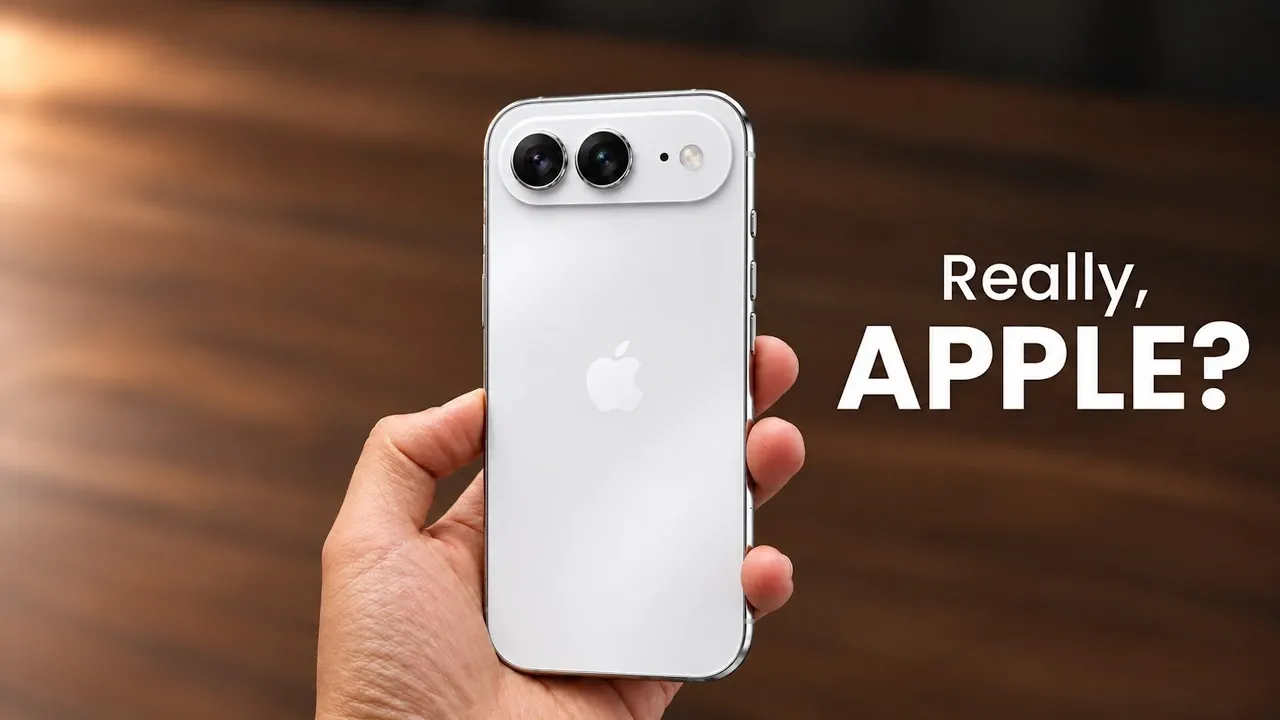
The iPhone Air 2, rumored to debut alongside the standard iPhone 18 in spring 2027, has become a focal point of discussion over how Apple balances ultra-thin hardware against component costs. Early reports suggest Apple is working to fix the biggest pain points of the original iPhone Air—most notably battery capacity and single-camera limitations—while introducing notable trade-offs. From reusing existing Samsung Display OLED panel stock to squeezing a larger cell into an even thinner frame, the Air 2 raises fair questions about whether Apple is prioritizing supply-chain efficiency over a true generational leap. The video below from Techtics breaks down the latest reports.
TL;DR Key Takeaways :
- 5.2mm Thin & ~3,500mAh Battery: Rumored to shave 0.4mm off the original Air’s 5.6mm frame while increasing battery capacity by roughly 11% to around 3,500mAh.
- Second 48MP Ultrawide Camera: Tipped to add a dedicated 48MP ultrawide lens alongside the primary sensor to fix the single-camera compromise of the first generation.
- Reused 6.5-Inch OLED Display: Supply-chain reports indicate Apple may retain the same 6.5-inch (6.55-inch diagonal) 120Hz LTPO OLED panel from Samsung Display using existing inventory rather than moving to a newer panel generation.
- Tough ~$1,099 Positioning: Expected to launch in spring 2027 around $1,099—sitting roughly $200 above the standard iPhone 18 despite carrying a smaller battery and carried-over screen tech.
Key Hardware Upgrades vs. First-Gen iPhone Air
Leaks around the iPhone Air 2 point to a noticeably sleeker profile measuring roughly 5.2mm thick—about 0.4mm slimmer than its predecessor and matching the unfolded thickness of Apple’s iPhone Duo. Despite trimming the chassis, Apple is rumored to pack in a larger 3,500mAh battery (up roughly 11% from the original’s 3,149mAh cell) paired with a 2nm A20-series processor and Apple’s C2 modem, directly targeting the endurance complaints that dogged the first model.
Camera versatility is also slated for a major upgrade, with supply-chain tipsters pointing to a second 48MP ultrawide rear camera alongside the 48MP primary sensor. However, display leaks complicate that upgrade story: rather than adopting a thinner, brighter polarizer-free OLED panel, Apple is reportedly sticking with the same 6.5-inch (6.55-inch diagonal) 120Hz LTPO OLED screen from Samsung Display so it can work through unused first-generation panel inventory.
| Feature / Spec | iPhone Air (1st Gen) | Rumored iPhone Air 2 (Spring 2027) |
|---|---|---|
| Thickness | ~5.6mm | ~5.2mm (rumored) |
| Battery Capacity | 3,149mAh | ~3,500mAh (~11% increase, rumored) |
| Rear Cameras | Single 48MP camera | Dual 48MP (main + ultrawide, rumored) |
| Display | 6.55-inch 120Hz LTPO OLED | 6.55-inch 120Hz LTPO OLED (reused stock rumored) |
| Processor & Modem | A19 Pro / C1X modem | 2nm A20 Pro / Apple C2 modem (rumored) |
Packaging and Display Inventory Trade-Offs
Fitting a larger 3,500mAh battery and a second 48MP camera module into a 5.2mm titanium-and-glass frame is a tight mechanical squeeze—especially without the space savings of a thinner, next-generation OLED stack. Keeping the existing Samsung Display panel helps Apple avoid excess component write-offs and protect hardware margins after the original iPhone Air saw steep production cuts and early retail discounts.
At the same time, carrying over an older display generation limits how much brighter or more power-efficient the screen can get compared with Apple’s fall flagships. Combined with tight thermal headroom inside a 5.2mm body and the absence of a dedicated telephoto lens, the Air 2 asks buyers to accept real hardware compromises in exchange for pocketable thinness.

Market Positioning and the ~$1,099 Pricing Squeeze
The first-generation iPhone Air struggled to find a broad audience between the standard iPhone and Pro tiers, with supply-chain reports pointing to production cuts of up to 80% shortly after launch. Even so, early rumors suggest the iPhone Air 2 could remain priced around $1,099 when it arrives in spring 2027—roughly $200 above the standard iPhone 18.
That pricing creates a tough value equation. While the Air 2 offers a noticeably thinner silhouette and dual 48MP cameras, shoppers paying over $1,000 will compare it directly against Pro models that include telephoto zoom, larger batteries, and newer display hardware—as well as the standard iPhone 18, which delivers comparable everyday performance for hundreds less.
Long-Term Role in Apple’s Hardware Roadmap
Even if the iPhone Air 2 remains a niche seller, its engineering plays a larger role across Apple’s lineup. Supply-chain reports indicate that high-density internal stacking, ultra-thin battery packaging, and slim structural tolerances refined for the Air series are feeding directly into future flagships, including Apple’s rumored 20th-anniversary iPhone 20 hardware slated for late 2027.
For everyday buyers, though, serving as an R&D stepping stone does not automatically justify a $1,099 price tag. Until Apple makes an official announcement, final specifications, OLED sourcing, and pricing for the iPhone Air 2 remain unconfirmed—and Apple will need a clear value pitch if it wants the second-generation Air to outperform its predecessor in spring 2027.
Learn more about iPhone Air 2 with other articles and guides we have written below.
- iPhone Air 2 Leaks: Apple Reportedly Solves the Biggest Battery Flaw
- Why the iPhone Air 2 Might Actually Be Worth Buying This Time
- iPhone Air 2 Leak: Apple Finally Fixes the Camera and Battery
- iPhone Air 2 Leaks Reveal a Second Camera, 2nm Chip and Spring 2027 Release
- Leaked: Apple iPhone Air 2 Gets 3 Big Upgrades For 2027
Source & Image Credit: Techtics
Disclosure: Some of our articles include affiliate links. If you buy something through one of these links, Geeky Gadgets may earn an affiliate commission. Learn about our Disclosure Policy.
