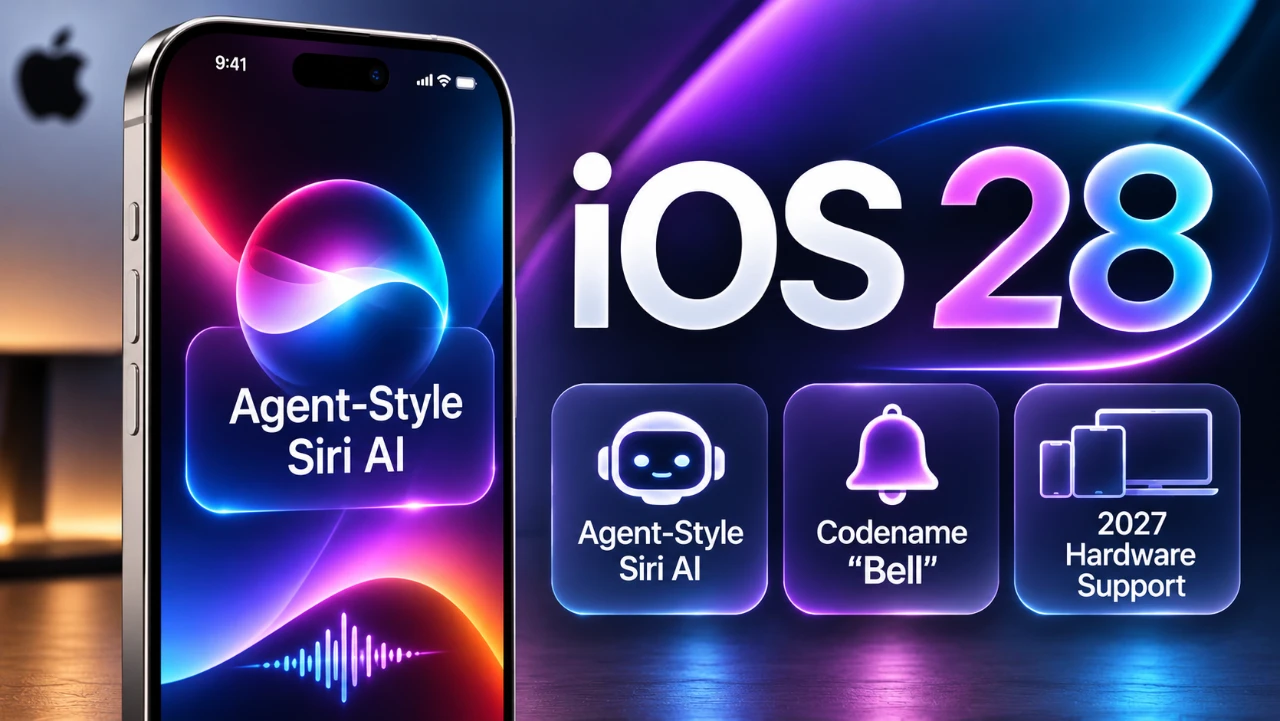
Apple is shaping a major software and AI push under CEO John Ternus, with early development underway on iOS 28 (internally codenamed “Bell”). With a sharper focus on artificial intelligence (AI), faster engineering cycles, and tight coordination with upcoming 2027 hardware, Apple is positioning its next software generation to compete more aggressively against rival AI assistants while maintaining its privacy-first foundation. The video below from ZONEofTECh gives us more details on what Apple has planned for iOS 28 in 2027.
TL;DR Key Takeaways :
- Agentic Siri Ambitions: CEO John Ternus is reportedly pressing software leadership to evolve Siri from a request-based assistant into a more autonomous task agent for 2027.
- Faster iOS 28 (“Bell”) Cadence: Early iOS 28 milestone cycles give engineers more upfront feature-building runway ahead of a rumored WWDC 2027 preview and September 2027 launch.
- 2027 Hardware Alignment: Rumors link iOS 28 with Apple’s 20th-anniversary iPhone plans, expanding ecosystem capabilities, and new product categories.
- Creator & Ecosystem Momentum: Apple continues expanding AI-assisted creative workflows alongside updates across its broader hardware and software lineup.
AI and Siri: A New Era
Apple is pushing to expand Siri beyond single-turn voice and app requests toward a more proactive, agent-style assistant capable of working across multi-step tasks. Under CEO John Ternus and software chief Craig Federighi, reports indicate Apple is looking to accelerate AI execution so Siri can handle goals more autonomously while keeping user permissions transparent.
This next phase builds on the Siri AI foundation introduced with iOS 27 while keeping user privacy and on-device or Private Cloud Compute safeguards central to how personal data is accessed. As competitors push background agents forward, Apple is aiming to pair deeper system-level app access with strict security controls in its 2027 software cycle.
iOS Updates: What’s New and What’s Next
Apple’s annual release cadence continues to pair near-term refinements with longer-horizon platform work. Alongside ongoing updates to the iOS 27 cycle, early engineering on iOS 28—codenamed “Bell”—is structured to give teams more upfront time to prototype features before converging builds ahead of a rumored June 2027 WWDC preview and September 2027 rollout.
- Proactive Siri & AI Tools: Continued expansion of on-screen awareness, app actions, and multi-step task handling.
- Smarter Everyday Apps: Ongoing refinements across core system apps, browsing, and health experiences as Apple Intelligence matures.
- Next-Gen Hardware Readiness: Software groundwork built to support Apple’s 2027 device wave without compromising privacy and security.
Because iOS 28 is still in early development, exact feature sets and device compatibility lists will continue to evolve as Apple approaches WWDC 2027.
Hardware Innovations
Software leaks around iOS 28 sit alongside broader supply-chain and product chatter spanning Apple’s desktop, laptop, and iPhone roadmaps:
- High-End Desktop & Entry Laptop Rumors: Chatter points to ultra-high-spec workstation configurations on the high end alongside lower-cost entry-level Mac options aimed at broadening ecosystem reach.
- 2027 iPhone Roadmap: Rumors connect Apple’s next major software cycle with its 20th-anniversary iPhone plans and ongoing display, button, and battery refinements across upcoming models.
- New Form Factors: Industry reports also link Apple’s 2027–2028 roadmap to evolving ecosystem devices and deeper cross-device continuity.
Together, these rumors reflect an effort to pair distinct hardware tiers with software that feels cohesive from budget laptops to flagship phones.
Empowering Creators: Creator Studio Suite
Apple is also continuing to invest in creative tools across video, audio, and imaging, bringing faster workflows and AI-assisted features to apps such as Final Cut Pro, Logic Pro, and Pixelmator Pro. By embedding smarter editing aids and streamlined templates directly into creative software, Apple aims to reduce routine friction so editors and producers can focus on storytelling.

Other Key Updates
Beyond core operating system milestones, attention across the Apple ecosystem continues to center on how new form factors and displays mature:
- Foldable & Multi-Screen Software Maturity: Expanding app layouts and multitasking support as foldable and larger-canvas experiences settle into iOS.
- Display & Industrial Refinements: Ongoing display engineering across Mac and iPhone lines aimed at sharper contrast, better efficiency, and cleaner aesthetics.
These developments underscore how software updates like iOS 28 are increasingly shaped by the physical devices they run on.
The Road Ahead
With iOS 28 in early motion and leadership pushing for faster AI execution, Apple’s software story heading into 2027 centers on turning smarter intelligence into dependable everyday utility. Balancing faster feature experimentation with Apple’s signature privacy guardrails will be the defining test as “Bell” moves closer to its formal unveiling.
Find more information on AI integration by browsing our extensive range of articles, guides and tutorials.
- Building AI Agents to analyze Excel spreadsheet data and more
- Adding AI to Obsidian : How to Do It The Right Way
- DHH Creates Omarchy to Simplify Arch Linux with AI Tools
- 10 AI Automation Hacks That Will Save You Hours Every Week
- Build Your Own AI Assistant with Voice and Vision Agents Using n8n (No Code)
Source: ZONEofTECH
Disclosure: Some of our articles include affiliate links. If you buy something through one of these links, Geeky Gadgets may earn an affiliate commission. Learn about our Disclosure Policy.
