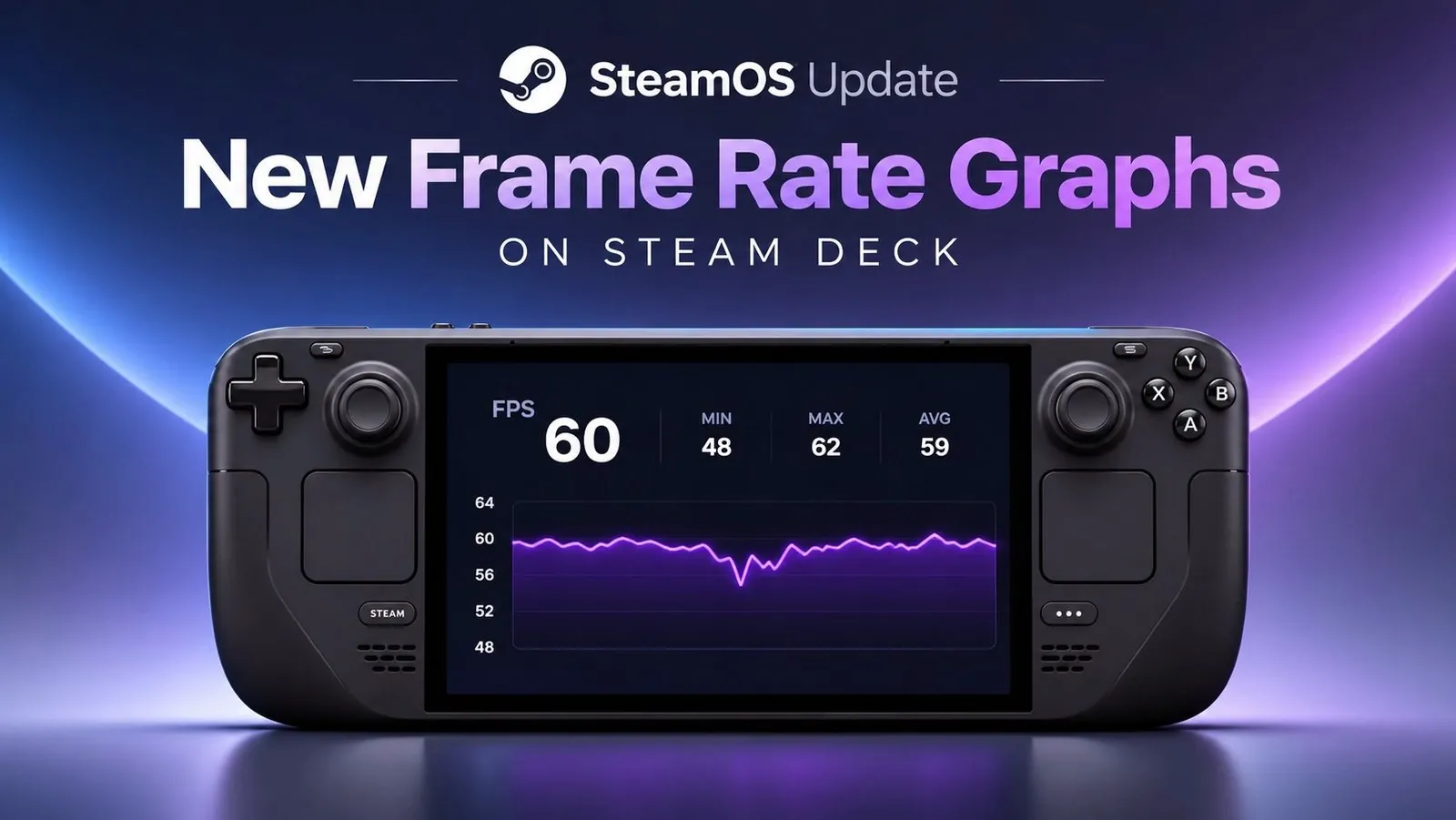
Valve’s latest SteamOS update introduces a frame rate graph for the Steam Deck, offering users a clearer view of game performance. This graph aggregates data from multiple players, showing how often specific frame rates, such as 30, 60, or 90 FPS, are achieved during gameplay. For instance, a game optimized for 60 FPS will display this as the highest bar if most users experience it consistently. However, the graph does not account for individual settings or anomalies like menu spikes, as noted by Deck Ready.
Explore how this feature could shape your gaming decisions, from assessing performance thresholds to understanding optimization limits. You’ll also gain insight into potential future applications, such as performance presets tailored to the Steam Deck’s hardware. Additionally, learn about the revamped achievement system, which separates base game and DLC progress, offering a more accurate completion rate for players. These updates highlight Valve’s ongoing efforts to refine the Steam experience.
Steam Deck’s Frame Rate Graph: A Game-Changer?
TL;DR Key Takeaways :
- Valve has added a frame rate graph to the Steam Deck’s SteamOS, displaying average frame rate data from multiple users to help assess game performance, though it does not account for individual settings or configurations.
- The frame rate graph is described as a “huge step in the right direction” for transparency and is expected to encourage more game purchases by enabling users to make better-informed decisions.
- Valve reportedly collects extensive hardware data through the Steam hardware survey, which could potentially be used to create performance presets for games, though developers would need to opt in for this feature.
- Steam achievements have been overhauled with “achievement sets” to separate base game and DLC achievements, seasonal achievements for limited-time events, and the ability to archive achievements for discontinued multiplayer modes.
- The success of these updates depends on developer participation, as both the frame rate graph’s data accuracy and the achievement overhaul require developers to actively implement and optimize these features.
Valve has introduced a significant update to the SteamOS verified system for the Steam Deck, adding a frame rate graph to improve transparency around game performance. This graph displays average frame rate data based on gameplay from multiple users, with bars indicating the distribution of frame rates. For instance, if 50 players achieve 60 FPS, that bar will be the tallest, while a smaller bar might represent 10 players experiencing 1 FPS.
This update addresses ongoing criticism of the verified system’s reliability. For example, games like The Last of Us Part One remake were verified at launch but performed poorly, delivering just 10 FPS on the lowest settings. The graph helps users assess whether a game can meet their performance expectations, such as running at 30, 40, 60, or even 90 FPS. However, the data has limitations.
It does not account for individual settings or configurations and can be skewed by anomalies like frame rate spikes in menus, as seen in Cyberpunk 2077.
The Steam Deck’s refresh rate typically caps at 90 FPS, and every game uses the frame rate limiter for smoother performance. VSSync is also active to prevent screen tearing. A game optimized for 90 FPS on the Steam Deck can have its settings adjusted to achieve frame rates of 45 or 40 FPS on an LCD or OLED screen, or 30 FPS with higher settings.
To display 60 or 90 FPS as the highest bar on the graph, a game must be well-optimized for the device.
Despite these caveats, the frame rate graph is described as a “huge step in the right direction” and is expected to encourage more game purchases. By offering sufficient data to evaluate performance, users can make better-informed decisions about whether a game will deliver the experience they want on the Steam Deck.
Could Valve Use Data for Game Optimization?
The frame rate graph introduces possibilities for broader applications, such as using collected data to create performance presets for games. A system similar to NVIDIA’s optimization app could allow Valve to adjust game settings based on hardware. For the Steam Deck, this might involve presets targeting 30, 40, or 60 FPS, tailored to the device’s capabilities.
Valve reportedly collects extensive data through the Steam hardware survey, which could help predict game performance on specific CPU and GPU combinations. However, developers would need to opt in for Valve to use this data to create presets for their games. A noted challenge is that developers often neglect to optimize presets for the Steam Deck, potentially limiting the effectiveness of such a system.
While this feature is currently exclusive to the Steam Deck, there is speculation it could eventually extend to the Steam Machine and other hardware configurations, using data from the Steam hardware survey. The frame rate graph is described as “a lock for the Steam Machine eventually.”

Find more information on Steam Deck and SteamOS by browsing our extensive range of articles, guides and tutorials.
- FidelityFX Super Resolution 4 Debuts on Steam Deck Soon
- Valve Confirms Steam Deck 2 with Unreal Engine 5 Support
- Leaked Steam Deck 2 Focuses on Massive Performance Upgrades: AMD Zen 6 CPU
- New Steam Deck 2 Chip Could Outperform the AMD Z3 Extreme
- Steam Deck 2 Could Feature AMD Gainsboro Chip with Zen 6 and RDNA 5
Steam Achievements Overhauled
Valve has also revamped the Steam achievement system, introducing “achievement sets” to separate base game achievements from DLC achievements. This change prevents DLC achievements from affecting the completion percentage of base game achievements, a welcome update for completionists. For instance, if a player has 100% of a base game’s achievements, adding DLC will no longer lower their completion rate.
The update also includes seasonal achievements tied to limited-time events, such as holiday-themed collaborations. These achievements disappear after the event ends and can be hidden from a user’s profile if they did not participate. Another major addition is the ability to archive achievements. Developers can now archive multiplayer achievements when servers shut down, so they no longer count against players who did not earn them. Archived achievements remain visible for those who unlocked them, preserving their accomplishment.
Jimmy Champagne finds these updates to SteamOS achievements reinvigorating, making him more interested in pursuing achievements again. He notes that Sony has long offered a similar system, with the PS4 and PS5 trophy systems providing comparable functionality. For example, multiplayer in Assassin’s Creed 4: Black Flag required 50 hours to prestige, a significant time investment for achievement hunters.
Challenges in Adoption
Despite the promise of these updates, their adoption depends on developer participation. The achievement overhaul is opt-in, requiring developers to update their games to implement achievement sets. Achievements are often treated as an afterthought by developers, as seen with Ubisoft’s slow rollout of achievements for games reintroduced on Steam. Initially, Ubisoft’s games lacked achievements after returning to the platform, but the company has gradually added them over the past few years, often alongside significant discounts.
It is unclear how straightforward Valve has made it for developers to implement achievement sets. However, there is speculation that it might involve a simple back-end switch. While these challenges persist, there is hope that new games will adopt the system, as it has renewed interest in achievement tracking.
Implications for Players
These updates to SteamOS mark progress in improving the user experience on the Steam Deck and the broader Steam platform. The frame rate graph helps players make informed decisions about game performance, while the achievement overhaul addresses long-standing frustrations for completionists. However, the success of these features depends on developer participation and how effectively Valve addresses the limitations of raw data collection.
Designed to function like a console, the Steam Deck continues to evolve, with the Steam Deck 2 expected within the next couple of years. For now, the frame rate graph and achievement updates represent meaningful progress. Players focused on performance data and achievement tracking will benefit the most, while those seeking widespread adoption of these features may need to wait for developers to catch up.
Media Credit: Deck Ready
Disclosure: Some of our articles include affiliate links. If you buy something through one of these links, Geeky Gadgets may earn an affiliate commission. Learn about our Disclosure Policy.
