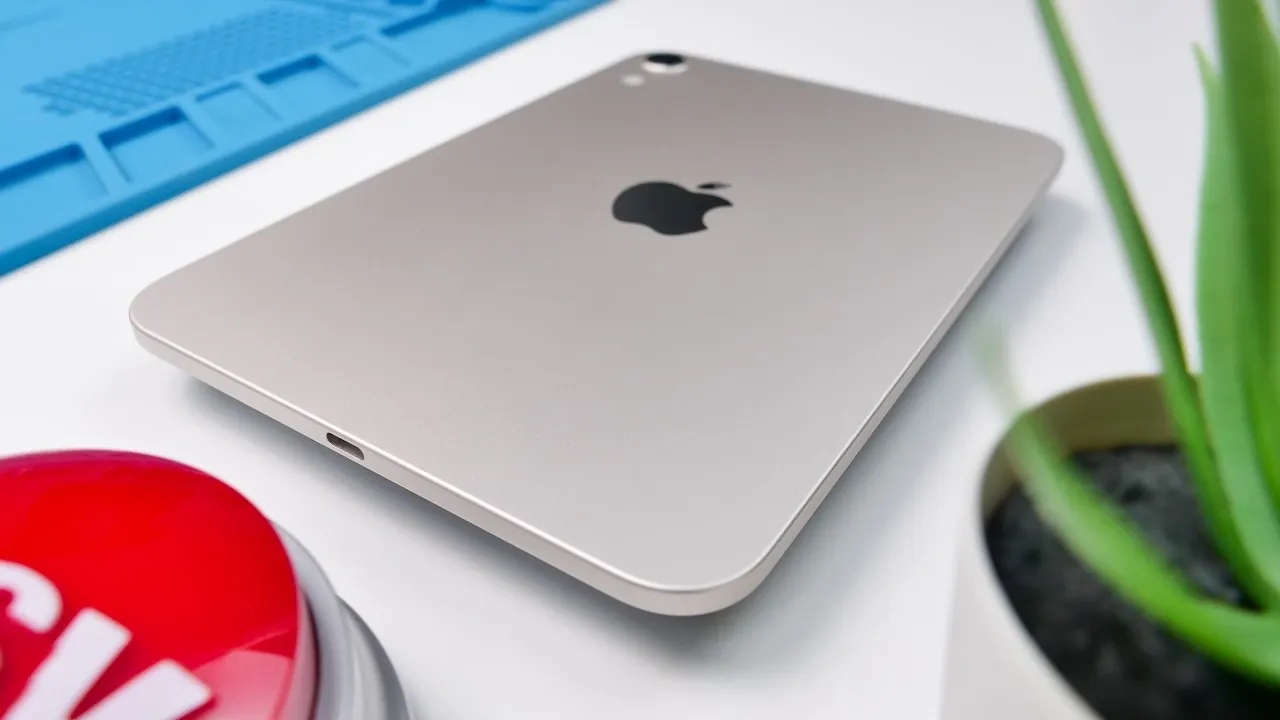
Apple’s latest iPad Mini introduces a range of advancements, including the highly anticipated OLED display, a refined, slimmer design and a starting price of $699. A detailed teardown of the device reveals a combination of innovative features and practical upgrades, alongside design decisions that could significantly impact your overall experience. From its modular internal components to the acoustic display speakers, this device reflects a shift in both functionality and repairability, offering a glimpse into Apple’s evolving approach to compact tablets.
TL;DR Key Takeaways :
- First OLED Mini Panel: Brings deep blacks, infinite contrast, and vibrant color accuracy to Apple’s 8.3-inch compact tablet lineup.
- Acoustic Display Audio: Eliminates traditional speaker grilles by routing sound directly through screen vibrations, though high volumes introduce slight tactile panel feedback.
- Improved DIY Repairability: Features pull-tab battery adhesives, minimal glue use, standard Phillips fasteners, and modular internal sub-assemblies.
- Storage Speed Discrepancies: Teardown benchmarks highlight read/write throughput variations between entry-level 128GB variants and higher-capacity storage tiers.
Design Updates: A Slimmer, More Advanced iPad Mini
The new iPad Mini stands out as Apple’s thinnest iteration yet, boasting a sleek profile that complements its first-ever OLED display in the Mini lineup. This display delivers vibrant colors, deep contrast, and improved energy efficiency, enhancing your viewing experience whether you’re streaming videos or editing photos. A notable design change is the absence of visible speaker grilles. Instead, Apple has implemented acoustic display technology, where sound is projected directly through the display itself. This innovation not only contributes to the device’s minimalist aesthetic but also eliminates the need for traditional speaker openings.
Another significant improvement is the device’s IP67 rating for water and dust resistance, a first for the iPad Mini series. This added durability ensures the tablet can withstand accidental spills or exposure to dust, making it a more reliable companion for everyday use. These design updates collectively position the iPad Mini as a modern, portable device that balances aesthetics with functionality.
Hardware Insights: Modular Design for Easier Repairs
A closer look inside the iPad Mini reveals Apple’s focus on modularity, a design choice that enhances repairability compared to previous models. Key components, including the speakers, volume buttons and cameras, are designed to be easily replaceable. This modular approach simplifies repairs, reducing the time and effort required to service the device.

The 4,900 mAh battery is another highlight, featuring pull tabs that allow for straightforward removal during repairs. This is a welcome change for those who prefer DIY repairs or rely on independent repair services. Additionally, the inclusion of a USB-C charging port supporting USB 3 speeds allows for faster data transfer and compatibility with external displays up to 60 Hz, catering to users who require greater connectivity options.
However, the internal design raises some questions. The smaller motherboard leaves unused internal space, sparking speculation about whether Apple has plans for future hardware expansions or additional features. While this design choice may seem inefficient, it could indicate potential upgrades in subsequent iterations of the iPad Mini.
Acoustic Display Speakers: Innovation with Trade-Offs
One of the most intriguing features of the new iPad Mini is its acoustic display speaker system, which uses the display itself as a sound channel. This eliminates the need for traditional speaker grilles, contributing to the device’s sleek and seamless design. The technology works by vibrating the display to produce sound, a concept that aligns with Apple’s commitment to integrating functionality into minimalist designs.
However, this innovation comes with certain trade-offs. At higher volumes, slight vibrations can be felt through the glass display surface, which may be distracting during prolonged use. Additionally, the sound profile shifts slightly when the display assembly is unseated during servicing. While the acoustic display speakers represent a major step forward in exterior design, these limitations highlight the physical challenges of merging audio drivers with touch display layers.
Repairability: A Win for DIY Enthusiasts
Apple has made significant strides in improving the repairability of the iPad Mini, addressing a growing demand for devices that are easier to service. The use of minimal adhesive throughout the internal chassis simplifies disassembly, making it far more accessible for DIY enthusiasts and independent repair shops. Furthermore, Apple has largely replaced proprietary fasteners with standard Phillips screws, further lowering the barrier to entry for repairs.
The modular sub-structure allows individual components—such as the battery cells, side buttons, and camera modules—to be swapped out independently. This approach not only extends the device’s operational lifespan but also aligns with broader electronics sustainability goals.
Performance Variations: Storage Models Matter
Performance variations across storage models are another factor to consider when choosing an iPad Mini configuration. Teardown benchmarks indicate that the 128 GB baseline version may exhibit slower data throughput compared to the 512 GB model, particularly when handling heavy data transfers, intensive video rendering, or high-end mobile gaming. This discrepancy stems from differing NAND flash chip densities across storage tiers.
If you plan to use the iPad Mini for heavy professional workflows or massive local file storage, opting for a higher-capacity model will secure faster read and write performance. For everyday web browsing, media streaming, and casual reading, however, these differences remain largely imperceptible.
Additional Observations: Subtle Features with Potential
Beyond its marquee upgrades, the iPad Mini includes several understated design choices that hint at future hardware expansions. For instance, Touch ID remains securely integrated into the top power button, providing fast, biometric authentication without cluttering the bezel.
Another curious detail uncovered during component analysis is a specialized aluminum mounting plate located on the rear chassis. While its direct function remains unconfirmed, industry analysts speculate it may serve as an anchor point for future magnetic accessories, localized wireless power distribution, or enhanced internal shielding.
Balancing Innovation and Practicality
The OLED iPad Mini represents a thoughtful blend of cutting-edge display technology and user-focused engineering. Its thinner build, modular interior components, and acoustic display speakers showcase Apple’s willingness to experiment, while improved repairability answers long-standing criticisms regarding device longevity. Despite minor trade-offs like acoustic panel feedback and storage speed variations, the compact tablet successfully establishes a new benchmark for premium portable devices.
Deep dive into the latest in OLED iPad Mini by exploring our other resources and articles.
- Apple’s OLED iPad Mini Is Finally Happening: Here Is Everything We Know
- Apple iPad Mini 8 Just Fully Leaked: Here is Everything Changing
- Leaked OLED iPad Mini Details Surface, but Does It Finally Deserve the ‘Pro’ Name?
- iPad Mini 8: Major Changes Coming to Apple’s Next Compact Tablet
- iPad Mini 8 Leaks: Massive Upgrades, But Will You Pay $799 for It?
Source & Image Credit: Phone Repair Guru
Disclosure: Some of our articles include affiliate links. If you buy something through one of these links, Geeky Gadgets may earn an affiliate commission. Learn about our Disclosure Policy.
