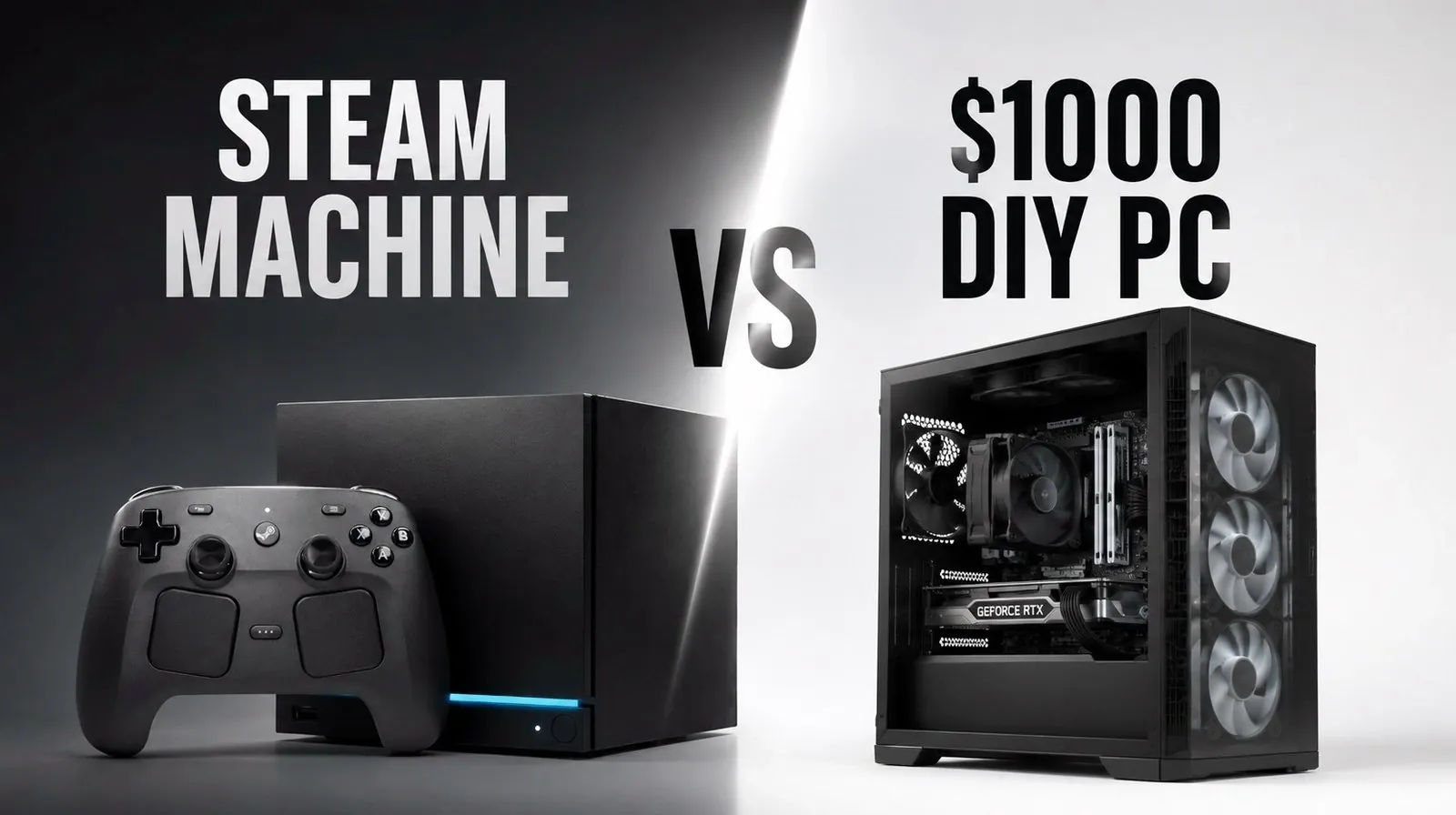
Blunty dives into the real-world gaming performance of a Steam Machine compared to a $1000 DIY PC, highlighting how their distinct hardware configurations impact gameplay. The Steam Machine features an AMD Zen 4 CPU, a semi-custom AMD GPU and 16GB of DDR5 RAM, prioritizing efficiency and compact design with lower power consumption. In contrast, the DIY PC, equipped with an AMD Zen 3 CPU, Nvidia RTX 5050 GPU and DDR4 RAM, focuses on raw performance but demands more energy and generates more heat. This breakdown explores how these differences translate into gaming experiences across titles like Cyberpunk 2077 and Star Wars Jedi: Fallen Order.
Explore how the Steam Machine’s optimized hardware integration delivers smoother frame pacing and reduced input latency, particularly at 1080p and 1440p resolutions. Compare this to the DIY PC’s flexibility, which allows for higher performance potential through manual adjustments and customization. You’ll also gain insight into how features like AMD’s FSR4 technology enhance visual quality on the Steam Machine, while the DIY PC offers enthusiasts the freedom to push their hardware to its limits. This comparison provides a clear look at which system aligns better with your gaming needs and preferences.
Steam Machine vs DIY Rig
TL;DR Key Takeaways :
- The Steam Machine is optimized for efficiency with modern hardware like an AMD Zen 4 CPU, DDR5 RAM and a compact, power-conscious design, while the DIY PC focuses on raw performance with an AMD Zen 3 CPU, Nvidia RTX 5050 GPU and higher power consumption.
- In gaming performance, the Steam Machine excels in hardware integration and frame pacing, delivering smoother gameplay in demanding titles, whereas the DIY PC may require manual optimization to achieve similar results.
- The Steam Machine offers a user-friendly, plug-and-play experience with features like AMD’s FSR4 technology for enhanced visuals, making it ideal for casual gamers and living room setups.
- The DIY PC provides unmatched customization and upgrade potential, appealing to enthusiasts who enjoy building and fine-tuning their systems for maximum performance.
- The choice between the two depends on user priorities: the Steam Machine is best for convenience and efficiency, while the DIY PC suits those seeking control, customization and long-term upgradeability.
Hardware Breakdown
The hardware configurations of the Steam Machine and the DIY PC significantly influence their performance, efficiency and overall appeal.
- Steam Machine: Powered by an AMD Zen 4 CPU, a semi-custom AMD GPU, 16GB of DDR5 RAM and 8GB of GDDR6 VRAM, the Steam Machine is designed for efficiency. Its CPU operates at a TDP of 30W, while the GPU runs at 110W, making it a power-conscious option for compact setups. The use of DDR5 RAM enhances memory bandwidth, contributing to smoother multitasking and faster load times.
- DIY PC: Built with an AMD Zen 3 CPU, an Nvidia RTX 5050 GPU, 16GB of DDR4 RAM and 8GB of GDDR6 VRAM, the DIY PC prioritizes raw performance. However, its CPU and GPU demand more power, with TDPs of 65W and 130W, respectively. While this configuration delivers higher peak performance, it comes at the cost of increased energy consumption and heat output.
The Steam Machine’s modern architecture and DDR5 RAM provide a clear advantage in efficiency and future-proofing, while the DIY PC’s components offer greater potential for performance enthusiasts willing to manage higher power requirements.
Performance Comparison
When it comes to real-world gaming performance, both systems demonstrate their strengths, but the differences in hardware integration and optimization become apparent.
- Steam Machine: Using its advanced CPU architecture and faster RAM, the Steam Machine excels in minimizing bottlenecks. It delivers smooth gameplay in demanding titles such as Cyberpunk 2077, Monster Hunter: World, and Spider-Man: Miles Morales at 1080p and 1440p resolutions with optimized settings. Its frame pacing is particularly impressive, making sure consistent performance even during graphically intense moments.
- DIY PC: While capable of running the same games, the DIY PC occasionally struggles to match the Steam Machine’s efficiency in certain scenarios. For example, in Star Wars Jedi: Fallen Order, the Steam Machine’s optimized hardware integration results in smoother frame pacing and reduced input latency, offering a more responsive gaming experience. The DIY PC, on the other hand, may require manual adjustments to achieve similar results.
The Steam Machine’s seamless design and hardware synergy give it an edge in delivering polished performance, while the DIY PC’s raw power can shine with proper configuration and optimization.

Discover other guides from our vast content that could be of interest on Steam Machine.
- Why Valve’s New Steam Machine Could Outperform the PS5 in Your Living Room
- Valve Confirms Summer 2026 Release Window for Steam Machine and Steam Frame
- What Valve’s Leaked June 2026 Steam Machine Details Mean for Your Living Room
- Leaked Geekbench Scores Reveal the True Power of the $750 Steam Machine
- Latest Leaked Clues Pointing to Valve’s Steam Machine Launch Date
- How to Build a Capable DIY Steam Machine for Under $170
- New SteamOS Update Reveals Details About Valve’s Upcoming Steam Machine
- Regulatory Filings Reveal June 2026 Launch for Valve’s Steam Machine
- What Valve’s New FCC Filings Reveal About the 2026 Steam Machine
- Steam Frame vs Quest 3 : Why Valve Completely Outperforms Meta
Gaming Experience
The gaming experience encompasses more than just performance metrics, extending to usability, features and overall enjoyment.
- Steam Machine: Its compact form factor and living room-friendly design make it an excellent choice for casual gamers or those seeking convenience. Equipped with AMD’s FSR4 technology, the Steam Machine enhances visual quality, often outperforming Nvidia’s DLSS3 in specific scenarios. This ensures that games not only run smoothly but also look visually stunning, making it a strong contender for immersive gaming in a streamlined package.
- DIY PC: Offers unparalleled flexibility for gamers who enjoy customizing their hardware and software. While it requires more effort to optimize settings, the DIY PC can achieve higher performance levels in certain games, especially with overclocking or component upgrades. This makes it a preferred option for enthusiasts who value control and the ability to push their system to its limits.
The Steam Machine prioritizes simplicity and ease of use, making it ideal for plug-and-play gaming. In contrast, the DIY PC appeals to those who enjoy the process of building and fine-tuning their gaming setup.
Value and Use Cases
The value of each system depends largely on your gaming habits, technical expertise and priorities.
- Steam Machine: Offers excellent value for its price by delivering consistent performance without requiring technical expertise. Its compact design and efficient architecture make it a perfect fit for living room setups, where space and simplicity are key considerations. For gamers who prioritize convenience and a polished out-of-the-box experience, the Steam Machine is a compelling option.
- DIY PC: Appeals to users who enjoy the process of building and maintaining their systems. While it can deliver better performance in specific scenarios, it demands more time and effort to optimize. This makes it less suitable for those seeking a hassle-free experience but highly rewarding for enthusiasts who value customization and long-term upgrade potential.
Your choice will ultimately depend on whether you prioritize convenience and efficiency or customization and raw power. Both systems offer unique advantages tailored to different types of gamers.
Media Credit: Blunty
Disclosure: Some of our articles include affiliate links. If you buy something through one of these links, Geeky Gadgets may earn an affiliate commission. Learn about our Disclosure Policy.
