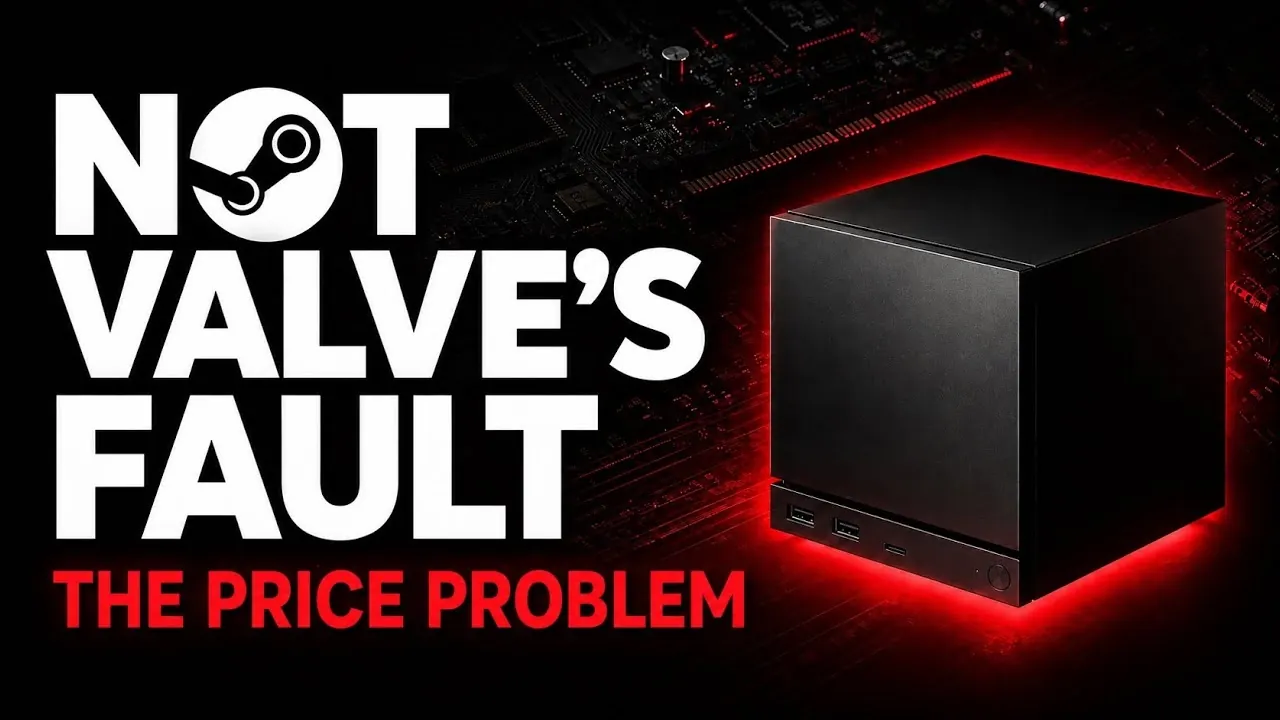
Valve’s Steam Machine has sparked significant discussion around its pricing, with many pointing to its $600–$800 range as a potential barrier for gamers. However, as PlayFever explains, this issue stems less from Valve’s decisions and more from the broader dynamics of the gaming hardware market. Unlike traditional consoles that rely on loss-leader pricing, the Steam Machine reflects the true cost of its advanced components, such as DDR5 memory and high-performance GPUs. This transparent pricing strategy highlights Valve’s commitment to sustainability but also places the device in a challenging position against both high-end gaming PCs and more affordable consoles.
Explore how this pricing strategy impacts the Steam Machine’s competitive standing and what it means for gamers evaluating their next hardware purchase. You’ll gain insight into the trade-offs between affordability and long-term value, the role of open ecosystems in shaping gaming experiences and how the Steam Machine’s hybrid design fits into the evolving landscape of gaming hardware. These considerations offer a clearer picture of whether the device’s price tag aligns with its promise of performance and flexibility.
Why the Price Tag Feels High
TL;DR Key Takeaways :
- The Steam Machine combines the versatility of a PC with the simplicity of a console, offering a hybrid gaming experience with an open ecosystem and seamless integration with existing gaming libraries.
- Its pricing, ranging between $600 and $800, reflects the inclusion of advanced components like DDR5 memory and high-performance GPUs, aligning with industry-wide trends but diverging from traditional console loss-leader pricing strategies.
- Valve’s transparent approach emphasizes long-term sustainability, avoiding proprietary systems and fostering an open gaming ecosystem that prioritizes user flexibility and accessibility.
- The Steam Machine faces competition from high-end gaming PCs and consoles, with its hybrid design aiming to unify gaming ecosystems while balancing performance and adaptability.
- If successful, the Steam Machine could reshape the gaming industry by offering a unique value proposition focused on openness, choice and long-term benefits, challenging traditional console manufacturers’ dominance.
If you’re a gamer, you’re likely aware of the increasing costs associated with gaming hardware. The Steam Machine’s price reflects these industry-wide trends, driven by the inclusion of advanced components such as DDR5 memory and high-performance GPUs. These innovative technologies significantly raise production costs. Unlike traditional consoles from companies like Sony or Microsoft, which often sell hardware at a loss and recoup profits through software sales and subscription services, Valve has opted for a different pricing strategy. Its approach is transparent, making sure the price reflects the device’s actual production value rather than relying on hidden subsidies.
This strategy, while sustainable, places the Steam Machine in direct competition with high-end gaming PCs and consoles. For comparison, gaming PCs with similar performance capabilities often exceed $1,000, making the Steam Machine’s price relatively competitive. However, for gamers accustomed to the lower price points of traditional consoles, the cost may still feel prohibitive. Valve’s decision to avoid loss-leader pricing underscores its commitment to long-term sustainability but also highlights the challenges of entering a market dominated by established players with entrenched pricing models.
Understanding the Broader Market
The gaming hardware market has undergone rapid evolution in recent years. Devices like the Steam Deck, Xbox Series X, and Lenovo Legion Go 2 have set new benchmarks for performance, portability and innovation. However, these advancements come at a cost. The integration of state-of-the-art components, combined with ongoing supply chain disruptions, has driven up prices across the industry.
For you, this creates a complex landscape where balancing affordability and performance becomes increasingly difficult. The Steam Machine seeks to address this challenge by offering a hybrid PC-console experience. It is not merely another console or gaming PC; instead, it aims to unify gaming ecosystems while retaining the flexibility and customization options of a PC. This unique positioning makes its pricing a critical factor in determining its success. The device’s ability to deliver both performance and adaptability could appeal to gamers seeking a versatile solution, but it also raises questions about whether the price aligns with the value it offers.

Expand your understanding of Steam Machine with additional resources from our extensive library of articles.
- Valve Steam Machine Update: RAM Supply Stabilizes as Unified Deck Software Expands
- Why Valve is Releasing 4 Different Steam Machine Variants
- Valve’s 2026 Steam Machine is Almost Here
- Inside Valve’s Unusual Rollout Plan for the Steam Machine
- Why the Upcoming Valve Steam Machine Might Be Sold at a Loss
- Valve Steam Machine Plans : Focus on Performance, Not Price
- How Valve Finally Solved the Steam Machine’s Biggest Performance Bottleneck
- Valve Explains Why We Got a New Steam Controller but No Steam Machine
- Valve’s $800 Steam Machine Could Now Cost Over $1,200
- $60 Steam Controller 2 is Packing Features PC Gamers Have Been Waiting For
Valve’s Transparent Strategy
Valve has approached the Steam Machine’s development with a level of transparency that distinguishes it from competitors. The company has openly addressed delays, pricing concerns and market challenges, emphasizing its commitment to delivering a high-quality product rather than rushing to market. This philosophy aligns with Valve’s broader mission of fostering an open gaming ecosystem, free from restrictive systems or mandatory subscriptions.
For you, this means a device designed to prioritize your gaming experience over corporate profit margins. The Steam Machine integrates seamlessly with your existing gaming library, offering a level of flexibility and accessibility rarely seen in the console market. By avoiding proprietary systems, Valve ensures that you retain control over your gaming experience, allowing you to access your games without being locked into a single platform or ecosystem.
Could the Steam Machine Reshape the Market?
If successful, the Steam Machine has the potential to reshape the gaming industry. Its hybrid design combines the accessibility of a console with the power and versatility of a gaming PC, appealing to a wide range of gamers. Building on the success of previous innovations like the Steam Deck and Steam Controller, Valve is using its reputation for pioneering solutions to carve out a unique niche in the market.
For you, this could represent a shift in gaming hardware, one that emphasizes value, choice and openness. The Steam Machine’s ability to unify gaming libraries and ecosystems could make it a compelling alternative to traditional consoles. However, its success ultimately depends on whether gamers perceive its price as a fair reflection of its value rather than a barrier to entry. If Valve can effectively communicate the long-term benefits of its open ecosystem and hybrid design, the Steam Machine could attract a loyal following and challenge the dominance of established console manufacturers.
Balancing Value and Affordability
As a potential buyer, the Steam Machine’s price is less about affordability in the traditional sense and more about the value it delivers. With its open ecosystem, non-restrictive systems and seamless integration of gaming libraries, the device offers a unique proposition. However, it also challenges you to carefully evaluate your priorities when it comes to gaming hardware. Are you looking for flexibility and performance, or is an affordable upfront cost your primary concern?
Valve’s pricing strategy encourages you to think beyond the initial price tag and consider the long-term benefits of investing in an open, hybrid gaming system. By avoiding restrictive barriers and proprietary limitations, the Steam Machine aims to provide a gaming experience that adapts to your needs rather than dictating them. This approach could appeal to gamers who value freedom of choice and the ability to customize their gaming experience.
A New Era of Gaming Hardware?
The Steam Machine enters a competitive and rapidly evolving market, where rising hardware costs and pricing concerns dominate the conversation. Despite these challenges, its potential to redefine gaming hardware remains strong. For you, as a gamer, the device represents an opportunity to embrace a new kind of gaming hardware, one that prioritizes openness, flexibility and long-term value. While its price may initially seem steep, Valve’s transparent approach and focus on quality could position the Steam Machine as a significant player in the gaming hardware space. Whether it succeeds in reshaping the industry will depend on how well it resonates with gamers seeking a balance between performance, adaptability and cost.
Media Credit: PlayFever
Disclosure: Some of our articles include affiliate links. If you buy something through one of these links, Geeky Gadgets may earn an affiliate commission. Learn about our Disclosure Policy.
