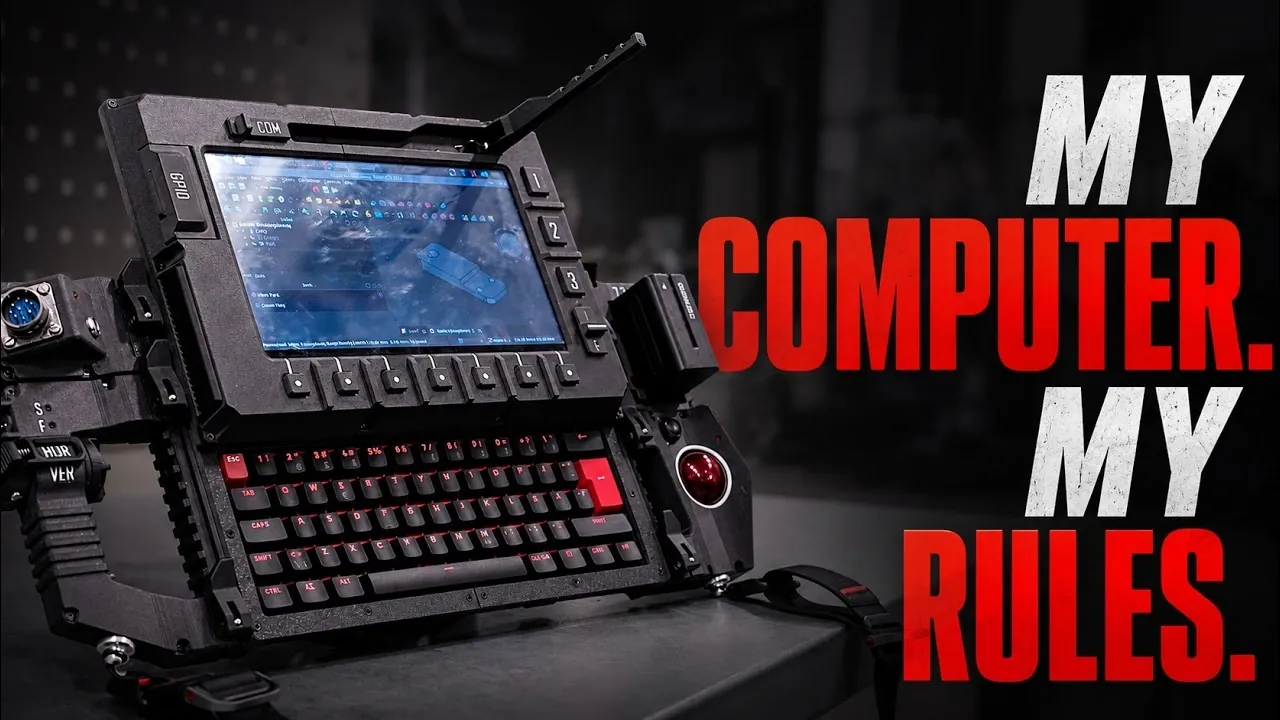
A modular cyberdeck is a customizable computing device that balances functionality, repairability and personal design. Jankbu’s awesome DIY project showcases a Raspberry Pi running Linux, paired with a sliding screen for portability and a mechanical keyboard for enhanced usability. The design incorporates swappable modules and a NATO rail system, allowing users to expand or modify the setup as needed. This approach prioritizes long-term adaptability, offering a sustainable alternative to disposable electronics.
Explore the prototyping workflow, including the transition from cardboard mock-ups to 3D-printed components and learn how challenges like screen alignment and cable routing were resolved. Gain insight into material considerations, such as the use of carbon fiber-reinforced polycarbonate for added durability and examine practical applications of the cyberdeck in mobile and field-based work scenarios.
Jankbu’s Cyberdeck 2026
TL;DR Key Takeaways :
- The modular cyberdeck is built around a Raspberry Pi and Linux OS, emphasizing adaptability, repairability and user customization.
- Key features include a sliding screen, mechanical keyboard, trackball, swappable batteries and a NATO rail system for expansion modules.
- Inspired by cyberpunk philosophy, the design prioritizes repairability, upgradeability and user ownership over sleek, disposable technology.
- The development process involved iterative prototyping with cardboard and 3D printing, addressing challenges like screen binding and structural stability.
- The cyberdeck is open source, with CAD files available on GitHub, encouraging collaboration and further innovation in sustainable, personalized computing solutions.
The modular design of the cyberdeck is its defining characteristic, prioritizing functionality and flexibility. Each component has been carefully selected to enhance usability and performance:
- Raspberry Pi Core: The Raspberry Pi serves as the computing brain, chosen for its versatility, compact size and seamless compatibility with Linux-based systems.
- Sliding Screen: A compact, retractable screen ensures portability while providing easy access when needed, making it ideal for on-the-go tasks.
- Mechanical Keyboard: A full-depth keyboard offers tactile feedback, making sure comfortable and efficient typing for extended periods.
- Trackball: Integrated for precise cursor control, the trackball is particularly useful for detailed tasks such as graphic design or coding.
- Swappable Batteries: NPF camera batteries power the device, providing extended usability and the convenience of quick replacements without reliance on fixed power sources.
- NATO Rail System: This feature enables the attachment of expansion modules, allowing users to customize the device for specific tasks or projects.
These features collectively make the cyberdeck a versatile and practical tool, adaptable to a wide range of professional and creative applications.
Design Philosophy: Inspired by Cyberpunk
The cyberdeck draws its inspiration from the cyberpunk genre, where technology is often portrayed as a means of empowerment and independence. This philosophy is reflected in the project’s emphasis on repairability, upgradeability and user trust. Unlike mass-produced laptops that often prioritize sleek designs over functionality, the cyberdeck is built to evolve alongside its user. It offers a sense of ownership and adaptability that modern, disposable devices frequently lack. By embracing this ethos, the cyberdeck becomes more than a tool, it becomes a personal statement about the future of technology.

Browse through more resources below from our in-depth content covering more areas on cyberdecks.
- Razer Edge Cyberdeck Runs Android 12 and Handles GameCube, PS2, and Cloud Gaming
- Awesome Backpack Cyberdeck powered by overclocked Raspberry Pi
- How to Build an Awesome LattePanda Mu Cyberdeck
- LattePanda Iota Review : Tiny Windows and Linux PC Built for 4K Thrills
- ClockworkPi uConsole Linux handheld PC from $139
- Inside the Cyberdeck-Inspired Smartphone Designed Entirely Around a Physical Keyboard
- Cyberdeck Windows PC made from Framework modular components
- Awesome Raspberry Pi Cyberdeck : Modular Design and Dual Screens
- Google Pixel 10 vs Pixel 10A: Which One Should You Buy?
- Gemini 3.1 Pro Brings Deepthink-Style Reasoning with Three Thinking Levels
From Concept to Reality: The Prototyping Process
The journey from concept to a fully functional cyberdeck involved a meticulous and iterative design process as kindly shown by Jankbu in the video above. Each stage of development was crucial in refining the final product:
- Cardboard Mock-ups: Initial prototypes were crafted from cardboard to test the layout and ergonomics. This step helped determine the optimal placement of components and identify potential design challenges early on.
- 3D Printing: The project advanced to 3D-printed prototypes, allowing for detailed testing and rapid iteration. This phase was instrumental in fine-tuning the design and making sure compatibility between components.
- Problem-Solving: Challenges such as sliding screen binding and cable management were addressed through successive improvements. Solutions included the use of linear bearings for smooth screen operation and cable chains for organized wiring.
This iterative approach highlights the importance of prototyping and problem-solving in achieving a functional and reliable design.
Overcoming Challenges
Building a modular cyberdeck presented several technical challenges for Jankbu, each requiring innovative solutions to ensure the device’s durability and performance:
- Sliding Screen Mechanism: Precision engineering was necessary to prevent binding during screen operation. The use of linear bearings and cable chains ensured smooth movement and efficient cable management.
- Structural Stability: To enhance durability, heavy steel rods were incorporated for stability, while aluminum components were machined for high-stress areas such as the handle.
These engineering solutions underscore the importance of material selection and design precision in creating a robust and dependable device.
The Final Build
The completed cyberdeck features a durable chassis constructed from polycarbonate reinforced with carbon fiber strands, making sure both heat resistance and structural integrity. Key components include:
- Battery and Trackball Modules: Modular components that can be easily swapped or upgraded, enhancing the device’s adaptability.
- Expansion Potential: Additional modules are under development, allowing the cyberdeck to support a variety of tasks, from 3D modeling to accessing technical blueprints.
This modularity ensures that the cyberdeck remains versatile and future-proof, capable of evolving to meet the changing needs of its user.
Practical Applications
The cyberdeck is designed to cater to Jankbu’s exact needs but also provides a blueprint for professionals, hobbyists and tech enthusiasts who require a portable and adaptable computing solution. Its practical applications include:
- Accessing blueprints, schematics and technical documents in workshops or on-site locations.
- Performing creative tasks such as 3D modeling, graphic design, or video editing.
- Managing workflows, browsing the web and handling administrative tasks in mobile environments.
By seamlessly integrating into diverse workflows, the cyberdeck proves its value as a reliable and efficient tool for a wide range of scenarios.
Room for Improvement
While the cyberdeck is fully functional, there are opportunities for further refinement and enhancement:
- Additional Modules: Planned upgrades include features such as a handle scroll wheel and external connections to expand the device’s functionality.
- Voltage Stability: Addressing occasional low voltage warnings is a priority to ensure consistent performance, particularly during demanding tasks.
These ongoing improvements reflect the project’s commitment to continuous development and real-world usability, making sure that the cyberdeck remains a innovative tool.
Open Source for Collaboration
To encourage innovation and collaboration, the cyberdeck’s CAD files are freely available on GitHub. This open source approach invites makers and developers to customize, replicate and improve the design. By sharing these resources, the project fosters a community of like-minded individuals passionate about modular, user-centric technology. This collaborative spirit not only enhances the cyberdeck but also contributes to a broader movement toward sustainable and personalized computing solutions.
Media Credit: Jankbu
Disclosure: Some of our articles include affiliate links. If you buy something through one of these links, Geeky Gadgets may earn an affiliate commission. Learn about our Disclosure Policy.
