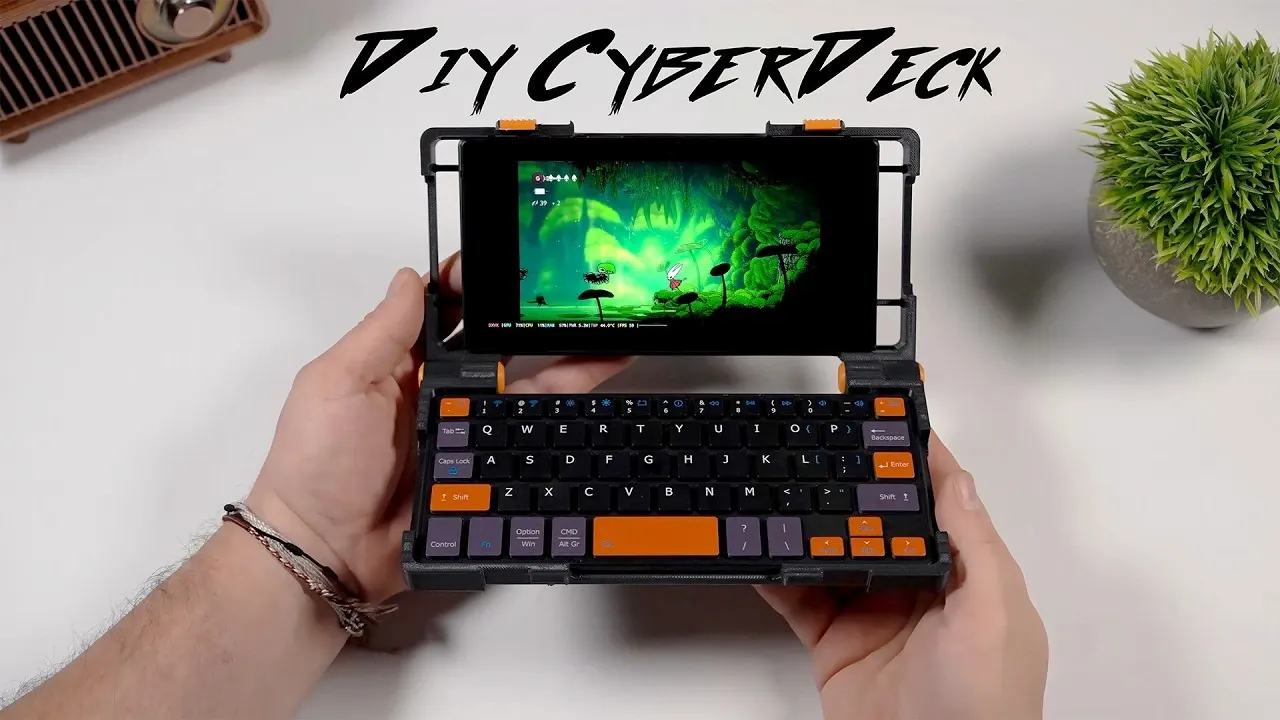
In this awesome project an old Razer Edge, Android-based handheld gaming tablet, has been reimagined as a compact Cyberdeck with expanded functionality. Below ETA Prime, takes you through the project utilizing the Razer Edge’s Snapdragon G3X Gen 1 chipset and incorporating custom features like a 3D printed clamshell case, a Bluetooth keyboard, and a magnetic mounting system. These modifications enable a portable setup suitable for gaming, productivity tasks, and retro computing, all while preserving the device’s lightweight design.
This explainer covers how components such as the magnetic mounting system and 3D-printed case improve usability and portability. You’ll also learn about the Cyberdeck’s performance with game emulators for platforms like the GameCube and its compatibility with cloud gaming services like GeForce Now. Additionally, the guide addresses practical constraints, including the device’s Android 12 operating system limit and its handling of resource-intensive applications.
What is the Razer Edge?
TL;DR Key Takeaways :
- The Razer Edge, originally an Android-based handheld gaming tablet, has been repurposed into a compact and modular Cyberdeck, showcasing the potential of repurposed technology.
- Key components of the build include a 3D printed clamshell case, a Bluetooth keyboard for productivity, and a magnetic mounting system for easy peripheral attachment.
- The Cyberdeck supports cloud gaming, game emulation (e.g., GameCube, PlayStation 2), basic productivity tasks, and retro computing, offering versatility for various use cases.
- Limitations include being capped at Android 12, struggles with high-end gaming or demanding applications, and a focus on mid-tier performance rather than innovative capabilities.
- The project emphasizes adaptability, allowing further customization and modifications, making it a creative platform for hobbyists and tech enthusiasts to explore innovative possibilities.
The Razer Edge serves as the foundation for this transformation. Released as a handheld gaming system, it features a detachable controller and is powered by the Snapdragon G3X Gen 1 chipset. With 6GB or 8GB of RAM, the device is capable of handling a variety of tasks beyond gaming. While its primary purpose was mobile gaming, its Android-based ecosystem and robust hardware make it an excellent candidate for repurposing into a portable Cyberdeck. Its compact size, solid performance, and versatile design provide an ideal starting point for customization, making it a practical choice for those looking to breathe new life into older technology.
Key Components of the Build
Transforming the Razer Edge into a fully functional Cyberdeck required the integration of several key components. These additions enhance the device’s usability, portability, and modularity, creating a cohesive and efficient setup.
- Bluetooth Keyboard: A compact wireless keyboard was added to enable typing and productivity tasks. Its Bluetooth connectivity ensures seamless integration with the Razer Edge, allowing for efficient input without the need for physical connections.
- 3D-Printed Case: A custom clamshell case was designed and 3D-printed to securely house both the Razer Edge and the keyboard. This case not only provides protection but also creates a unified and portable form factor that enhances the device’s usability.
- Magnetic Mounting System: Inspired by MagSafe technology, a magnetic mounting system was incorporated to allow for easy attachment and detachment of peripherals. This system ensures flexibility while maintaining the integrity of the device, making it simple to switch between different configurations.
DIY Pocket Cyberdeck from Razer Edge Tablet
Explore further guides and articles from our vast library that you may find relevant to your interests in cyberdeck.
- Awesome Framedeck transparent modular cyberdeck
- Raspberry Pi Cyberdeck project
- Raspberry Pi Cyberdeck inspired by 1980s MSX computer
- NX Yamato Cyberdeck project By BlastoSupreme
- Rugged Raspberry Pi cyberdeck project
- Raspberry Pi cyberdeck features 6 screens and 3 Pi
- Raspberry Pi Reviiser Cyberdeck portable mini PC
- SiSpeed Lichee Console 4A portable RISC-V cyberdeck $395
- Raspberry Pi 400 mini PC converted into a hacker cyberdeck
- Cyberdeck Raspberry Pi laptop complete with Geiger counter
Customization and Modifications
The project required precise adjustments to ensure compatibility and functionality. The 3D-printed case was tailored to the exact dimensions of the Razer Edge, making sure a snug and secure fit. Additional mounting options, such as clamps or adhesive solutions, were explored to enhance the device’s versatility. These modifications demonstrate the adaptability of the design, allowing users to further customize the setup based on their specific needs. Whether you prefer a minimalist design or a more feature-rich configuration, the project encourages experimentation and personalization.
What Can the Cyberdeck Do?
The repurposed Razer Edge Cyberdeck is a versatile tool with a wide range of applications. Its capabilities extend beyond gaming, making it a practical choice for various tasks.
- Cloud Gaming: The device supports platforms like Steam Link, GeForce Now, and Moonlight, allowing you to stream games remotely with minimal latency. This makes it an excellent option for gamers who want to enjoy their favorite titles on the go.
- Game Emulation: With its Snapdragon G3X Gen 1 chipset, the Cyberdeck can emulate systems such as the GameCube and PlayStation 2. It also runs older PC games, offering a nostalgic gaming experience for enthusiasts.
- Productivity: The device handles basic computing tasks, including document creation, photo editing, and light video editing. Its portability and modular design make it a convenient tool for productivity on the move.
- Retro Computing: A Windows 98 simulator adds a fun, retro computing element to the device’s capabilities, appealing to hobbyists and tech enthusiasts alike.
Limitations to Consider
While the Cyberdeck offers impressive versatility, it does come with certain limitations. The Razer Edge is capped at Android 12, which restricts access to newer features and updates. Additionally, while it performs well for mid-tier gaming and emulation, it struggles with more demanding applications, such as running Linux or high-end games like Cyberpunk 2077. These constraints highlight the importance of setting realistic expectations when repurposing older hardware. Understanding these limitations ensures that the device is used effectively within its capabilities.
Performance Highlights
The Snapdragon G3X Gen 1 chipset delivers reliable performance for most tasks, particularly in gaming and emulation. While it doesn’t compete with high-end gaming PCs or consoles, it provides a satisfactory experience for mid-tier games and older titles. The device’s portability and modular design further enhance its appeal, making it a practical solution for on-the-go computing. Its ability to handle a variety of tasks with ease underscores the potential of repurposed technology.
Adaptability and Future Potential
One of the most exciting aspects of this project is its adaptability. The design can be modified to accommodate other devices, such as Android phones or iPhones, broadening its potential applications. This flexibility encourages experimentation and creativity, allowing you to tailor the setup to your specific needs and preferences. Whether you’re a hobbyist exploring new possibilities or a tech enthusiast seeking a unique project, the Cyberdeck offers a platform for innovation. Its modular nature ensures that it can evolve alongside your requirements, making it a valuable tool for years to come.
Media Credit: ETA PRIME
Disclosure: Some of our articles include affiliate links. If you buy something through one of these links, Geeky Gadgets may earn an affiliate commission. Learn about our Disclosure Policy.
