
Raspberry Pi enthusiast and maker Dave Estes has created the latest version of his Reviiser Cyberdeck portable mini PC powered by the Raspberry Pi 4. The Reviiser V.1 is a 3D printed deck built around a Raspberry Pi mini PC and is equipped with a powerful 30,000 mAh battery. Check out the video below to learn more about the compact computer and its features.

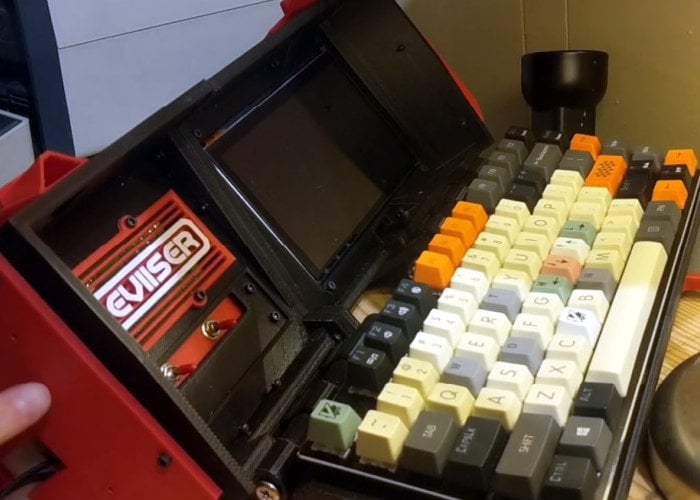
Features of the awesome Raspberry Pi Reviiser Cyberdeck project include :
– A Raspberry Pi 4 with custom software
– Fully 3D printed case
– 7″ touchscreen display
– Mechanical keyboard
– 30,000 mAh battery
– Built-in touchpad
– Foldable portability
– Mechanical on/off switches
Design and Build
The Reviiser Cyberdeck is a testament to the versatility and power of the Raspberry Pi 4. The 3D printed case is not only aesthetically pleasing but also functional, providing a robust housing for the components. The 7″ touchscreen display is a significant upgrade, offering a responsive and clear interface for users. The mechanical keyboard adds a tactile feel, making typing more efficient and enjoyable. The built-in touchpad further enhances the user experience, allowing for easy navigation without the need for an external mouse.
The 30,000 mAh battery is a standout feature, providing ample power for extended use. This makes the Reviiser Cyberdeck an excellent choice for on-the-go computing, whether you’re working remotely, traveling, or simply need a portable solution. The foldable design adds to its portability, making it easy to carry and store.
Software and Functionality
The custom software running on the Raspberry Pi 4 is tailored to maximize the hardware’s capabilities. This ensures smooth performance and a user-friendly experience. The mechanical on/off switches provide a satisfying and reliable way to power the device, adding to the overall build quality.
For those interested in building their own Reviiser Cyberdeck, Dave Estes will soon be making available a complete parts list and .stl files. This will allow enthusiasts to replicate the project and even customize it to their liking. The availability of these resources underscores the DIY spirit of the Raspberry Pi community, encouraging innovation and creativity.
If you’re interested in learning which Raspberry Pi operating system is the best choice for your next project, jump over to our previous article. Different operating systems can offer various features and optimizations, so choosing the right one can significantly impact your project’s success.
Source: Liliputing : Hackaday : Dave Estes
Disclosure: Some of our articles include affiliate links. If you buy something through one of these links, Geeky Gadgets may earn an affiliate commission. Learn about our Disclosure Policy.
