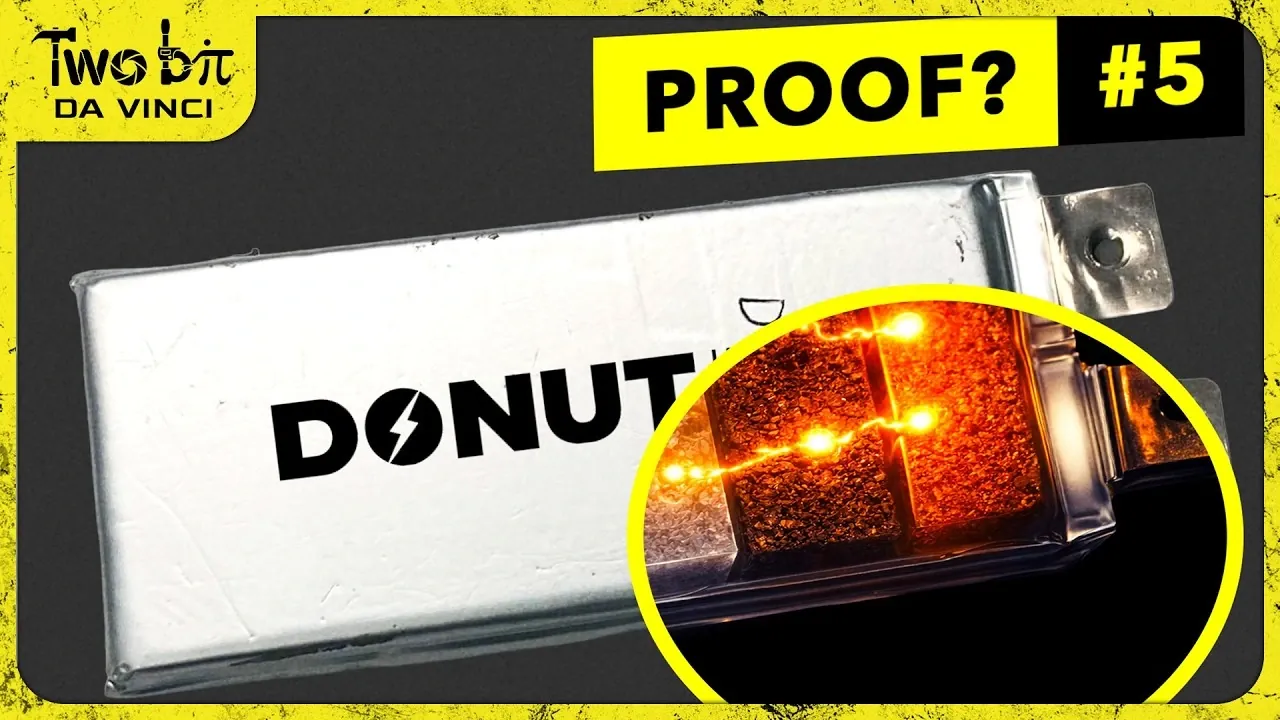
Two Bit da Vinci examines Donut Lab’s fifth test of its salt-based battery, focusing on its performance under extreme heat. The test revealed that the battery endured 50 cycles at 100°C with a discharge rate of 5C (130 amps). While the battery retained full capacity for the first six cycles, it experienced a 55% capacity loss by the 27th cycle. These results highlight its potential for high-temperature use, though its energy density and long-term stability remain areas of concern.
Gain insight into the battery’s air-stable chemistry and how its design aligns with solid-state principles. Understand the structural changes observed during testing, the role of electrode expansion in performance loss and the significance of its columbic efficiency trends. This explainer breaks down the findings and evaluates the challenges that must be addressed for broader applications.
Key Findings at a Glance
TL;DR Key Takeaways :
- The battery demonstrated exceptional thermal resilience, retaining full capacity during initial high-temperature cycles but showing capacity loss over extended use.
- Its air-stable chemistry allowed functionality even after exposure to ambient air, a rare and valuable trait for solid-state batteries.
- Structural changes, including 17% pouch swelling, were attributed to solid-state behavior, highlighting mechanical challenges in maintaining integrity under stress.
- Degradation mechanisms such as contact loss, electrode expansion and lack of external pressure were identified as key factors affecting performance.
- Critical data gaps, including unknown chemistry, missing energy density calculations and untested cold temperature performance, limit a full evaluation of its potential.
The test highlighted several notable aspects of the battery’s performance:
- Exceptional thermal resilience during high-temperature cycling.
- Air-stable chemistry that maintained functionality despite exposure to ambient air.
- Structural changes consistent with solid-state battery behavior.
- Graceful degradation without thermal events or safety concerns.
However, the absence of weight measurements and detailed chemical analysis limits a complete evaluation of its energy density and long-term viability.
Performance Under High Temperatures
The battery underwent 50 cycles at a high discharge rate of 5C (130 amps) after being exposed to 100°C. During the initial six cycles, it retained full capacity, demonstrating remarkable thermal resilience. By the 27th cycle, however, its capacity had decreased by 55%, eventually stabilizing for the remaining cycles. This performance indicates that while the battery can endure high temperatures, its capacity retention diminishes over extended use. Such data suggests potential for applications in high-temperature environments, though long-term reliability remains a concern.

Advance your skills in Solid-State Battery by reading more of our detailed content.
- Donut Lab Solid-State Battery Test Results from VTT Explained
- Solid-State Battery Energy Density: Donut Labs Scrutiny
- Donut Lab Solid State Battery or Pseudo-Capacitor, Experts Weigh In
- Solid-State Battery or Capacitor? Donut Lab’s 100,000-cycle Claim
- Solid-State Battery CES 2026 : Donut Verge TS Pro Plans & Doubts
- Donut Lab Solid-State Battery Test: VTT Finds 110% Capacity at 80C
- Donut Lab Solid State Battery Claims, 400 Wh/kg and Fast Charge
- Donut Lab Battery Claims vs Test Data: No Energy Density or 100,000-Cycle Proof Yet
- Donut Lab Verge Motorcycle Battery Claims : Solid-State or Hype?
- Real-World Donut Lab Solid-State Battery Charging Performance
Air Exposure: A Rare Strength
One of the most striking outcomes was the battery’s ability to function after air exposure. Despite a compromised pouch allowing air to enter, the battery initially delivered near-full capacity. This demonstrates an air-stable chemistry, a rare and valuable trait in battery technology, particularly for sodium-ion or solid-state designs. Such resilience could make this battery suitable for applications where exposure to ambient conditions is unavoidable, such as outdoor energy storage systems or portable devices.
Structural Changes and Swelling
During testing, the battery pouch expanded by 17%. This swelling was attributed to solid-state structural changes rather than gas generation, as no exothermic reactions or gas-related swelling were observed. This behavior aligns with the characteristics of solid-state batteries, which use solid electrolytes instead of liquid or gel-based ones. However, the structural changes also highlight mechanical challenges inherent in solid-state designs, such as maintaining integrity under repeated cycling and thermal stress.
Degradation Mechanisms
The test identified several degradation mechanisms contributing to capacity loss:
- Contact loss between solid interfaces.
- Electrode expansion and mechanical fatigue.
- Absence of external pressure to maintain solid interface contact.
These findings underscore the engineering challenges associated with solid-state batteries. Addressing these issues will be critical to improving their long-term performance and reliability.
Columbic Efficiency: A Mixed Performance
The battery’s columbic efficiency, a measure of how effectively it retains charge, remained near-perfect during the initial cycles. However, under high-rate cycling, it dropped to 88% before recovering to 98%. This fluctuation suggests that while the battery is generally efficient, its performance can vary under demanding conditions. Further investigation is needed to ensure consistent reliability, particularly for applications requiring sustained high performance.
Evidence of Solid-State Design
Several observations support the hypothesis that the battery employs a solid-state design:
- Air stability, even after exposure.
- Absence of thermal events during testing.
- Degradation patterns consistent with solid-state batteries.
The suspected use of sodium-ion and titanium oxide-based materials further reinforces this hypothesis. However, without a definitive chemical analysis, its classification as a solid-state battery remains speculative. Confirming its composition will be essential to understanding its full potential.
Unanswered Questions
Despite the promising results, several critical gaps in data remain:
- The exact chemistry of the battery is unknown.
- Energy density could not be calculated due to missing weight data.
- Cold temperature performance and safety under physical stress were not tested.
These unanswered questions limit the ability to fully assess the battery’s potential for real-world applications. Addressing these gaps will be crucial for determining its viability in commercial and industrial settings.
Safety and Durability
The battery demonstrated exceptional safety and durability throughout the test. Even under extreme conditions, it exhibited “graceful degradation” without fires, thermal events, or other safety concerns. This is a significant advantage for applications requiring high safety standards, such as electric vehicles, aerospace systems, or grid storage solutions. The absence of thermal events further reinforces its potential as a reliable energy storage option.
Recommendations for Future Testing
To build on these findings and address existing knowledge gaps, further testing is essential. Recommended evaluations include:
- Cold temperature performance to assess resilience in diverse climates.
- Detailed chemical analysis to confirm material composition.
- Weight measurements to calculate energy density.
- Nail penetration tests to evaluate safety under physical stress.
These additional tests will provide a more comprehensive understanding of the battery’s capabilities and limitations, paving the way for its potential commercialization.
Path Forward
Donut Lab’s fifth battery test has revealed a promising design with features such as air stability, high-temperature resilience and exceptional safety. However, critical data gaps, particularly regarding its chemistry and energy density, prevent a definitive assessment of its full potential. While the results highlight the battery’s promise, further testing is necessary to confirm its suitability for real-world applications and to unlock its potential as a next-generation energy storage solution.
Media Credit: Two Bit da Vinci
Disclosure: Some of our articles include affiliate links. If you buy something through one of these links, Geeky Gadgets may earn an affiliate commission. Learn about our Disclosure Policy.
