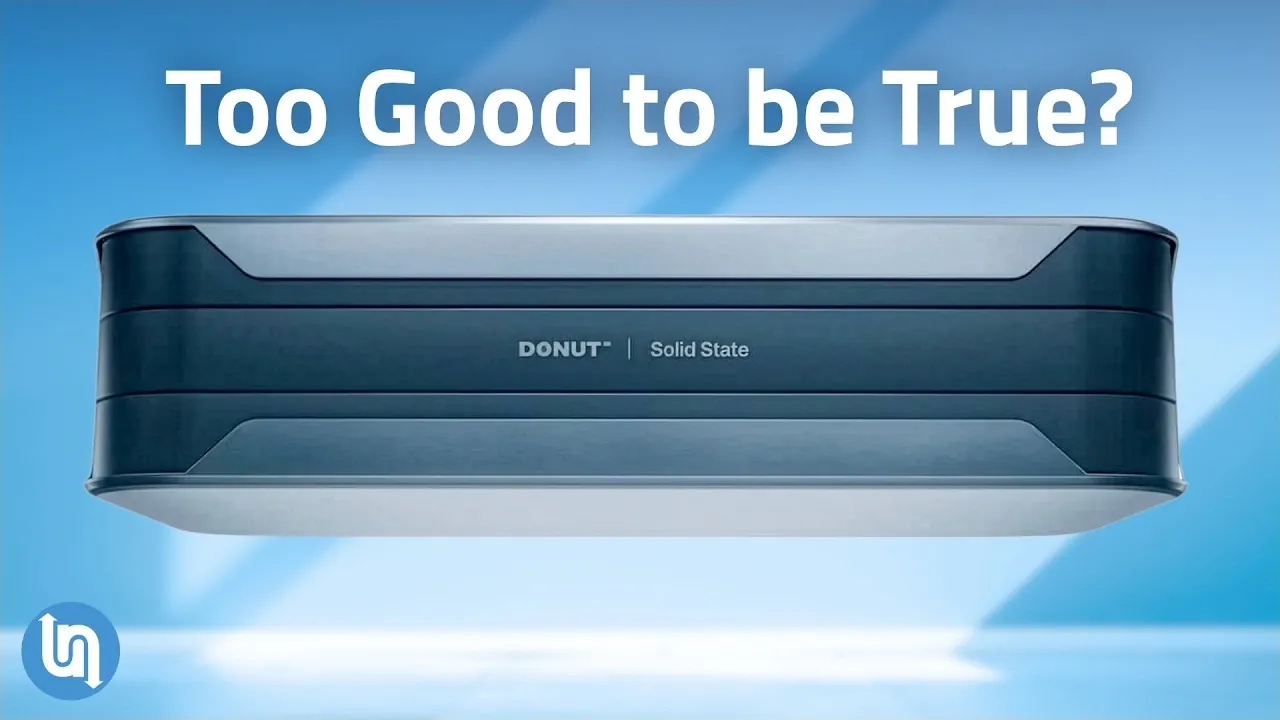
What if the most talked-about innovation at CES 2026 wasn’t a sleek gadget or a new AI but a battery? In this breakdown, Undecided with Matt Ferrell walks through how Donut Labs’ solid-state battery has managed to ignite both excitement and skepticism across the tech world. With promises of a 400 Wh/kg energy density, a lifespan of 100,000 cycles, and a blazing 5-minute charge time, it sounds like a dream come true for energy storage. But here’s the catch: critics are raising eyebrows at the lack of third-party validation and technical transparency. Is this the future of sustainable energy, or just another overhyped prototype? The stakes couldn’t be higher for a technology that claims to transform everything from electric vehicles to renewable energy grids.
This overview dives into the polarizing debate surrounding Donut Labs’ bold claims while also exploring other innovative energy innovations unveiled at CES. From wireless power systems that could eliminate disposable batteries to modular storage solutions designed for everyday consumers, the event showcased a spectrum of ideas aimed at reshaping how we think about energy. But the real question remains: can these advancements deliver on their promises, or are we looking at a future filled with unfulfilled potential? The answers may surprise you, and they’re bound to spark some serious conversations about the balance between ambition and accountability in tech.
Highlights from CES 2026
TL;DR Key Takeaways :
- Donut Labs unveiled a solid-state battery with new claims, including 400 Wh/kg energy density, 5-minute charging, and a 100,000-cycle lifespan, but faced skepticism due to limited transparency and lack of third-party validation.
- Wireless power solutions, such as Lockin’s Aura Charge and ambient energy harvesting systems, showcased potential to reduce battery dependency, enhance convenience, and align with sustainability goals.
- Smart home innovations focused on energy efficiency and comfort, featuring noise-canceling windows, smart blinds, and app-free solutions like a bathroom fan with a built-in humidistat.
- Autonomous vehicles, including Zoox’s driverless cab, highlighted advancements in transportation, aiming to optimize traffic flow, reduce accidents, and redefine urban mobility.
- Sustainable battery developments, such as Flint’s compostable paper batteries and Amprius’ high-energy-density batteries, emphasized balancing performance with environmental impact for diverse applications.
Solid-State Battery Innovation: Innovative Potential or Unproven Hype?
Donut Labs introduced a solid-state battery with ambitious claims that, if substantiated, could significantly advance energy storage technology. The battery’s specifications include:
- Energy density of 400 Wh/kg, offering greater storage capacity than current lithium-ion batteries.
- 5-minute charging time, addressing one of the most persistent challenges in battery technology.
- Lifespan of 100,000 cycles, promising durability far beyond existing solutions.
- Operational range from -30°C to 100°C, making sure reliability in diverse environments.
These features position the battery as a potential breakthrough, with the Verge TS Pro motorcycle slated to be its first commercial application. Mass production is reportedly on the horizon, further fueling anticipation.
However, industry experts have raised concerns. Donut Labs has yet to provide detailed technical data or third-party validation to support its claims. This lack of transparency has led to questions about whether the technology is ready for practical use or remains a theoretical concept. The debate underscores the challenges of balancing innovation with accountability in the tech industry.
Wireless Power Solutions: Reducing Dependency on Batteries
Wireless power technology emerged as a promising alternative to traditional batteries, offering solutions that could reduce waste and enhance convenience. Lockin’s Aura Charge system, for example, uses infrared beams to power smart door locks, eliminating the need for frequent battery replacements. Other companies, such as Powercast and LV Energy, showcased systems that harvest ambient energy from light, radio frequencies, and vibrations to power small devices. These technologies aim to make everyday applications more energy-efficient, aligning with broader sustainability goals.
The potential of wireless power extends beyond convenience. By reducing reliance on disposable batteries, these innovations contribute to environmental conservation while paving the way for battery-free devices in the future.
Controversial Solid-State-Battery at CES 2026

Explore further guides and articles from our vast library that you may find relevant to your interests in solid-state battery innovations.
- Galaxy Watch 9 Ultra: Smartwatch with Solid-State Batteries
- Donut Lab Solid State Battery Claims, 400 Wh/kg and Fast Charge
- New Donut Lab Solid-State Battery Made with Abundant, Non-Rare
- Are Solid-State Batteries the Key to Safer, Longer-Lasting EVs
- Solid-State Batteries for EVs, 2027 Commercialization Timeline
- Solid-State Electric Motorcycle from Verge Adds 300 Km in 10
- Solid-State Battery Commercialization : How Close Are We?
- Samsung Galaxy Ring 2: The Next Big Thing in Wearables
- Record Broken: Mercedes EQS Solid-State Battery Covers 1205 km
- Samsung Galaxy Ring 2: Features, Release Date, and More
Smart Home Innovations: Enhancing Efficiency and Comfort
Smart home technologies at CES 2026 demonstrated how innovation can improve both comfort and energy efficiency. Notable advancements included:
- D-Noise’s noise-canceling windows, which use sound wave inversion to create quieter living spaces, particularly beneficial for urban environments.
- Lutron’s smart wood blinds, designed to optimize light and heat based on window orientation, reducing energy consumption.
- A bathroom fan with a built-in humidistat, showcasing how simple, app-free solutions can enhance home efficiency without adding complexity.
These technologies highlight the growing trend of integrating sustainability into everyday living, offering practical solutions that blend seamlessly into modern homes.
Energy Efficiency for EVs: Simplifying Home Charging
Electric vehicle (EV) owners were introduced to a practical innovation aimed at simplifying home charging. A new energy-sharing circuit switch allows two high-powered appliances, such as an EV charger and a dryer, to share a single circuit. By prioritizing usage, the switch prevents electrical overloads and eliminates the need for costly panel upgrades.
This development addresses a common barrier to EV adoption, home charging infrastructure. By offering a cost-effective and user-friendly solution, it has the potential to make EV ownership more accessible to a broader audience.
Autonomous Vehicles: Shaping the Future of Transportation
Autonomous vehicles continued to capture attention at CES 2026, with Zoox unveiling its fully driverless cab. Designed with passenger comfort in mind, the vehicle features a reimagined interior and promises a seamless, uneventful ride experience. While still in its early stages, the concept signals a future where personal transportation could become entirely automated, reducing the need for human intervention.
The implications of autonomous vehicles extend beyond convenience. By optimizing traffic flow and reducing accidents caused by human error, these technologies could transform urban mobility and redefine the transportation landscape.
Sustainable Battery Developments: Bridging Performance and Ecology
Sustainability remained a central theme in battery technology, with several innovations addressing the balance between performance and environmental impact. Key developments included:
- Flint’s compostable paper batteries, designed for single-use applications like IoT devices and AA replacements. These batteries decompose naturally, offering an eco-friendly alternative to traditional options.
- Amprius’ high-energy-density battery, boasting 520 Wh/kg and targeting applications in drones and aviation. While promising, the high cost remains a barrier to widespread adoption.
These advancements reflect the industry’s commitment to creating sustainable energy solutions without compromising on performance.
Modular Energy Storage: Adaptable and Consumer-Friendly
Pila Energy introduced a modular battery system that prioritizes portability and ease of use. Designed to integrate seamlessly with solar panels, the system provides backup power without requiring professional installation. This innovation caters to consumers seeking energy independence and resilience during power outages, offering a practical solution for modern energy needs.
The modular design also allows users to scale their energy storage capacity based on individual requirements, making it a versatile option for a wide range of applications.
Cooling and Comfort Technology: Smarter Climate Control
Advancements in cooling technology showcased how small innovations can significantly enhance comfort and energy efficiency. Dreo’s Turbo Cool Misting fan, for instance, delivers effective airflow without adding moisture to the air, addressing a common drawback of traditional misting systems. Additionally, motion-sensing fans that adjust airflow based on user movement demonstrated how technology can adapt to individual needs, optimizing energy use in homes and offices.
AI and Robotics: Transforming Home Assistance
AI-driven robotics took center stage, with several companies unveiling prototypes designed to assist with daily tasks. These household robots, while still in development, highlight the potential for AI to transform home automation and personal assistance. From cleaning and cooking to providing companionship, these technologies offer a glimpse into a future where AI seamlessly integrates into everyday life.
Key Insights from CES 2026
CES 2026 highlighted the tech industry’s focus on practical, real-world applications that prioritize energy efficiency, sustainability, and convenience. While some innovations, such as Donut Labs’ solid-state battery, sparked debate over their feasibility, others, like wireless power solutions and modular energy storage, are poised for market adoption. The event underscored a future where technology not only enhances daily life but also addresses pressing global challenges, offering solutions that are both innovative and impactful.
Media Credit: Undecided with Matt Ferrell
Disclosure: Some of our articles include affiliate links. If you buy something through one of these links, Geeky Gadgets may earn an affiliate commission. Learn about our Disclosure Policy.
