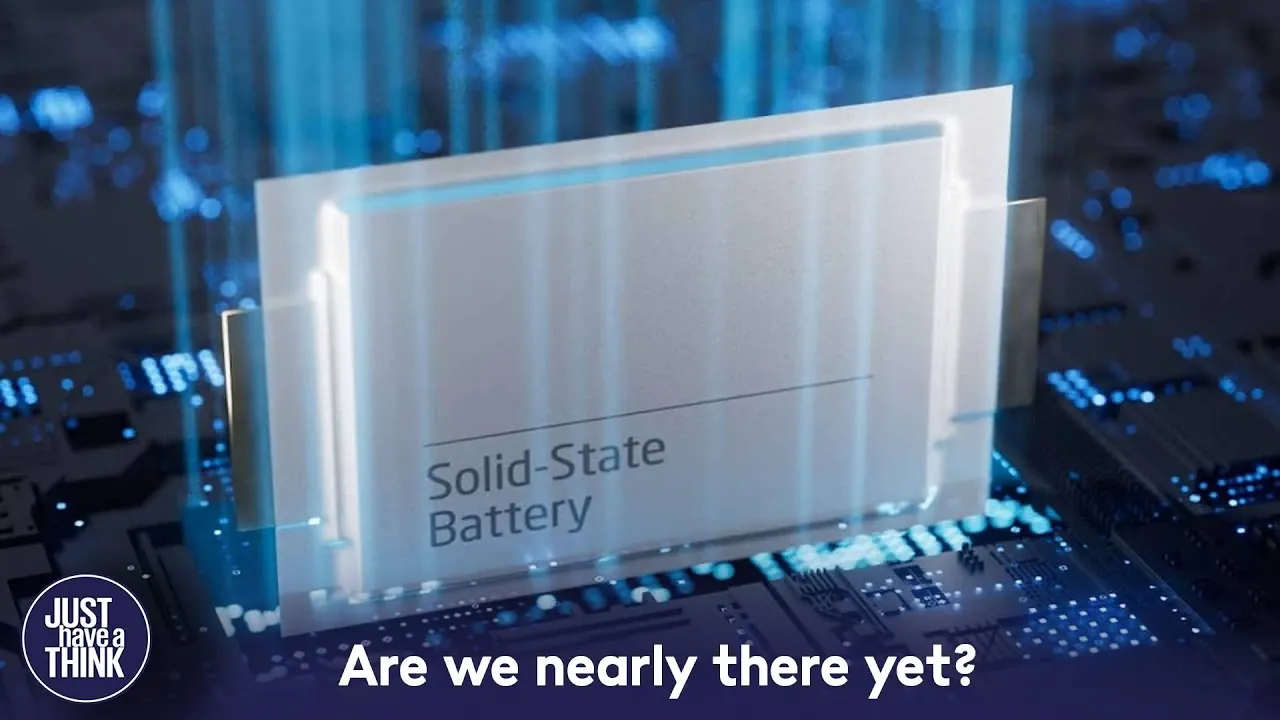
What if the future of energy storage was already here, quietly reshaping industries and redefining possibilities? For decades, solid-state batteries have been heralded as the holy grail of energy innovation, promising safer, lighter, and more efficient power solutions. Imagine an electric vehicle that charges in minutes, travels hundreds of miles on a single charge, and eliminates the fire risks associated with traditional lithium-ion batteries. Yet, despite these tantalizing prospects, the journey to commercializing this technology has been fraught with obstacles. Are we finally on the cusp of a breakthrough, or is the promise of solid-state batteries still just out of reach?
This overview by Just Have a Think provides more insights into the state of solid-state batteries, unpacking the science behind their potential and the hurdles that have kept them from mass adoption. From higher energy densities to faster charging capabilities, the advantages of this technology are clear, but so are the challenges, from scaling production to sourcing advanced materials. As 2027 looms as a pivotal year for industry leaders, this discussion will uncover where the technology stands today, who’s leading the charge, and what it could mean for industries far beyond electric vehicles. The question remains: will solid-state batteries finally deliver on their promise, or will they remain a tantalizing vision of the future?
Solid-State Battery Breakthroughs
TL;DR Key Takeaways :
- Solid-state batteries, using solid electrolytes instead of liquid or gel, promise higher energy density, faster charging, improved safety, and lighter weight, making them a potential fantastic option for electric vehicles (EVs).
- Key challenges include scaling up manufacturing, making sure consistent performance, and reducing production costs, with 2027 identified as a pivotal year for commercialization.
- Major players like Volkswagen-QuantumScape, CATL, BYD, Cherry Automobile, ProLogium, and SK Innovation are investing heavily in solid-state battery development, targeting breakthroughs by 2027.
- Semi-solid-state batteries are being explored as an interim solution, combining solid and liquid electrolytes, but they face limitations such as higher costs and complexity.
- Solid-state batteries have fantastic potential beyond EVs, including applications in consumer electronics, renewable energy storage, and aerospace, but achieving commercial viability requires overcoming significant technical and economic barriers.
What Makes Solid-State Batteries Different?
Solid-state batteries represent a fundamental shift from conventional lithium-ion technology. Unlike traditional batteries that rely on liquid or gel-based electrolytes, solid-state designs use solid materials, which eliminates risks such as leakage and fire hazards. This innovation also enables the use of lithium metal anodes, which can significantly boost energy density. For EVs, this could translate into longer driving ranges and lighter battery packs, addressing two critical concerns for consumers.
However, the path to mass production is far from straightforward. Manufacturing solid-state batteries at scale presents significant challenges. Materials like ceramic-based electrolytes are difficult to process and integrate into production lines. Additionally, making sure consistent performance and reliability under real-world conditions remains a significant hurdle. These obstacles highlight the complexity of transitioning from laboratory prototypes to commercially viable products.
Who’s Leading the Charge?
Several major companies are investing heavily in the development of solid-state batteries, each pursuing unique approaches to overcome technical and economic barriers. Here are some of the key players and their progress:
- Volkswagen & QuantumScape: This partnership is focused on developing lithium metal anode-free solid-state cells with energy densities around 300 Wh/kg. They aim to commercialize their technology by 2027.
- CATL & BYD: These Chinese companies are currently in the prototype phase, with plans to introduce demonstration vehicles and begin commercial production by 2027.
- Cherry Automobile: The company has developed a prototype boasting an impressive energy density of 600 Wh/kg and an 800-mile range. Like others, they are targeting 2027 for broader rollout.
- ProLogium: Based in Taiwan, ProLogium is working on fluidized ceramic-based solid electrolytes and plans to establish a gigafactory in France by 2027.
- SK Innovation: This South Korean company is operating a pilot plant and aims to achieve commercialization by 2029.
These companies are not only competing to bring solid-state batteries to market but are also collaborating with automakers and governments to accelerate development and adoption.
QuantumScape and Volkswagen, Progress on Solid-State EV Cells

Take a look at other insightful guides from our broad collection that might capture your interest in energy technologies.
- Are Solid-State Batteries the Key to Safer, Longer-Lasting EVs
- Rain-Powered Energy : 100,000x More Electricity from Rain
- How MGA Thermal’s Alloy is Changing the Future of Energy
- Onshore Wave Energy: A Sustainable Solution to Harness Ocean
- How Regenerative Tech is Reducing Energy Waste and Costs
- Wave Energy : The Future of Clean, Reliable Renewable Energy
- Orison Home Energy Storage System (video)
- Samsung showcases energy saving devices
- NASA’s Mechanical Battery: A Breakthrough in Sustainable Energy
- Why Sodium-Ion Batteries Are the Future of Energy Storage
Semi-Solid-State Batteries: A Transitional Technology
While fully solid-state batteries are the ultimate goal, some companies are exploring semi-solid-state batteries as an interim solution. These designs combine solid and liquid electrolytes, offering some of the benefits of solid-state technology while addressing certain manufacturing challenges. For example, companies like NIO and WeLion are actively developing semi-solid-state batteries to bridge the gap between current lithium-ion technology and fully solid-state designs.
However, semi-solid-state batteries come with their own set of challenges, including added complexity and higher production costs. While they may serve as a stepping stone, they are unlikely to replace the need for fully solid-state solutions in the long term.
Overcoming Manufacturing and Cost Barriers
Scaling the production of solid-state batteries from laboratory prototypes to mass-market products is one of the most significant challenges facing the industry. Current manufacturing processes are expensive and yield low volumes, making it difficult to achieve the economies of scale necessary for widespread adoption. Additionally, sourcing and processing advanced materials, such as ceramic-based electrolytes, remain cost-prohibitive.
To address these issues, manufacturers are focusing on several key strategies:
- Innovating in materials science to develop more cost-effective and scalable solid electrolytes.
- Streamlining supply chains to reduce material costs and improve efficiency.
- Investing in advanced manufacturing techniques to increase production capacity and consistency.
These efforts are critical to reducing costs and accelerating the commercialization of solid-state batteries. Without significant advancements in these areas, the widespread adoption of this technology will remain out of reach.
What Lies Ahead?
The year 2027 has emerged as a critical milestone for the commercialization of solid-state batteries. Many leading manufacturers are aligning their development timelines with this target, aiming to overcome the technical and economic barriers that have hindered progress. If successful, these batteries could transform the EV market by allowing longer ranges, faster charging, and safer energy storage.
However, significant risks remain. Scaling production while maintaining quality and affordability will require breakthroughs in materials science, manufacturing processes, and logistics. Additionally, the industry must address concerns related to supply chain stability and the environmental impact of sourcing advanced materials. Until these challenges are resolved, solid-state batteries will remain a promising but unproven technology.
Implications for Electric Vehicles and Beyond
If solid-state batteries achieve commercial viability, they could transform the EV landscape. Higher energy densities would allow vehicles to travel farther on a single charge, addressing one of the primary concerns of potential EV buyers. Faster charging times would enhance convenience, making EVs more practical for everyday use. Improved safety features, such as reduced risk of thermal runaway and fires, could also increase consumer confidence in the technology.
Beyond the automotive sector, solid-state batteries have the potential to impact a wide range of industries. Their compact size and high energy efficiency make them an attractive option for consumer electronics, renewable energy storage, and even aerospace applications. As the technology matures, its versatility could unlock new possibilities for energy storage across various sectors.
The road ahead for solid-state batteries is filled with both promise and uncertainty. While the challenges are significant, the potential rewards are equally substantial. As researchers and manufacturers continue to push the boundaries of what is possible, the world watches closely, anticipating a future where solid-state batteries redefine energy storage and power the next generation of innovation.
Media Credit: Just Have a Think
Disclosure: Some of our articles include affiliate links. If you buy something through one of these links, Geeky Gadgets may earn an affiliate commission. Learn about our Disclosure Policy.
