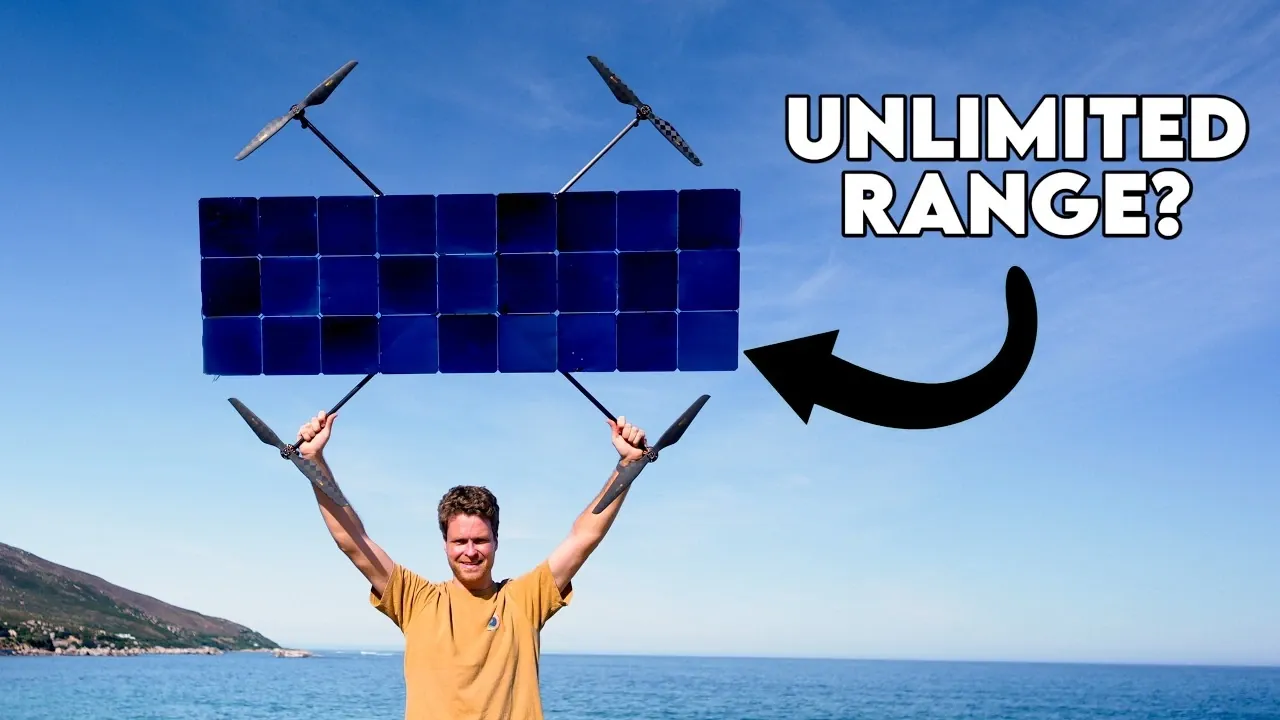
Have you ever imagined a drone that could fly indefinitely, powered only by the sun? It sounds like something out of a sci-fi movie, but it’s now a reality. By harnessing the power of renewable energy, I built a 100% solar-powered drone that doesn’t just hover for a few minutes, it achieves sustained flight without relying on traditional batteries or fossil fuels. This project wasn’t just about building a machine; it was about pushing the boundaries of what’s possible in sustainable aviation. From lightweight carbon fiber frames to precision-engineered solar arrays, every detail was designed with one goal in mind: proving that clean energy can take to the skies.
Luke Maximo Bell take you behind the scenes of this new project, sharing the innovative design choices, engineering challenges, and thrilling moments of success. You’ll discover how solar panels, efficient propulsion systems, and advanced materials came together to create a drone that’s not only functional but also a glimpse into the future of aviation. Whether you’re an enthusiast of renewable energy, a tech innovator, or simply curious about what’s next for drones, this story offers a fresh perspective on how technology and sustainability can work hand in hand.
Solar-Powered Drone Innovation
TL;DR Key Takeaways :
- The solar-powered drone was built using lightweight carbon fiber and 3D-printed components to optimize weight, energy efficiency, and structural integrity.
- High-efficiency solar panels, arranged at a 10° angle, provided sufficient energy for sustained flight, showcasing the feasibility of solar-powered aviation.
- The propulsion system achieved exceptional efficiency, generating 17 grams of thrust per watt, allowing stable and energy-efficient flight.
- Extensive testing, including tethered and untethered trials, ensured the drone’s stability and performance before achieving fully solar-powered flight.
- Future improvements could include adding more solar panels, integrating GPS and autonomous flight software, and using advanced materials to enhance capabilities and flight duration.
How the Drone Was Designed and Built
Designing and building a solar-powered drone required a meticulous approach to balance weight, energy efficiency, and structural integrity. The frame was constructed using lightweight carbon fiber, a material chosen for its exceptional strength-to-weight ratio and durability. This choice ensured the drone could withstand the stresses of flight while remaining light enough to maximize energy efficiency. To further reduce weight, critical structural components such as motor mounts and brackets were 3D-printed. This method allowed for precise customization, making sure stability without adding unnecessary bulk.
The propulsion system was another critical focus area. T-Motor anti-gravity motors were paired with 18-inch carbon fiber propellers, a combination specifically selected to maximize thrust-to-watt efficiency. This setup ensured the motors could generate sufficient lift while consuming minimal power, a key factor in achieving sustained flight. Custom-designed landing legs were also incorporated to provide adequate ground clearance for the solar panels and ensure stability during takeoff and landing. These legs were carefully engineered to support the drone’s weight without compromising its aerodynamic performance.
Integrating Solar Panels for Power
The integration of solar panels was the core innovation of this project. Lightweight, high-efficiency solar panels, each capable of producing approximately 5 watts of power, were selected to minimize the additional weight they would contribute to the drone. A total of 27 panels were arranged in an array mounted at a 10° angle. This configuration was chosen to optimize sunlight exposure during flight, making sure maximum energy generation.
Before being integrated into the drone, the solar panels underwent extensive testing to verify their power output and thermal performance under direct sunlight. This step was crucial to ensure the panels could consistently supply the energy needed for flight without overheating or degrading. Balancing the weight of the solar array with the drone’s overall design was another critical challenge. The final system successfully generated enough energy to power the drone’s motors during sustained flight, demonstrating the feasibility of solar-powered aviation.
100% Solar Powered Drone

Enhance your knowledge on Drones by exploring a selection of articles and guides on the subject.
- Drones capable of 3D printing in flight will transform construction
- 8+ Big drones capable of carrying large payloads and heavy
- CNN Will Use Drones For News Reporting
- Awesome parachute system saves drones and rockets
- 1,500 drones flying in formation set two Guinness World Records
- How to build a drone tracking radar
- New Interceptor drones being created by Oculus co-founder Palmer
- How Morphing Wing Drones Are Revolutionizing Aerial Robotics
- Swarm of drones demonstrated flying through heavily wooded area
- New Futurama Mobile Game : Game of Drones Announced
Testing for Efficiency and Stability
Achieving flight powered solely by solar energy required extensive testing to fine-tune the drone’s performance. The propulsion system achieved an impressive efficiency of 17 grams of thrust per watt, far exceeding the performance of many traditional drones. This high level of efficiency was essential to lift both the drone and its solar array while conserving energy for sustained operation.
Stability testing was equally important. Initial tethered tests allowed for careful adjustments to the flight controls, making sure safe and reliable operation. These tests also helped identify and address any imbalances or performance issues that could compromise flight stability. Once the drone demonstrated consistent stability during tethered tests, it was ready for untethered trials.
Achieving Solar-Powered Flight
Before attempting solar-powered flight, the drone was tested using a battery to confirm its stability and optimize its tuning. These preliminary tests ensured that all systems were functioning correctly and that the drone could maintain stable flight under controlled conditions. Once these tests were successfully completed, the solar panels were connected as the sole power source.
The drone achieved sustained flight powered entirely by solar energy, marking a significant milestone in renewable energy technology. This accomplishment demonstrated that solar-powered drones could operate without traditional batteries, offering a sustainable alternative for aviation. The successful flight also highlighted the potential for drones to perform long-duration missions with minimal environmental impact, opening the door to new possibilities in fields such as environmental monitoring, disaster response, and logistics.
Opportunities for Future Improvements
While the project successfully achieved its primary goal, there are several opportunities for further enhancements that could expand the capabilities of solar-powered drones:
- Incorporating additional solar panels to increase power generation, allowing longer flight durations or the ability to carry heavier payloads.
- Integrating GPS technology and autonomous flight software to improve navigation, operational efficiency, and mission versatility.
- Exploring advanced materials, such as graphene or next-generation composites, to further reduce weight while enhancing durability and structural integrity.
One particularly ambitious goal for the future is to attempt breaking the Guinness World Record for the longest drone flight. Achieving this milestone would not only demonstrate the capabilities of solar-powered drones but also inspire further innovation in sustainable aviation technology. Such advancements could lead to practical applications in areas ranging from agricultural monitoring to remote delivery services, all while reducing the environmental impact of aviation.
The Potential of Solar-Powered Drones
This project underscores the potential of combining solar energy with advanced drone technology. By using lightweight materials, efficient propulsion systems, and innovative design, it is possible to create a drone capable of sustained flight powered entirely by the sun. As technology continues to evolve, solar-powered drones could play a pivotal role in reducing the environmental impact of aviation. They hold the promise of allowing long-duration missions, supporting critical operations in remote areas, and contributing to a more sustainable future for aerial transportation.
Media Credit: Luke Maximo Bell
Disclosure: Some of our articles include affiliate links. If you buy something through one of these links, Geeky Gadgets may earn an affiliate commission. Learn about our Disclosure Policy.
