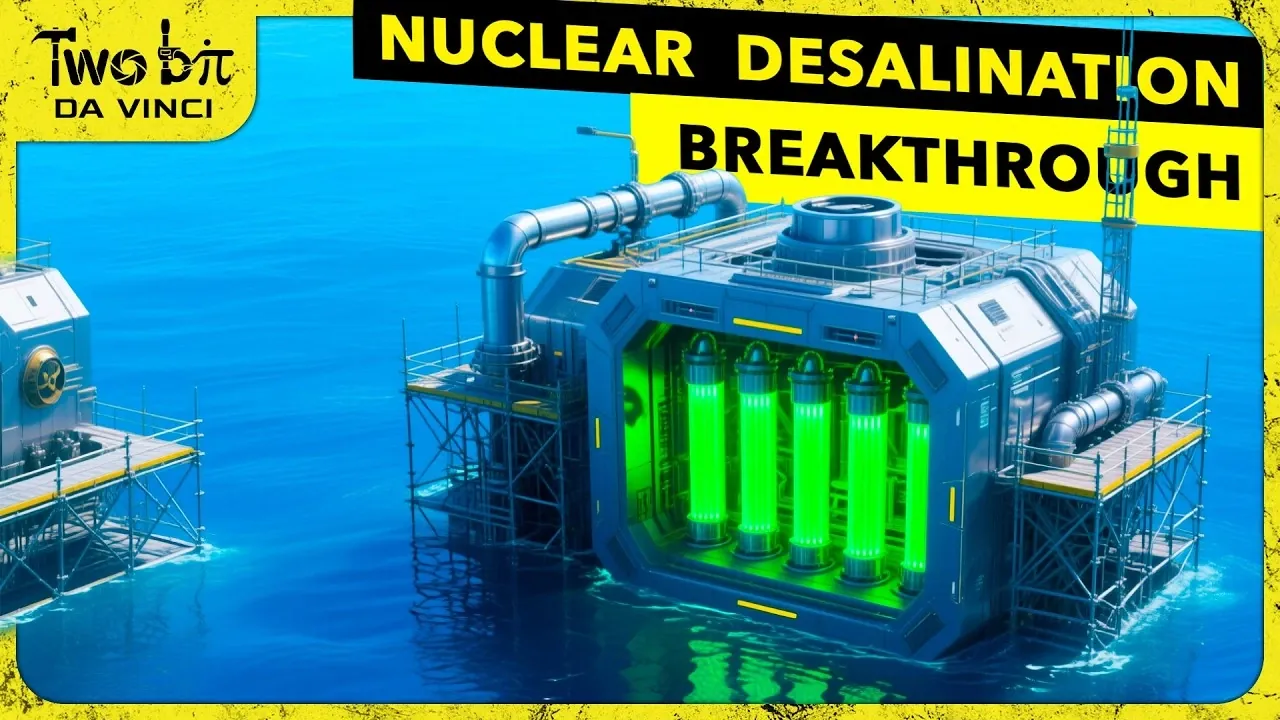
What if the solution to two of humanity’s most urgent crises, freshwater scarcity and rising energy demands, was hiding in plain sight? Imagine a world where the same technology that powers cities could also transform seawater into clean, drinkable water, all while reducing waste and maximizing efficiency. It sounds like science fiction, but this is the promise of nuclear desalination, a new innovation that merges nuclear energy with advanced water purification systems. While countries like Russia, Japan, and India have already embraced this dual-purpose technology, the United States remains hesitant, leaving untapped potential to address critical resource shortages. Could this be the fantastic option we’ve been waiting for?
In this overview video Two Bit da Vinci explains how nuclear desalination works and why it’s poised to transform the way we think about water and energy production. From the role of small modular reactors (SMRs) in making this technology more scalable and cost-effective to the global success stories that prove its viability, you’ll discover why this approach is not just innovative but essential. Yet, the path forward isn’t without challenges, financial, regulatory, and societal barriers have slowed adoption in key regions. As we unpack the possibilities and hurdles, one question looms large: can we afford to ignore a solution that could secure two of our most vital resources for generations to come?
How Nuclear Desalination Works
TL;DR Key Takeaways :
- Nuclear desalination integrates nuclear reactors with desalination technologies to address freshwater scarcity and rising energy demands by producing clean water and electricity simultaneously.
- Key desalination methods include Reverse Osmosis (RO) and Multi-Effect Distillation (MED), which are highly efficient when powered by nuclear energy, with hybrid systems capable of producing up to 1 million cubic meters of freshwater daily.
- Small Modular Reactors (SMRs) are emerging as a cost-effective and scalable solution, allowing broader adoption of nuclear desalination, especially in remote or water-scarce regions.
- Barriers to adoption include high initial costs, regulatory complexities, public concerns about nuclear safety, and challenges in cost allocation between water and energy production.
- Countries like Russia, Japan, and India have successfully implemented nuclear desalination, while the U.S. lags behind, though advancements in SMRs offer renewed potential for adoption in the future.
Nuclear desalination combines nuclear energy with desalination processes to produce freshwater and electricity simultaneously. The heat and electricity generated by nuclear reactors power various desalination methods, including reverse osmosis (RO) and multi-effect distillation (MED). These methods are highly efficient when paired with nuclear energy, offering a sustainable solution for water production.
- Reverse Osmosis (RO): This method uses electricity to force seawater through specialized membranes, filtering out salt and impurities to create potable water. RO is widely used due to its efficiency and scalability.
- Multi-Effect Distillation (MED): MED uses waste heat from nuclear reactors to evaporate seawater, condensing the vapor into freshwater. This process is particularly effective when integrated with nuclear energy, as it repurposes heat that would otherwise be wasted.
- Hybrid Systems: Combining RO and MED can maximize efficiency. Some advanced hybrid systems are capable of producing up to 1 million cubic meters of freshwater daily, meeting the needs of large populations.
By using waste heat from nuclear reactors, these methods significantly reduce energy consumption and operational costs compared to conventional desalination systems, making them both efficient and economically viable.
Efficiency and Sustainability
The efficiency of nuclear desalination lies in its ability to repurpose waste heat from nuclear reactors, creating a dual-purpose system that addresses both energy and water needs. This approach minimizes resource consumption while maximizing output, making it an attractive option for regions facing water and energy shortages.
The sustainability of nuclear desalination is further underscored by the abundance of uranium, the primary fuel for nuclear reactors. Current uranium reserves are sufficient to sustain freshwater production for 500 million people for nearly 5,000 years. This long-term viability positions nuclear desalination as a reliable solution for future generations, particularly as global populations and resource demands continue to grow.
How Nuclear Heat Could Turn Saltwater into Supply for Millions

Take a look at other insightful guides from our broad collection that might capture your interest in energy.
- How MGA Thermal’s Alloy is Changing the Future of Energy
- Onshore Wave Energy: A Sustainable Solution to Harness Ocean
- Wave Energy : The Future of Clean, Reliable Renewable Energy
- Dyson Energy
- How Regenerative Tech is Reducing Energy Waste and Costs
- Rain-Powered Energy : 100,000x More Electricity from Rain
- NASA’s Mechanical Battery: A Breakthrough in Sustainable Energy
- UniWave 200 creates energy from wave swell
- BLUETTI Apex 300 Modular Energy Storage System from $1,199
- How China’s Energy Infrastructure is Dominating the AI Race
Barriers to Adoption
Despite its potential, nuclear desalination faces several challenges that have hindered its widespread adoption, particularly in the United States. These barriers include financial, regulatory, and societal factors that must be addressed to unlock the full potential of this technology.
- High Initial Costs: The construction of nuclear desalination plants requires substantial upfront investment, which can deter stakeholders and governments from pursuing such projects.
- Regulatory Complexity: Lengthy approval processes and stringent regulatory frameworks have historically delayed nuclear projects, creating additional hurdles for nuclear desalination initiatives.
- Public Concerns: Concerns about nuclear safety and the potential for radioactive contamination, though largely unfounded in this context, remain significant obstacles to public acceptance.
- Cost Allocation: Determining how to distribute costs between electricity and water production adds complexity to project planning and financing.
While these challenges are substantial, advancements in reactor technology, such as the development of SMRs, and innovative regulatory approaches could help overcome these obstacles, paving the way for broader adoption of nuclear desalination.
Global Success Stories
Several countries have already demonstrated the feasibility and benefits of nuclear desalination, providing valuable examples of its potential to address water and energy challenges.
- Russia and Japan: Both nations have successfully integrated nuclear reactors with desalination plants to address regional water shortages, showcasing the practicality of this approach.
- India: India has used nuclear desalination to provide freshwater in coastal areas, highlighting its potential for developing nations with limited resources.
- Middle Eastern Countries: Countries in this arid region are actively exploring nuclear desalination to meet their growing water and energy demands, demonstrating its relevance in water-scarce environments.
In contrast, the United States has struggled to advance nuclear desalination projects. Historical efforts, such as the Bolsa Island project, were abandoned due to high costs and bureaucratic challenges. However, the emergence of SMRs offers renewed hope for overcoming these barriers and realizing the potential of nuclear desalination in the U.S.
The Promise of Small Modular Reactors (SMRs)
Small modular reactors (SMRs) represent a fantastic advancement in nuclear technology. These compact reactors are designed to be more affordable, flexible, and quicker to deploy than traditional nuclear reactors, making them ideal for integration with desalination systems. Their scalability also makes them well-suited for remote or water-scarce regions, where traditional infrastructure may be impractical.
By reducing financial and logistical barriers, SMRs could enable the widespread adoption of nuclear desalination. This technology has the potential to transform the energy-water nexus, providing sustainable solutions for communities worldwide. Additionally, the modular nature of SMRs allows for incremental deployment, allowing regions to scale their water and energy production capabilities as needed.
The Future of Nuclear Desalination
Nuclear desalination offers a compelling solution to two critical global challenges: freshwater scarcity and energy demand. By using advancements in reactor technology, such as SMRs, this approach has the potential to provide sustainable and scalable solutions for water and energy production. However, its success will depend on addressing key challenges, including regulatory hurdles, public acceptance, and the development of innovative financing models.
As the world faces increasing pressure to secure clean water and energy, nuclear desalination stands out as a promising path forward. By integrating these technologies, nations can work toward a sustainable future, making sure that essential resources are available for generations to come.
Media Credit: Two Bit da Vinci
Disclosure: Some of our articles include affiliate links. If you buy something through one of these links, Geeky Gadgets may earn an affiliate commission. Learn about our Disclosure Policy.
