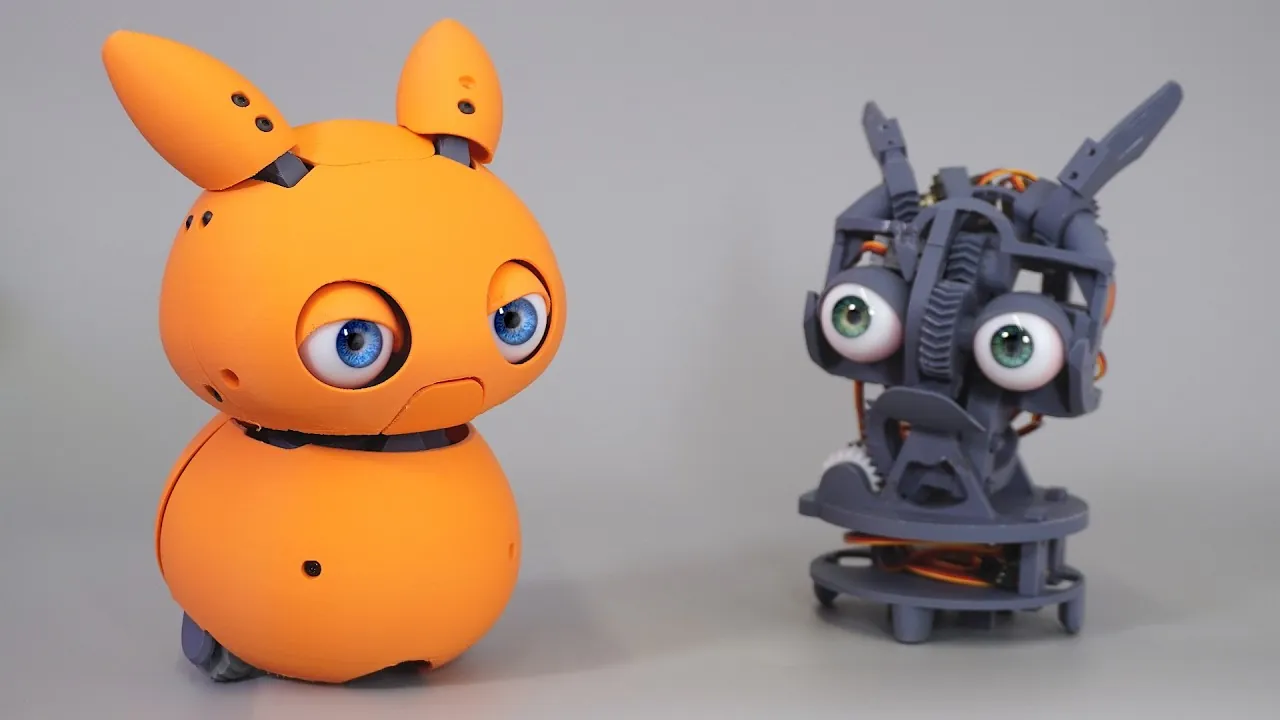
What if your childhood Tamagotchi could step off the screen and into the real world? Imagine a tiny robot, complete with blinking eyes and lifelike movements, responding to your voice and following your gaze. Thanks to the magic of modern technology, this isn’t just a whimsical dream, it’s a tangible DIY project waiting to happen. By combining the affordable power of a Raspberry Pi with the precision of 3D printing, you can create a physical virtual pet that not only entertains but also showcases innovative engineering and artificial intelligence. This exploration dives into how nostalgia meets innovation, offering a hands-on way to bring a robotic companion to life.
In this guide, Will Cogley takes you step-by-step through how to design and build your own interactive pet robot, from crafting its modular 3D-printed frame to programming its AI-driven personality. Along the way, you’ll learn how to integrate smooth, lifelike animations using servo motors and even experiment with features like face tracking for a more engaging experience. Whether you’re a seasoned maker or a curious beginner, this project invites you to explore the intersection of creativity and technology. By the end, you’ll not only have a charming robotic companion but also a deeper appreciation for the collaborative spirit of open source innovation. So, what kind of personality will your virtual pet take on?
Building a Virtual Pet Robot
TL;DR Key Takeaways :
- The project combines nostalgia and modern technology to create a physical virtual pet robot using Raspberry Pi, 3D printing, and open source tools, focusing on design, animation, AI integration, and community collaboration.
- Key design features include herringbone gears for durability and precision, snap-fit modular components for easy assembly, and retrofuturistic aesthetics for a unique visual appeal.
- Realistic animations are achieved through servo motors and custom easing algorithms, with state-based animations adding personality and lifelike behavior to the robot.
- AI integration, powered by lightweight models like Flan T5, enables conversational and interactive capabilities, while embedded cameras enhance interactivity with features like face tracking and eye contact simulation.
- The project emphasizes accessibility and collaboration by using affordable components, sharing open source designs, and fostering a community-driven approach to innovation and inclusivity.
Design and Mechanics: Laying the Groundwork
The foundation of your virtual pet robot lies in its design and mechanical structure. To ensure smooth operation and long-term durability, herringbone gears are an excellent choice. These gears minimize backlash and wear, making them ideal for the precise and repetitive movements required by the robot. Their compact design also allows for efficient use of space, allowing multiple actuations in a limited area without compromising functionality.
To streamline the assembly process, snap-fit modular components are used. These components allow for easy assembly and disassembly without the need for specialized tools, making it simple to replace or upgrade parts as needed. This modular approach encourages experimentation, giving you the flexibility to refine and improve the design over time. For aesthetics, incorporating retrofuturistic or Y2K-inspired styles adds a nostalgic yet modern touch, enhancing the robot’s visual appeal and personality.
Animation and Movement: Breathing Life into the Robot
Realistic animations are essential for creating a lifelike and engaging virtual pet robot. Servo motors, paired with custom easing algorithms, enable smooth and natural movements that mimic organic behavior. These algorithms not only enhance the robot’s realism but also reduce mechanical strain, extending the lifespan of its components.
To give the robot personality, state-based animations are implemented. For example, the robot can exhibit idle movements when at rest, shift into a listening mode when detecting input, and animate its eyes and body during interactions. These dynamic behaviors make the robot feel more alive and approachable, fostering a stronger connection between the user and their virtual companion.
Raspberry Pi Virtual Pet Robot Project

Enhance your knowledge on Raspberry Pi by exploring a selection of articles and guides on the subject.
- SunFounder PiDog Robot Dog Kit with Raspberry Pi 4 2GB + 32GB
- PiMecha Humanoid Raspberry Pi Robot Kit
- Easy DIY Gobot Raspberry Pi robot
- MyCobot 280 Raspberry Pi robotic arm
- Raspberry Pi Powered Metal Detecting Robot (video)
- LEGO plastic cap firing Raspberry Pi robot turret
- Raspberry Pi Zero or Microbit M.A.R.S. Rover robot £120
- Pi Tank 3D Printed Open Source Smartphone Controlled Raspberry
- Awesome Raspberry Pi mini Mars Rover robot
- XGO 2 Raspberry Pi CM4 powered robot dog
AI Integration and Vision: Intelligence and Interactivity
At the core of the virtual pet robot is its AI system, which powers its conversational and interactive capabilities. By running a local AI chatbot, such as the Flan T5 model, on a Raspberry Pi, the robot can process and respond to user input. However, the Raspberry Pi’s hardware limitations require careful optimization of the AI model to ensure smooth and responsive interactions. Lightweight AI configurations are essential to balance performance with the device’s limited processing power.
Ethical considerations play a significant role in the AI’s development. Training the chatbot on unbiased and inclusive data helps ensure fair interactions while avoiding the perpetuation of harmful stereotypes. Additionally, prioritizing energy-efficient AI practices minimizes the environmental impact of running the system on compact hardware.
Integrating cameras into the robot’s design further enhances its interactivity. By embedding cameras in the robot’s eyes, you can enable face tracking, allowing the robot to detect and follow user movements. This feature not only improves functionality but also adds a layer of personality by simulating eye contact and responsiveness. Proper calibration and testing are crucial to achieving accurate focus and optical clarity, making sure a seamless user experience.
Expanding the Project: Future Possibilities
While the current design demonstrates the potential of a Raspberry Pi-powered virtual pet robot, there are numerous opportunities for future development. One possibility is connecting the robot to external servers to offload computational tasks. This approach would enhance the AI’s response quality and speed, allowing more complex interactions without compromising the robot’s compact and energy-efficient design.
The project also emphasizes the importance of open source principles. By sharing CAD files, code, and 3D-printed designs, you can contribute to a growing community of makers. Engaging with beta testers and other contributors provides valuable feedback, helping to refine the robot’s design and functionality. This collaborative approach fosters innovation and ensures that the project remains accessible to a wide audience.
Accessibility and Collaboration: A Community-Driven Effort
Accessibility is a central focus of this project, making sure that individuals with limited resources can participate. By using affordable components like the Raspberry Pi and providing detailed instructions, the project lowers the barrier to entry for aspiring roboticists. Open source CAD files and code further support this goal, allowing others to replicate, modify, or expand upon the design.
Community collaboration is equally vital. Engaging with a network of makers, beta testers, and contributors fosters iterative improvements and a sense of shared ownership. By working together, you can create a virtual pet robot that not only showcases innovative technology but also embodies creativity, inclusivity, and the spirit of collaboration. This collective effort ensures that the project continues to evolve and inspire future advancements in robotics.
Media Credit: Will Cogley
Disclosure: Some of our articles include affiliate links. If you buy something through one of these links, Geeky Gadgets may earn an affiliate commission. Learn about our Disclosure Policy.
