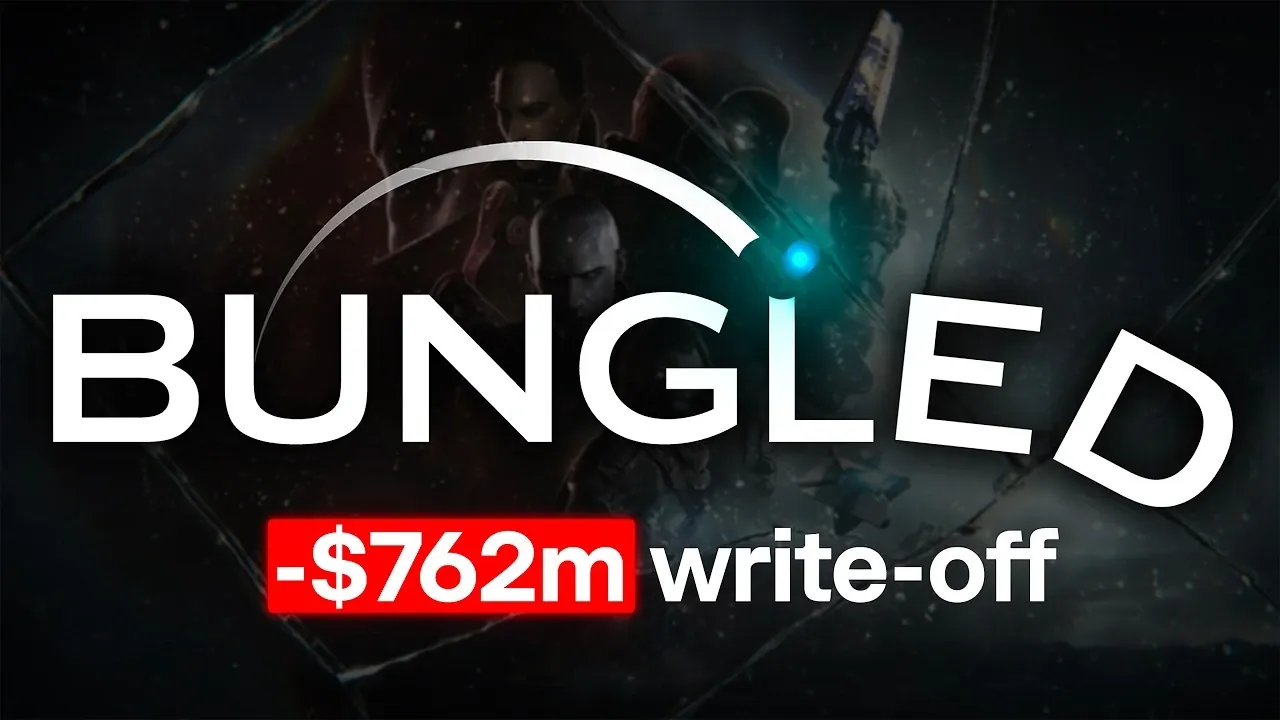
PlayStation’s $765 million write-down following its acquisition of Bungie highlights the challenges of aligning corporate goals in the gaming industry. As reported by Bellular News, the deal was intended to bolster PlayStation’s live-service gaming strategy, but it has faced significant setbacks. Bungie’s flagship game, Destiny 2, has struggled with declining player engagement and the planned reboot of Marathon has been delayed indefinitely after receiving poor initial feedback. These issues, combined with leadership changes and layoffs, have disrupted PlayStation’s efforts to expand its live-service portfolio.
Explore the lessons from this acquisition and its fallout. Learn how Bungie’s struggles with live-service games have revealed critical risks in this model. Gain insight into the adjustments PlayStation may need to make, including the potential ripple effects on future projects like Destiny 3. Understand the broader industry challenges as both companies navigate shifting player expectations and market trends.
Bungie’s Financial Struggles and Strategic Missteps
TL;DR Key Takeaways :
- PlayStation reported a $765 million financial write-down from its 2022 acquisition of Bungie, with $560 million recorded in the last fiscal quarter, primarily due to Bungie’s underperformance and challenges with key projects like Destiny 2 and Marathon.
- Bungie’s struggles, including declining player engagement and missed revenue targets, have disrupted PlayStation’s live-service gaming strategy, leading to the cancellation of several high-profile projects.
- Workforce reductions and leadership instability at Bungie, including the departure of key executives, have further hindered the studio’s ability to recover and execute a cohesive strategy.
- The acquisition reflects broader misjudgments during the pandemic-era gaming boom, as inflated expectations of sustained growth have forced PlayStation to reassess its live-service ambitions.
- Bungie’s future remains uncertain, with PlayStation’s support for Marathon and Destiny 2 under scrutiny, while the potential development of Destiny 3 could be a critical test of the studio’s recovery and viability.
The $765 million write-down highlights Bungie’s shift from a highly valued acquisition to a financial liability for PlayStation. Initially envisioned as a cornerstone of PlayStation’s live-service gaming ambitions, Bungie’s declining performance has cast doubt on the strategic rationale for the acquisition. The studio’s inability to meet expectations has not only diminished its own value but has also negatively impacted PlayStation’s broader financial results.
This situation reflects broader challenges in the gaming industry, where live-service models demand consistent player engagement and revenue generation. Bungie’s struggles suggest that PlayStation may have overestimated the studio’s ability to deliver on these fronts. The financial burden of this miscalculation has forced PlayStation to reassess its approach to live-service gaming and its reliance on Bungie as a key driver of growth.
Setbacks in Key Projects and Live-Service Challenges
Bungie’s recent projects have failed to meet PlayStation’s expectations, further complicating the studio’s recovery. The revival of Marathon, a classic franchise, has been delayed indefinitely after early testing failed to generate sufficient player interest. Meanwhile, Destiny 2, Bungie’s flagship title, has experienced declining player engagement and missed revenue targets for its expansions. These setbacks have been compounded by the cancellation of other planned projects, including a Destiny spin-off and several live-service games.
The underperformance of these projects has not only tarnished Bungie’s reputation but has also disrupted PlayStation’s broader live-service strategy. Internal feedback on PlayStation’s live-service initiatives has reportedly been critical, leading to the cancellation of several high-profile projects, such as the multiplayer game for The Last of Us. These challenges highlight the risks of over-reliance on live-service models, particularly in a competitive market where audience engagement can be unpredictable.

Here are more guides from our previous articles and guides related to PlayStation that you may find helpful.
- Why the Latest PlayStation 6 Leaks Are Shocking the Gaming Industry
- What Sony’s Massive PlayStation 5 Price Hike Means for the PlayStation 6
- Why Your PS5 Digital Games Might Suddenly Stop Working Offline
- Modders Discovered a Secret Timer Inside Every PS5 Console
- Why Your PS5 Games Might Stop Working Offline After March 2026
- More Details on the Sony PS5 Pro Console (Video)
- New Sony PS Vita Teardown
- PlayStation 6 Full Specs Leak : RTX 5090 Ray Tracing & Next-Gen AI
Workforce Reductions and Leadership Instability
Bungie’s operational struggles have led to significant workforce reductions and leadership changes, further complicating its ability to recover. Multiple rounds of layoffs have reduced the studio’s headcount, with some employees reassigned to other PlayStation Studios projects. These workforce reductions have left Bungie with fewer resources to address its challenges and develop new projects.
Leadership instability has also played a critical role in Bungie’s difficulties. The departure of key figures, including CEO Pete Parsons, has left the studio with a weakened leadership structure. This instability has hindered Bungie’s ability to implement a cohesive strategy for recovery, raising concerns about its long-term viability. The combination of reduced resources and leadership challenges underscores the significant obstacles Bungie faces as it attempts to regain its footing.
Lessons from the Pandemic-Era Gaming Boom
Bungie’s struggles are emblematic of broader misjudgments made during the pandemic-era gaming boom. The acquisition of Bungie, like many corporate deals during that period, was driven by inflated expectations of sustained growth in the gaming industry. As the market has normalized, the limitations of these strategies have become increasingly apparent.
For PlayStation, the fallout from the Bungie acquisition has forced a reevaluation of its live-service ambitions. The company has scaled back its plans for live-service games, recognizing the challenges of maintaining player engagement and generating consistent revenue in a competitive market. This shift reflects a broader reassessment of the gaming industry’s trajectory, as companies adapt to a post-pandemic landscape marked by slower growth and heightened competition.
The Road Ahead for Bungie and PlayStation
Bungie now faces a challenging path forward as it seeks to stabilize its operations and rebuild its reputation. With a reduced workforce, weakened leadership and declining player engagement for its core titles, the studio’s future remains uncertain. PlayStation has expressed its commitment to supporting Marathon and Destiny 2, but the long-term viability of these projects is unclear.
The potential development of Destiny 3 could serve as a critical test of Bungie’s ability to recover and reestablish itself as a leader in the gaming industry. However, this project also carries significant risks, particularly in an increasingly competitive market where player expectations are higher than ever. For PlayStation, the success or failure of Bungie’s future projects will have far-reaching implications for its overall strategy and its ability to compete in the evolving gaming landscape.
Key Takeaways for the Gaming Industry
The challenges faced by Bungie and PlayStation offer important lessons for the gaming industry. The acquisition of Bungie, once seen as a strategic opportunity, has become a cautionary tale about the risks of overestimating the value of live-service gaming during a volatile market period. As the gaming industry continues to evolve, companies must carefully balance innovation with realistic expectations, particularly when pursuing ambitious growth strategies.
For PlayStation, the experience underscores the importance of adaptability and strategic foresight. The company’s ability to learn from its missteps and refine its approach to live-service gaming will be critical to its future success. As Bungie works to overcome its challenges, the broader implications for PlayStation and the gaming industry will remain a key area of focus in the years to come.
Media Credit: Bellular News
Disclosure: Some of our articles include affiliate links. If you buy something through one of these links, Geeky Gadgets may earn an affiliate commission. Learn about our Disclosure Policy.
