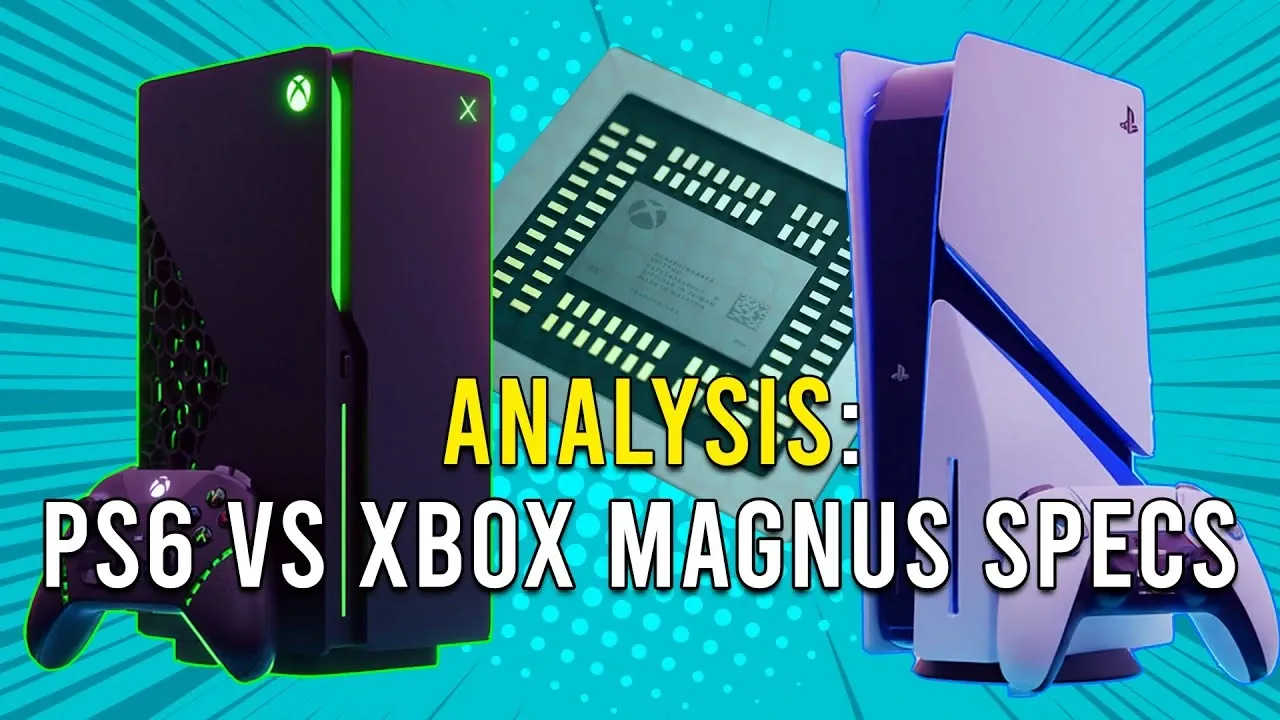
Is the console war about to reach a new level? Leaked specs for the highly anticipated PlayStation 6 (PS6) and Xbox Magnus suggest a dramatic shift in gaming priorities, sparking heated debates among fans and tech enthusiasts alike. With the Xbox Magnus boasting a staggering 48GB of GDDR7 memory and innovative performance capabilities, it’s being hailed as a potential powerhouse that could outclass even high-end gaming PCs. Meanwhile, Sony’s PS6 seems to be taking a different route, focusing on affordability and ecosystem integration, aiming to cater to a broader audience. These contrasting strategies raise a tantalizing question: is raw power enough to win the next-gen console race, or will accessibility and innovation steal the spotlight?
In this leak spec summary, Red Gaming Tech break down the rumored hardware specs, explore the philosophical divide between Sony and Microsoft, and analyze what these differences mean for gamers. From the Xbox Magnus’s ambitious hardware to the PS6’s energy-efficient design, each console reflects a unique vision for the future of gaming. But which approach will resonate more with players? And how will features like RDNA5 GPUs, AI-driven rendering, and backward compatibility shape the gaming experience? As we unpack the details, you might find yourself rethinking what truly matters in next-gen gaming.
PS6 vs Xbox Magnus
TL;DR Key Takeaways :
- Both the PlayStation 6 (PS6) and Xbox Magnus will feature AMD’s RDNA5 GPU architecture, with the Xbox Magnus prioritizing raw performance and the PS6 focusing on affordability and energy efficiency.
- The Xbox Magnus features 48GB of GDDR7 memory and a 192-bit memory bus for superior performance, while the PS6 offers 40GB of GDDR7 memory and a 160-bit memory bus for a balanced, cost-effective approach.
- Technological advancements like ray tracing, path tracing, and AI integration will enhance visual fidelity and gameplay, with Sony exploring AI-driven rendering and Microsoft focusing on AI-enhanced performance optimization.
- Backward compatibility is a priority for both consoles, with the PS6 supporting PS4 and PS5 games and the Xbox Magnus maintaining compatibility with Xbox Series and Xbox One titles.
- Sony targets a broader audience with affordability and ecosystem integration, while Microsoft aims at performance-oriented gamers with premium hardware and a hybrid console-PC experience.
Key Hardware Specifications
Both consoles are expected to feature AMD’s RDNA5 GPU architecture, a innovative technology designed to elevate gaming visuals and performance. However, their hardware configurations reveal distinct priorities and strategies:
- Xbox Magnus: Equipped with 68 compute units, a 192-bit memory bus, and 48GB of GDDR7 memory, the Xbox Magnus is engineered for high-performance gaming. Its estimated power consumption of 250-350W underscores its focus on delivering top-tier graphical and computational capabilities, making it a powerhouse for demanding gamers.
- PS6: Featuring 52-54 compute units, a 160-bit memory bus, and 40GB of GDDR7 memory, the PS6 prioritizes efficiency and cost-effectiveness. Sony’s decision to incorporate smaller Zen 6C cores alongside low-power cores highlights a design philosophy aimed at balancing performance with energy savings.
Both consoles are expected to support advanced features such as ray tracing, path tracing, and compression technologies. These innovations will ensure a significant leap in visual fidelity and rendering techniques, setting new standards for immersive gaming experiences.
Performance vs. Design Philosophy
The Xbox Magnus is shaping up to be the most powerful gaming console on the market, with its focus on raw performance and innovative hardware. However, this emphasis on power may come at a premium price, positioning it as a high-end option for gamers who prioritize hardware capabilities over cost. In contrast, the PS6 appears to target a broader audience by emphasizing affordability and compatibility, potentially making it more accessible to casual gamers and existing PlayStation users.
The CPU configurations further illustrate the contrasting approaches. The Xbox Magnus combines Zen 6 and Zen 6C cores to balance power and efficiency, while the PS6 relies heavily on smaller Zen 6C cores. This design choice reinforces Sony’s commitment to energy efficiency and cost-effectiveness, aligning with its strategy to appeal to a wider audience.
PlayStation 6 or Xbox Magnus? The Console War Just Started

Learn more about new and old game consoles with the help of our in-depth articles and helpful guides.
- PlayStation 6 Specs Leak: Everything About the New PS6 Here
- PlayStation 6 & PS6 Portable: Early Rumors and Predictions
- PS6 Everything We KnowSo Far : Rumours, Release Date, Price
- Next Xbox and PlayStation 6: Rumored Features & Release Dates
- How New Xbox Magnus Dashboard is Changing Gaming Across
- Xbox Magnus Leak Reveals Console-PC Hybrid Features
- 2048 DIY Open Source Game Console Hits Kickstarter (video
- Ayaneo Next Lite upcoming AMD Ryzen handheld game console
- Could the Apple Games Console Launch at the iPhone 16 Event
- Raspberry Pi Game Console Created By Ben Heck
Memory and Bandwidth: A Key Differentiator
Memory configurations are another area where the two consoles diverge significantly. The Xbox Magnus features 48GB of GDDR7 memory and a 192-bit memory bus, providing higher bandwidth and potentially superior performance in memory-intensive applications. In comparison, the PS6 offers 40GB of GDDR7 memory with a 160-bit memory bus, which, while slightly less powerful, still represents a substantial upgrade over previous generations.
Both consoles benefit from the adoption of GDDR7 memory, the fastest memory technology currently available. This advancement ensures faster data transfer rates, reduced latency, and improved overall performance, allowing smoother gameplay and enhanced visual quality.
Technological Advancements
The integration of RDNA5 GPUs marks a significant leap forward for both consoles, particularly in areas such as ray tracing and path tracing. These technologies enable more realistic lighting, shadows, and reflections, creating deeply immersive gaming environments. Additionally, AI integration is expected to play a pivotal role in next-generation gaming. Sony is reportedly exploring AI-driven applications for rendering and gameplay, which could lead to dynamic environments and adaptive gaming experiences that respond to player behavior.
Microsoft, on the other hand, is rumored to be focusing on AI-enhanced performance optimization, potentially allowing the Xbox Magnus to deliver consistent frame rates and graphical fidelity even in the most demanding scenarios. These advancements highlight the growing importance of AI in shaping the future of gaming.
Backward Compatibility and Ecosystem Expansion
Backward compatibility remains a shared priority for both Sony and Microsoft. The PS6 is rumored to support PS4 and PS5 games, making sure a seamless transition for existing PlayStation users. Similarly, the Xbox Magnus is expected to maintain compatibility with Xbox Series and Xbox One titles, reinforcing Microsoft’s commitment to its gaming ecosystem.
Both companies are also likely to expand their ecosystems with complementary hardware and services. Sony’s rumored handheld device could provide additional flexibility for PS6 users, allowing them to enjoy their favorite games on the go. Microsoft, meanwhile, may continue to integrate its Game Pass subscription service more deeply into the Xbox Magnus experience, offering gamers access to a vast library of titles across multiple platforms.
Market Strategies: Affordability vs. Premium Performance
Sony and Microsoft appear to be pursuing distinct strategies to capture different segments of the gaming market. Sony’s focus on affordability, backward compatibility, and exclusive games positions the PS6 as an attractive option for casual gamers and loyal PlayStation fans. This approach could help Sony maintain its strong market presence and appeal to a broader audience.
In contrast, Microsoft’s emphasis on premium hardware and raw power seems tailored to a niche audience of performance-oriented gamers. The Xbox Magnus may also appeal to those seeking a hybrid console-PC experience, offering capabilities that rival high-end gaming PCs. This strategy aligns with Microsoft’s broader vision of creating a unified gaming ecosystem that spans consoles, PCs, and cloud gaming.
Implications for the Gaming Industry
The PS6 and Xbox Magnus are set to redefine the gaming landscape, introducing advancements in areas such as ray tracing, AI-driven rendering, and memory performance. These innovations are likely to influence not only console gaming but also the broader gaming industry, including PC hardware and game development.
The adoption of RDNA5 GPUs and GDDR7 memory in these consoles could set new benchmarks for performance and visual quality, encouraging developers to create more ambitious and visually stunning games. Additionally, the integration of AI technologies may pave the way for new gameplay mechanics and experiences, further blurring the line between reality and virtual worlds.
What Lies Ahead
Despite the wealth of leaked information, many details about the PS6 and Xbox Magnus remain uncertain. Key factors such as final specifications, clock speeds, pricing, and potential redesigns could significantly impact their performance and market positioning. Official announcements from Sony and Microsoft will ultimately determine the direction of these platforms and their reception among gamers.
As the gaming community eagerly awaits more concrete details, one thing is clear: the next generation of consoles promises to deliver new advancements that will shape the future of gaming for years to come.
Media Credit: RedGamingTech
Disclosure: Some of our articles include affiliate links. If you buy something through one of these links, Geeky Gadgets may earn an affiliate commission. Learn about our Disclosure Policy.
