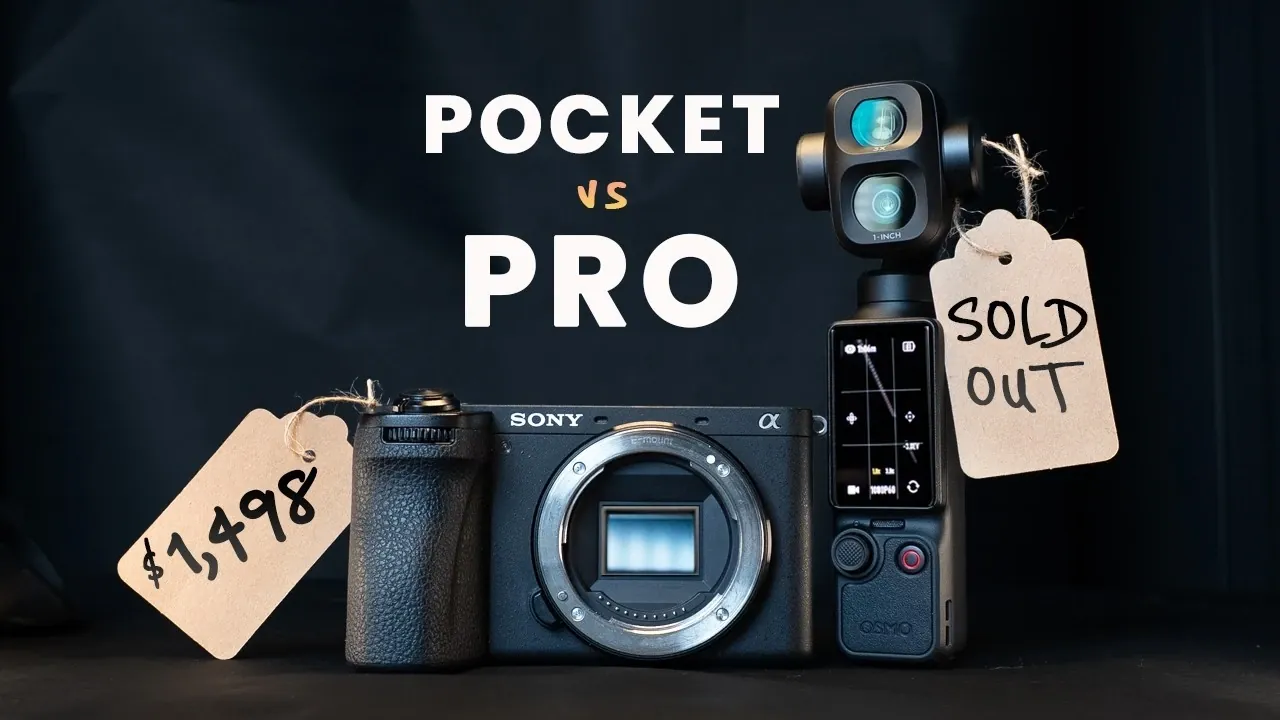
Choosing between the Pocket 4P and the Sony a6700 involves weighing portability against performance. The Pocket 4P stands out with its built-in gimbal stabilization and lightweight design, making it a practical choice for travelers and casual videographers. However, its fixed lens system and smaller sensor may limit creative flexibility and low-light performance. The Sony a6700, by contrast, offers an interchangeable lens system and superior dynamic range, catering to professionals who require precision and adaptability in diverse shooting environments. As highlighted by The Film Alliance, each camera serves distinct needs and understanding these differences is key to making the right choice.
Explore how these cameras compare across critical factors like low-light performance, stabilization and lens versatility. Gain insight into the Pocket 4P’s vibrant color reproduction and ease of use, alongside the a6700’s advanced features and post-production flexibility. Whether you’re prioritizing convenience or professional-grade results, this breakdown will help clarify which camera aligns best with your creative goals.
Sony A6700 vs Pocket 4P
TL;DR Key Takeaways :
- The Pocket 4P excels in producing vibrant, ready-to-use images with built-in gimbal stabilization, making it ideal for casual users and vloggers, but struggles with shadow details and low-light noise.
- The Sony a6700 offers superior dynamic range, natural tones and cleaner low-light performance, appealing to professionals who prioritize precision and post-production flexibility.
- The Pocket 4P features fixed focal lengths for simplicity, while the Sony a6700’s interchangeable lens system provides creative versatility at a higher cost.
- The Sony a6700 includes a larger display and electronic viewfinder for better usability in bright conditions, whereas the Pocket 4P’s compact display may limit functionality outdoors.
- The Pocket 4P is lightweight and budget-friendly, catering to portability-focused users, while the Sony a6700 offers advanced features and long-term investment value for professionals.
Image Quality: Vibrancy or Precision?
The Pocket 4P is celebrated for its ability to produce vivid, punchy colors straight out of the camera, making it an excellent choice for users who prefer minimal post-processing. However, it has limitations in handling shadow details, especially in high-contrast scenes, which can result in a loss of subtle textures and tones.
In contrast, the Sony a6700 excels in capturing natural tones and intricate details, particularly in shadowed areas. Its superior dynamic range allows for greater flexibility during post-production, making it the preferred option for photographers and videographers who prioritize precision and creative control. If you value vibrant, ready-to-use images, the Pocket 4P is a strong contender, but for those seeking professional-grade image quality, the a6700 stands out.
Low-Light Performance: Noise Control and Stability
Low-light conditions often test a camera’s capabilities and the Pocket 4P and Sony a6700 approach this challenge differently. The Pocket 4P maintains its signature vibrant color reproduction even in dim environments, aided by its built-in gimbal stabilization, which ensures smooth footage without additional equipment. However, its smaller sensor struggles with noise, leading to grainier images in darker settings.
The Sony a6700, equipped with a larger sensor, delivers cleaner images with reduced noise and better dynamic range in low-light scenarios. While its in-body stabilization is less effective for video, the a6700’s performance can be enhanced with external stabilization tools like gimbals. This trade-off makes the Pocket 4P more convenient for casual users, while the a6700 appeals to professionals who demand superior image quality in challenging lighting conditions.

Check out more relevant guides from our extensive collection on Pocket 4P that you might find useful.
- DJI Osmo Pocket 4P Global Launch is Finally Here
- Osmo Pocket 4P 1-Inch Sensor Beats iPhone 17 Pro for Video
- DJI Osmo Pocket 4P vs Insta360 Luna Ultra : Key Differences Explained
- DJI Pocket 4 vs Pocket 4P : Are the New Pro Features Worth the Upgrade?
- Why DJI Kept the Osmo Pocket 4P Specs a Secret at Cannes
- Why the DJI Osmo Pocket 4P Might Disappoint Social Media Creators
- Why the DJI Pocket 4P Might Disappoint Modern Social Media Creators
- Inside the Massive DJI Osmo Pocket 4P Upgrade : 17 Stops of Dynamic Range & More
- What the DJI Pocket 4P’s Dual-Camera System Means for Creators
- How the Insta360 Luna Ultra Challenges DJI’s Cinematic Dominance
Stabilization: Built-In Convenience vs External Precision
Stabilization is a critical factor for videographers and the Pocket 4P shines with its built-in gimbal stabilization, offering steady footage without the need for additional gear. This feature is particularly advantageous for vloggers, travelers and casual videographers who prioritize ease of use and portability.
On the other hand, the Sony a6700 features in-body stabilization, which is effective for still photography but less reliable for video. To achieve comparable video stability, users will need to invest in external stabilization equipment, such as gimbals or tripods. While this adds to the overall cost and complexity, it provides greater flexibility and precision for professional workflows.
Lens Options: Fixed Simplicity or Creative Versatility
The Pocket 4P features fixed focal lengths equivalent to 20mm and 60mm, offering simplicity and ease of use for casual users. However, this fixed lens system limits creative flexibility, as users cannot switch lenses to adapt to different shooting scenarios.
In contrast, the Sony a6700’s interchangeable lens system provides a wide array of options, from wide-angle lenses for landscapes to telephoto lenses for portraits and wildlife photography. This versatility allows users to tailor their setup to specific needs, but it comes at a higher cost, as additional lenses are required to unlock the camera’s full potential. For those who value creative freedom, the a6700 is the clear choice.
Dynamic Range and Color Profiles: Instant Results or Professional Control
The Pocket 4P is designed for users who prefer vibrant, ready-to-share images, thanks to its saturated color profiles. This makes it an excellent option for those who want visually striking results without extensive editing.
The Sony a6700, on the other hand, offers flatter color profiles, such as S-Log, which are ideal for advanced users who want to fine-tune colors and tones during post-production. This feature provides greater control over the final output, making the a6700 a better choice for professionals and enthusiasts who prioritize customization and precision.
Display and Viewfinder: Practicality in Different Environments
The Pocket 4P includes a compact display, which can be challenging to use for focusing and reviewing footage, particularly in bright outdoor conditions. This limitation may hinder usability in certain scenarios.
The Sony a6700 addresses this issue with a larger display and an electronic viewfinder, providing greater flexibility for composing shots and reviewing footage in various lighting environments. For users who frequently work in bright or unpredictable conditions, the a6700’s viewfinder is a significant advantage, especially for professional workflows.
Portability and Usability: Lightweight Design or Comprehensive Features
Weighing less and designed for portability, the Pocket 4P is an excellent choice for travelers, vloggers and casual users who need a lightweight, easy-to-carry camera. Its compact design and built-in stabilization make it a convenient option for on-the-go shooting.
The Sony a6700, while bulkier, offers a more robust feature set and extensive customization options. This makes it better suited for professionals or enthusiasts who prioritize performance and adaptability over convenience. If portability is your primary concern, the Pocket 4P is the ideal choice, but for those who need advanced features, the a6700 is worth the extra weight.
Price and Availability: Affordability or Long-Term Investment
The Pocket 4P is the more budget-friendly option, making it an attractive choice for cost-conscious buyers. However, its availability can be limited in certain regions, such as the United States, which may pose challenges for potential buyers.
The Sony a6700, while significantly more expensive, is widely available and supported by Sony’s extensive distribution network. For those willing to invest in a high-quality, versatile camera, the a6700 offers reliability and accessibility, making it a dependable choice for long-term use.
Choosing the Right Camera for Your Needs
The Sony a6700 is the better all-around camera for professionals and serious enthusiasts, offering advanced features, interchangeable lenses and post-production flexibility. Its superior image quality and creative versatility make it a powerful tool for a wide range of projects.
However, the Pocket 4P’s portability, built-in stabilization and ease of use make it a compelling option for casual users, travelers, or those who value convenience over complexity. Your decision ultimately depends on your specific needs and how you plan to use your camera. Whether you prioritize portability or professional-grade performance, both cameras offer unique advantages to suit different types of users.
Media Credit: The Film Alliance
Disclosure: Some of our articles include affiliate links. If you buy something through one of these links, Geeky Gadgets may earn an affiliate commission. Learn about our Disclosure Policy.
