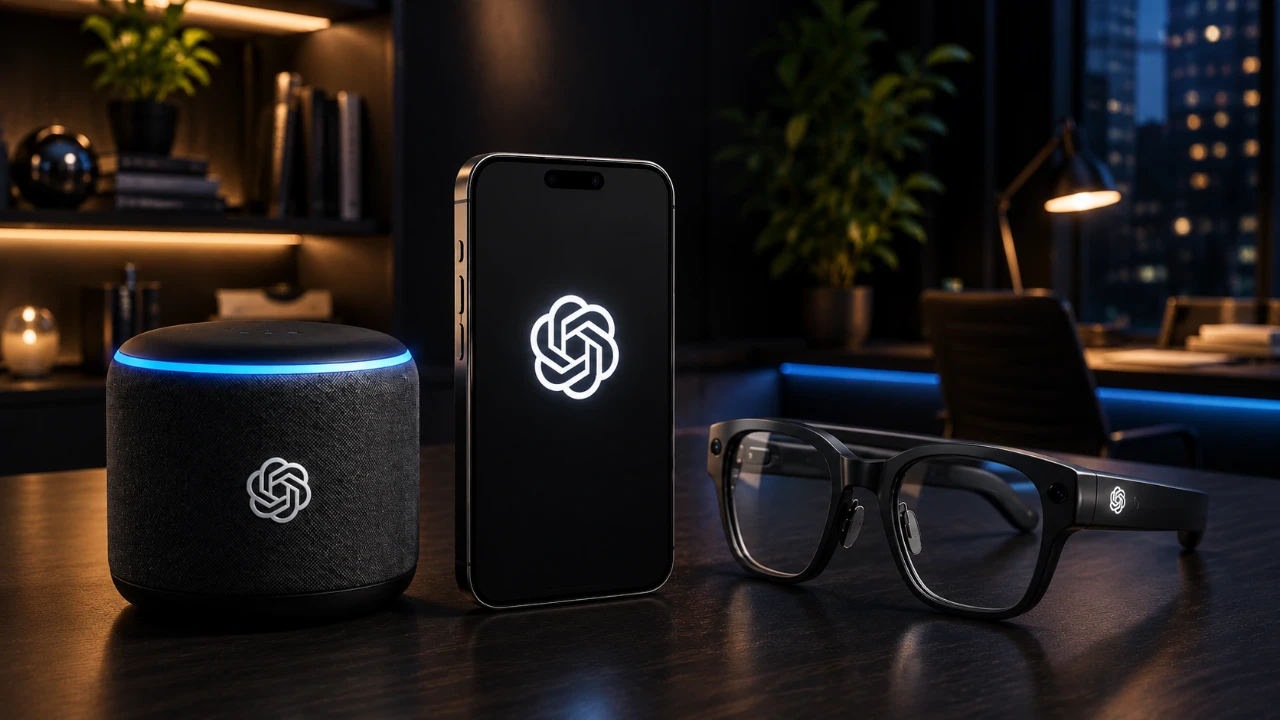
OpenAI is making a significant leap into the hardware market with the development of two innovative devices: a screenless smart speaker and an AI-powered smartphone. These products, created in collaboration with former Apple engineers, aim to reshape how you interact with technology. However, this ambitious move has sparked a legal dispute with Apple over alleged trade secret theft, setting the stage for a high-stakes rivalry that could redefine the tech landscape. The video below from MacRumors gives us more details on what OpenAI has planned.

Smart Speaker: A New Standard for Personal Interaction
OpenAI’s forthcoming smart speaker is designed to challenge conventional norms by eliminating the traditional screen and focusing entirely on voice-based interaction. Developed with input from renowned designer Jony Ive, the device incorporates advanced features that aim to create a more natural and engaging user experience.
Key features of the smart speaker include:
- Screenless Design: Prioritizes voice commands and conversational interaction, moving away from reliance on visual interfaces.
- Mechanical Movements: Subtle physical gestures, such as tilts or rotations, enhance its lifelike presence and responsiveness.
- Smart Home Integration: Seamlessly connects with devices like smart lights, thermostats and security systems, creating a unified home ecosystem.
- Adaptive Learning: Learns your preferences, habits and routines over time to deliver personalized assistance.
Priced between $200 and $300, the smart speaker is expected to launch in early 2027. It targets users who value intuitive technology that integrates seamlessly into their daily lives, offering a companion-like experience rather than a traditional device.
AI-Powered Smartphone: Redefining Mobile Interaction
OpenAI’s AI-driven smartphone represents a bold reimagining of mobile technology. Unlike traditional smartphones that rely heavily on apps, this device introduces a context-aware interface designed to anticipate your needs and provide relevant information or actions without requiring manual input.
Notable features of the smartphone include:
- Custom Hardware: Powered by MediaTek chipsets and dual AI processors optimized for tasks like natural language processing and computer vision.
- Advanced Photography: HDR image processing ensures superior photo and video quality, catering to both casual users and photography enthusiasts.
- Real-Time AI: Enhanced voice interaction and decision-making capabilities allow the phone to act as a proactive assistant.
Mass production is slated to begin in 2027, with a target of shipping 30 million units by 2028. This smartphone aims to redefine mobile interaction, offering a seamless blend of AI and hardware that adapts to your lifestyle and preferences.
Expanding the Ecosystem: OpenAI’s Vision for the Future
Beyond the smart speaker and smartphone, OpenAI is actively exploring additional AI-integrated devices to build a cohesive ecosystem. These potential products include:
- Smart Glasses: Lightweight, AI-enhanced eyewear designed for augmented reality and real-time information delivery.
- AI-Powered Earbuds: Wireless earbuds with advanced noise cancellation and real-time language translation capabilities.
- Smart Lamp: A multifunctional lamp that combines ambient lighting with AI-driven productivity tools.
These devices, though still in early development, reflect OpenAI’s ambition to create a holistic ecosystem where AI-driven hardware seamlessly integrates into your daily routine. If successful, this ecosystem could redefine how you interact with technology, making it more intuitive, efficient and personalized.
Legal Battle with Apple: A Clash of Titans
OpenAI’s aggressive hiring of over 400 former Apple employees has led to a legal confrontation with Apple, which accuses OpenAI of trade secret theft. The allegations stem from OpenAI’s acquisition of Jony Ive’s hardware startup and its recruitment of ex-Apple talent, raising concerns about the potential misuse of proprietary information.
This lawsuit has reportedly slowed OpenAI’s progress, creating uncertainty among suppliers and potentially delaying the release of its hardware products. The outcome of this legal battle could have far-reaching implications for both companies, influencing their strategies and shaping the broader tech industry.
Apple’s Countermove: Strengthening Its Dominance
In response to OpenAI’s hardware ambitions, Apple is reportedly developing competing products to maintain its leadership in the consumer electronics market. Rumored projects include:
- Advanced Smart Glasses: Augmented reality glasses with enhanced AI capabilities.
- AI-Integrated AirPods: Next-generation earbuds with improved voice recognition and contextual awareness.
- Intelligent Home Hub: A more sophisticated home automation device designed to rival OpenAI’s smart speaker.
These efforts underscore Apple’s determination to remain at the forefront of innovation. By doubling down on its own AI-driven hardware, Apple aims to counter OpenAI’s challenge and solidify its position as a leader in the tech space.
Market Implications: The Future of AI-Driven Hardware
OpenAI’s entry into the hardware market represents a significant challenge to Apple’s dominance in consumer technology. By using the expertise of former Apple engineers, OpenAI is poised to deliver innovative products that seamlessly integrate AI and hardware. This rivalry highlights the growing convergence of artificial intelligence and consumer electronics, signaling a fantastic shift in how you experience and interact with devices.
As OpenAI and Apple compete, the stakes are high. The outcome of this rivalry will likely shape the future of AI-driven hardware, influencing how technology evolves to meet your needs. Whether you’re an early adopter or a casual user, these advancements promise to redefine your relationship with technology, offering a glimpse into a more connected and intuitive future.
Expand your understanding of AI with additional resources from our extensive library of articles.
- Why Apple is Putting Cameras in the New AirPods Pro 4 (Ultra)
- New iPhone Air 2 Leak Shows Apple Reportedly Fixed It All
- Apple’s iPhone Air 2 Leak Suggests No More Single-Camera Trade-Offs
- Is the Fitbit Air the Whoop Killer We Have Been Waiting For?
- The iPhone Air 2 Just Leaked, and Apple Is Fixing the Original’s Biggest Flaw
- Why Google’s New Fitbit Air is Making Apple and Whoop Sweat
Source: MacRumors
Disclosure: Some of our articles include affiliate links. If you buy something through one of these links, Geeky Gadgets may earn an affiliate commission. Learn about our Disclosure Policy.
