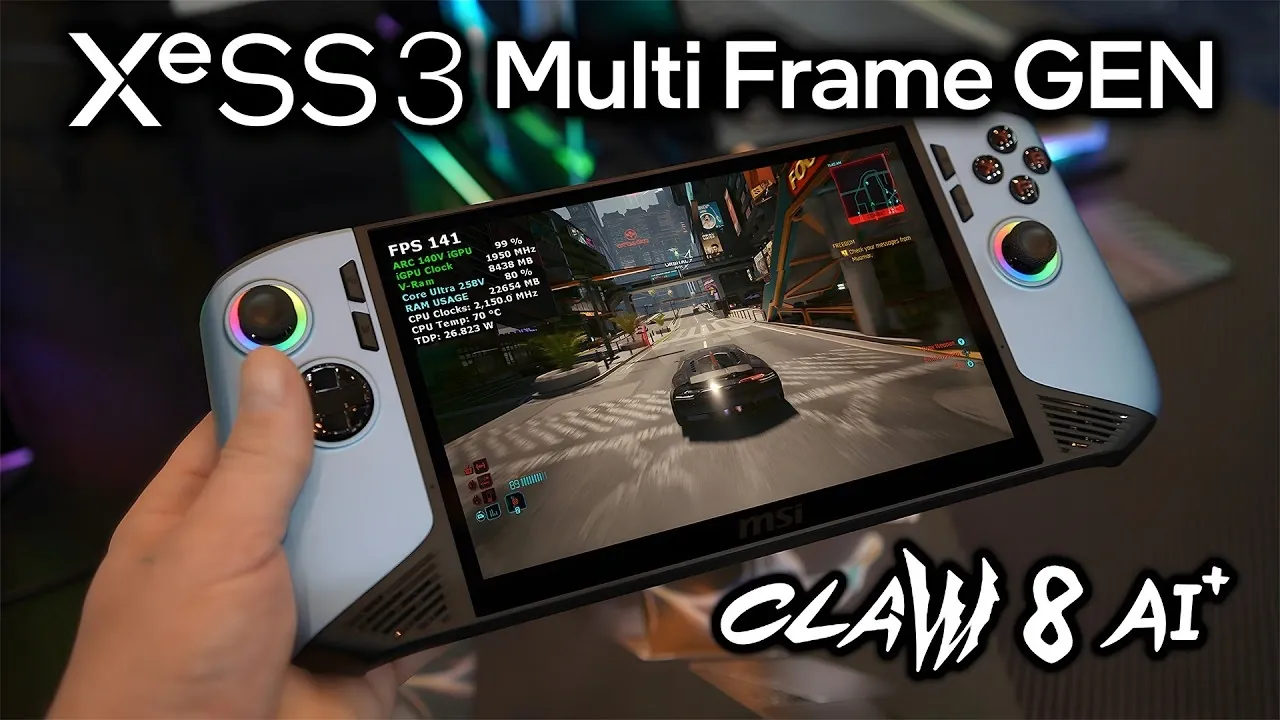
What if your handheld gaming device could deliver console-level performance without breaking a sweat? That’s exactly what Intel’s XESS multi-frame generation technology promises, and it’s already making waves on devices like the MSI Claw 8 AI. ETA Prime outlines how this new innovation uses Intel ARC GPUs and advanced frame generation techniques to deliver smoother gameplay, higher frame rates, and stunning visuals, all while maintaining impressively low latency. For gamers who crave the perfect blend of portability and performance, XESS might just be the fantastic option we’ve been waiting for.
In this overview, we’ll explore how XESS multi-frame generation is reshaping the handheld gaming landscape and why it’s causing such a stir among enthusiasts. From the seamless fluidity of X4 frame generation in graphically demanding titles to the surprising power efficiency of the MSI Claw 8 AI, there’s a lot to unpack here. But it’s not all smooth sailing, compatibility issues and the occasional trade-off between latency and visual fidelity add complexity to the equation. Whether you’re a tech-savvy gamer or just curious about the future of portable gaming, this deep dive into Intel’s innovative technology offers plenty to think about.
Understanding XESS Multi-Frame Generation
TL;DR Key Takeaways :
- Intel’s XESS multi-frame generation technology enhances gaming performance by generating additional frames, offering smoother gameplay and improved visuals, especially on devices like the MSI Claw 8 AI.
- XESS supports multiple frame generation modes (2x, 3x, 4x) and features a low latency mode, making it ideal for fast-paced and competitive games.
- The MSI Claw 8 AI, powered by Intel’s Core Ultra 7258V CPU and ARC 140VIG GPU, is optimized for XESS, delivering high-quality visuals at resolutions like 1200p while maintaining power efficiency.
- Performance improvements are evident in popular games like Cyberpunk 2077 and Hogwarts Legacy, though some titles face compatibility challenges, emphasizing the need for ongoing driver updates.
- Intel’s roadmap includes advancements like Panther Lake chips and improved ARC GPU drivers, promising better power efficiency, broader compatibility, and enhanced gaming experiences in the future.
XESS (Xe Super Sampling) multi-frame generation is Intel’s proprietary technology designed to improve gaming performance by generating additional frames between the ones rendered by the GPU. This process supports multiple modes, including 2x, 3x, and 4x frame generation, making sure smoother gameplay even in graphically demanding titles. A key feature of XESS is its low latency mode, which minimizes input lag, making it particularly suitable for fast-paced and competitive games.
This technology is optimized for Intel ARC GPUs, such as the ARC 140VIG integrated into the MSI Claw 8 AI. By combining hardware acceleration with advanced machine learning algorithms, XESS achieves a balance between performance and visual fidelity, even at higher resolutions like 1200p. This makes it an ideal solution for gamers who demand both portability and high-quality visuals.
Requirements for Optimal Performance
To fully use XESS multi-frame generation, specific hardware and software configurations are necessary. The MSI Claw 8 AI, equipped with Intel’s Core Ultra 7258V CPU and ARC 140VIG GPU, is a prime example of a device designed to support this technology. However, achieving optimal performance requires attention to several factors:
- Ensure the latest Intel ARC graphics drivers are installed. Outdated drivers can limit the effectiveness of XESS.
- Use tools like Display Driver Uninstaller (DDU) for a clean driver installation to avoid potential conflicts.
- Some games may require manual adjustments to driver files to enable full compatibility with XESS.
While these steps may involve some technical effort, they unlock the full potential of Intel’s frame generation capabilities, allowing gamers to experience smoother and more immersive gameplay.
XESS 3 Multi Frame Gen On MSI Claw 8

Here is a selection of other guides from our extensive library of content you may find of interest on handheld gaming.
- Battery-Powered Dual GPU Gaming: What You Need to Know
- PocketSprite Tiny Handheld Game System Launches From $45
- Louii handheld game console built from Wii components
- Best Gaming Handhelds 2025 Guide for Steam OS & Windows Players
- Awesome Ouya Handheld Game Console Created By Modder
- DIY portable Nintendo Wii handheld game system
- $649 GPD Win 2 Windows Handheld Gaming PC Unboxed
- Lenovo Legion Go 2 Review: Handheld Gaming Device Redefining
- Miyoo Mini Flip Review : Powerful Pocket-Sized Retro Gaming
- Commodore 64 Game Boy handheld console kit
Performance Insights Across Popular Games
XESS multi-frame generation delivers noticeable performance improvements across a variety of popular games, showcasing its versatility and effectiveness:
- In Cyberpunk 2077, the MSI Claw 8 AI achieves over 100 FPS at 1200p high settings using X4 frame generation, offering a fluid and visually stunning experience.
- Hogwarts Legacy benefits from smoother gameplay and enhanced visuals, particularly at 800p ultra settings, making it an excellent choice for fans of immersive RPGs.
- Other titles, such as Japanese Drift Master and Black Myth: Wukong, demonstrate the advantages of XESS in delivering consistent frame rates and improved graphics.
However, compatibility issues remain a challenge. For instance, in Borderlands 4, frame generation may not function as intended, highlighting the need for ongoing driver updates and game-specific optimizations. These limitations emphasize the importance of Intel’s commitment to refining its software ecosystem.
Power Efficiency and Portability
Power efficiency is a critical consideration for handheld gaming devices, and the MSI Claw 8 AI excels in this area. Operating at a 30W TDP, it strikes a balance between performance and power consumption, making sure extended gaming sessions without compromising on quality. For less demanding games, the device can operate at lower wattage settings, though this may require adjustments to resolution or graphics settings to maintain smooth gameplay.
Intel’s focus on power efficiency ensures that XESS multi-frame generation can be used without significantly impacting battery life. This is a crucial feature for portable gaming enthusiasts who prioritize mobility and convenience without sacrificing performance.
Looking Ahead: The Future of Handheld Gaming
Intel’s roadmap for handheld gaming promises exciting developments in the coming years. The anticipated release of Panther Lake chips is expected to further enhance performance, offering improved integration with ARC GPUs and XESS technology. These next-generation chips are likely to deliver better power efficiency and broader compatibility, addressing some of the current limitations of the technology.
Additionally, continuous improvements in ARC GPU drivers are on the horizon. These updates will expand game compatibility, refine frame generation algorithms, and enhance the overall user experience. With these advancements, Intel aims to solidify its position as a leader in the handheld gaming market.
Challenges and Recommendations
While XESS multi-frame generation offers numerous benefits, it is not without its challenges. Gamers may encounter certain limitations that require careful consideration:
- X4 frame generation, while delivering impressive visuals, may introduce latency in some games. For smoother gameplay, X3 frame generation is often a more reliable option.
- Online multiplayer titles, despite benefiting from low latency mode, can still face challenges with frame generation due to network-related factors.
To optimize your gaming experience, experiment with different XESS settings and modes based on the specific game and resolution. Regularly updating drivers and firmware is also essential to ensure compatibility and performance improvements. By staying informed and proactive, gamers can maximize the benefits of this innovative technology.
Shaping the Future of Portable Gaming
Intel’s XESS multi-frame generation technology represents a significant step forward in the evolution of handheld gaming. By delivering enhanced frame rates, improved visual quality, and efficient power consumption, it sets a new standard for portable gaming devices like the MSI Claw 8 AI. While challenges such as game compatibility and latency persist, Intel’s ongoing efforts to refine its hardware and software solutions promise a bright future for gamers. As the industry continues to evolve, innovations like XESS will play a pivotal role in shaping the next generation of gaming experiences.
Media Credit: ETA PRIME
Disclosure: Some of our articles include affiliate links. If you buy something through one of these links, Geeky Gadgets may earn an affiliate commission. Learn about our Disclosure Policy.
