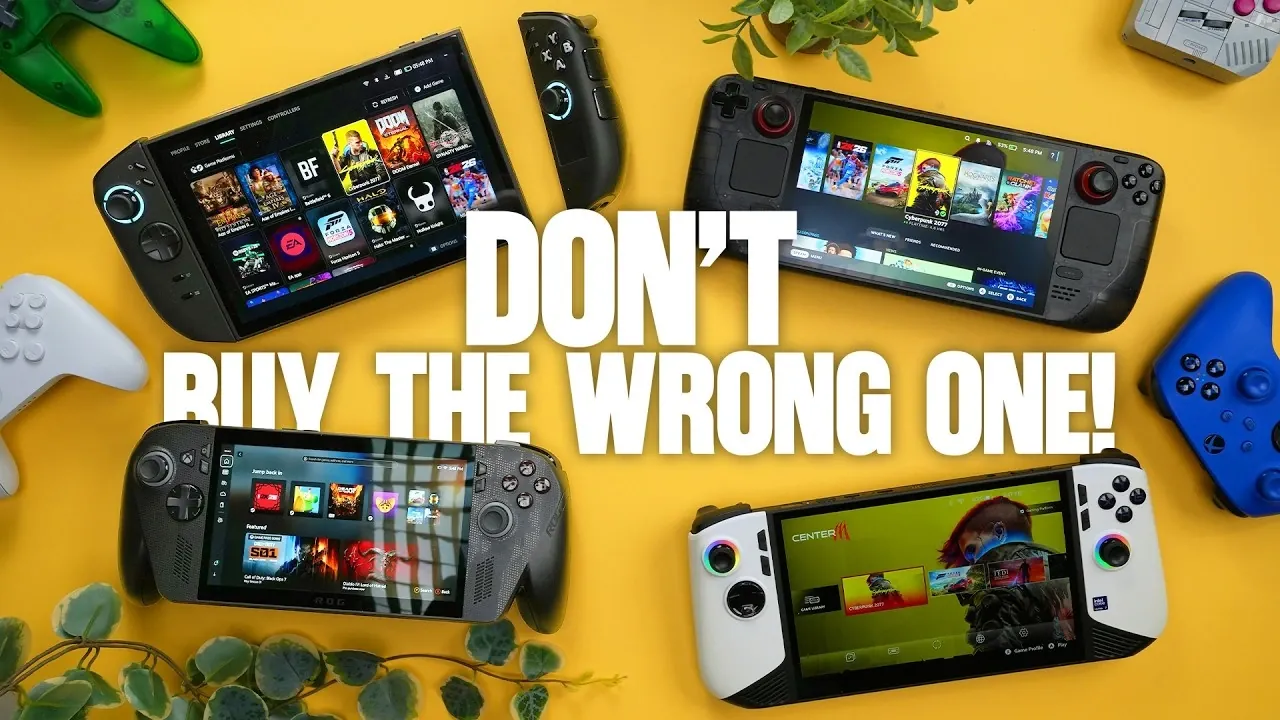
Imagine this: you’re on a cross-country flight, and nestled in your hands is a sleek gaming handheld that delivers console-quality graphics, buttery-smooth gameplay, and hours of battery life. Sounds like the dream, right? But in 2025, this dream is no longer a fantasy, it’s a reality, with devices like the Xbox Ally X, Steam Deck OLED, and Lenovo Legion Go 2 leading the charge. These handhelds represent the pinnacle of portable gaming, but with so many innovative options, the question isn’t whether you should invest in one, it’s which one deserves your hard-earned cash. Each device features its own strengths, from affordability to raw power, making the decision as thrilling as it is daunting.
In this comprehensive comparison, Tech Fowler breaks down the features, performance, and quirks of these top-tier gaming handhelds to help you find your perfect match. Whether you’re drawn to the vibrant OLED display of the Steam Deck, the high-end performance of the Legion Go 2, or the ergonomic portability of the Ally X, there’s a device tailored to your gaming lifestyle. But which one strikes the ideal balance of price, power, and practicality? By the end of this deep dive, you’ll have a clear understanding of what sets each contender apart, and which one is destined to elevate your gaming experience. After all, in a market this competitive, the right choice isn’t just about specs; it’s about finding the handheld that feels like it was made for you.
Top Gaming Handhelds of 2025
TL;DR Key Takeaways :
- The gaming handheld market in 2025 is highly competitive, with devices like the Steam Deck OLED, Lenovo Legion Go 2, Asus ROG Ally X, and MSI Claw 8i Plus offering diverse options for various budgets and gaming preferences.
- The Steam Deck OLED is an affordable entry-level option with a vibrant OLED display, long battery life, and ease of use, but it has limited hardware power and compatibility issues with some games.
- The Lenovo Legion Go 2 delivers high-end performance with innovative hardware and a 144Hz OLED display, but its bulky design and premium price may not suit all gamers.
- The Asus ROG Ally X balances portability and performance with ergonomic design and solid hardware, though it has shorter battery life and limited connectivity options.
- The MSI Claw 8i Plus offers exceptional power and precision for demanding gamers, but its flat design and reflective screen may impact comfort and usability during extended sessions.
Steam Deck OLED: Affordable and Accessible
The Steam Deck OLED stands out as an excellent entry-level option for gamers seeking affordability without sacrificing quality. Priced at $549, it features a vibrant OLED display with HDR support and a 90Hz refresh rate, delivering visually stunning gameplay. Its lightweight and ergonomic design ensures comfort during extended sessions, while the intuitive controls make it particularly appealing to beginners. Running on Steam OS, the device provides a console-like experience optimized for Valve’s extensive game library.
Despite its strengths, the Steam Deck OLED has some limitations. Its hardware is less powerful compared to newer competitors, and the 1280×800 resolution may not satisfy gamers seeking ultra-high-definition visuals. Additionally, Steam OS faces compatibility challenges with certain games, especially those requiring anti-cheat software. However, the device compensates with expandable storage via microSD and a long battery life ranging from 3 to 12 hours, making it a practical choice for budget-conscious gamers who value accessibility and ease of use.
Lenovo Legion Go 2: High-End Performance
The Lenovo Legion Go 2 is a powerhouse designed for gamers who prioritize performance and innovative technology. Equipped with AMD Ryzen Z2 Extreme processors, up to 32GB of RAM, and 2TB of storage, it effortlessly handles demanding AAA titles and resource-intensive tasks. Its 8.8-inch OLED display with a 144Hz refresh rate ensures stunning visuals and smooth gameplay, while the detachable controllers add versatility, particularly in FPS mode. This feature makes it a standout choice for competitive gamers seeking precision and adaptability.
However, the Legion Go 2’s high performance comes at a premium, with prices ranging from $1,099 to $1,500. Its bulky design may deter those who prioritize portability, and the detachable controllers, while innovative, can feel overwhelming due to their numerous buttons. Nevertheless, for gamers seeking top-tier performance, display quality, and unique features, the Lenovo Legion Go 2 remains a compelling option that delivers on its promise of high-end gaming.
Xbox Ally X vs Steam Deck OLED vs Lenovo Legion Go 2

Expand your understanding of gaming handhelds with additional resources from our extensive library of articles.
- Best Gaming Handheld 2025: Legion Go 2 vs Ally X vs Claw 8
- Best Gaming Handhelds of 2025: Top Picks for Every Gamer
- Double Your Gaming Power on the Go: The Future of Handheld
- ROG Ally 2 Gaming Handheld Rumors : Specs, Features and
- ASUS ROG Xbox Ally Windows Gaming Handheld : Features
- AMD Ryzen Z2 Extreme: Powering the Next Handheld Gaming
- Miyoo Mini Flip Review : Compact Retro Gaming Handheld
- How To Turn The Asus ROG Flow Z13 Into A DIY Gaming Handheld
- AMD Ryzen AI Max Plus 395 Overview : Powerful Handheld Gaming
- PyGamer open source handheld gaming starter kit $59.95
Asus ROG Ally X: Ergonomics and Portability
The Asus ROG Ally X strikes a balance between performance and portability, making it a versatile choice for gamers on the go. Its ergonomic design, featuring Xbox-style grips, ensures a comfortable gaming experience even during long sessions. Available in two versions—$600 for the base model and $999 for the high-end variant, it caters to a wide range of budgets. The high-end model includes an AMD Ryzen Z2 Extreme AI chip, 24GB of RAM, and 1TB of storage, offering solid performance for modern games.
Despite its strengths, the ROG Ally X has some trade-offs. Its 7-inch 1080p IPS display, while sharp, lacks the brightness and vibrancy of OLED panels. Additionally, its battery life ranges from 2.5 to 6 hours, which is shorter than many competitors. With only one USB 4 port, connectivity options are also limited. However, its compact design, front-facing speakers, and user-friendly interface make it an excellent choice for gamers who value portability and comfort without compromising too much on performance.
MSI Claw 8i Plus: Power and Precision
The MSI Claw 8i Plus is tailored for gamers who demand high performance and precision. Powered by an Intel Core Ultra 7 processor, Intel ARC 140VG GPU, and 32GB of LPDDR5X RAM, it excels in handling intensive gaming tasks. Its 8-inch 1080p IPS display supports a 120Hz refresh rate and Variable Refresh Rate (VRR), making sure smooth and immersive visuals. Priced at $1,029, it offers a competitive option for power users who seek a balance between price and performance.
However, the device’s flat design and less ergonomic grips may not suit all users, particularly those who prioritize comfort during extended play. The reflective screen coating can cause glare in bright environments, and fan noise becomes noticeable during intensive gameplay. Despite these minor drawbacks, the MSI Claw 8i Plus delivers exceptional performance and value, making it a strong contender for gamers who prioritize power and precision.
Budget and Mid-Range Recommendations
Selecting the right gaming handheld depends on your budget and gaming preferences. Here are the top recommendations based on price and performance:
- Best Budget Option: Steam Deck OLED. Its affordability, ease of use, and long battery life make it ideal for beginners and casual gamers.
- Best Mid-Range Option: Lenovo Legion Go S (Steam OS version). Priced at $900, it offers a balanced mix of performance, features, and affordability.
- Best High-End Option: Lenovo Legion Go 2. With its superior display, hardware, and innovative features, it caters to gamers seeking the ultimate experience.
Key Considerations
When choosing a gaming handheld, it is essential to evaluate the following factors to ensure the device meets your needs:
- Budget: Determine your spending limit and compare the features offered at each price point to maximize value.
- Display Quality: OLED panels provide superior visuals, while high refresh rates enhance gameplay fluidity.
- Operating System: Steam OS offers a streamlined, console-like experience but may face compatibility issues, whereas Windows provides broader game support.
- Portability and Comfort: Consider the device’s size, weight, and ergonomic design for extended gaming sessions.
- Battery Life: Longer battery life is crucial for uninterrupted gaming, especially during travel or long commutes.
Making the Right Choice
The best gaming handheld of 2025 ultimately depends on your individual preferences, gaming habits, and budget. The Steam Deck OLED is an excellent choice for those seeking affordability and simplicity, while the Lenovo Legion Go 2 and MSI Claw 8i Plus cater to power users who demand high performance. Meanwhile, the Asus ROG Ally X offers a portable and ergonomic solution for gamers who prioritize mobility. By carefully considering your priorities and evaluating the features of each device, you can confidently select the handheld that best complements your gaming lifestyle.
Media Credit: Tech Fowler
Disclosure: Some of our articles include affiliate links. If you buy something through one of these links, Geeky Gadgets may earn an affiliate commission. Learn about our Disclosure Policy.
