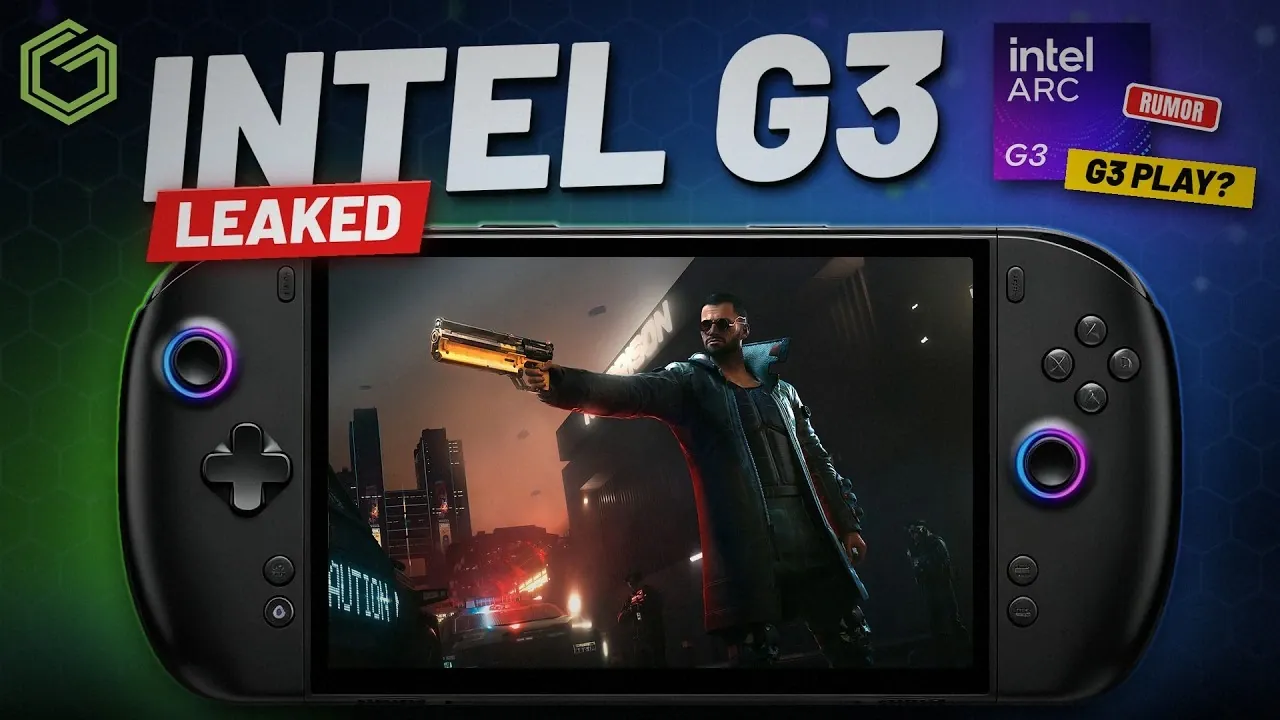
Now priced between $1,449.99 and $1,849, premium Panther Lake handhelds cost more than their launch prices and early estimates suggested. GameTechPlanet takes a closer look at what those changes mean for you when buying a portable gaming PC. The price gaps involve more than different processors, with memory and storage configurations also varying between models. See why rising component costs and demand from AI servers are putting pressure on handheld prices, while TrendForce expects DRAM shortages to persist into next year.
Panther Lake Handhelds Carry Higher Prices
TL;DR Key Takeaways :
- Windows Central reports that Acer’s Predator Atlas 8 rose from $1,299.99 to $1,449.99 at Best Buy nine days after launch.
- MSI lists the Claw 8 EX AI+ at $1,799 with a G3 Extreme and 1TB SSD, versus $1,499 for a G3 model with 512GB.
- Notebookcheck reports that the OneXPlayer 3’s 24GB/512GB configuration initially cost $1,399 through crowdfunding; its current advertised price is $1,549.
- Notebookcheck reports that GPD said DDR5 prices rose another 44% between August and November 2026.
- TrendForce forecast that DRAM supplies would remain constrained throughout 2027, although quarterly contract price increases would gradually moderate.
Acer, MSI and OneXPlayer all sell premium handhelds with Intel’s Arc G3 and G3 Extreme processors, at prices that vary by chip, memory and storage configuration. Intel introduced the G-Series family in May 2026 for handheld gaming systems. Its processors use Intel’s Core Ultra Series 3 architecture, codenamed Panther Lake, and support XeSS upscaling and frame generation regardless of GPU core count.
Acer’s Atlas 8 Rose $150 After Launch
The Acer Predator Atlas 8 reached its higher US price just nine days after launch: Windows Central reports that it debuted on November 1, 2026, at $1,299.99 and rose to $1,449.99 at Best Buy on November 10. That US configuration includes an Intel Arc G3 Extreme processor, 24GB of LPDDR5x memory and a 512GB SSD, and Acer’s own US store also lists it at $1,449.99.
MSI’s Extreme Model Costs More Than Standard G3
The MSI Claw 8 EX AI+ costs more than early estimates suggested. They pointed to around $1,500, but MSI’s US store has listed its G3 Extreme configuration at $1,799 since launch, with 32GB of memory and 1TB of storage. MSI also lists a separate model with the standard Arc G3 for $1,499, which has the same 32GB of memory but a smaller 512GB SSD, so both the processor and storage differ between the listings.
GameTechPlanet considers the Acer and MSI prices high for the handheld market, and notes that anything under $700 or $800 now counts as low-priced, a range that covered higher-end handhelds a couple of years ago.

Deep dive into the latest in Acer Predator Atlas 8 by exploring our other resources and articles.
- Acer Predator Atlas 8 Arrives Early with G3 Extreme Chip: Undercuts MSI Claw EX
- Acer Predator Atlas 8 Tested: Does This Intel-Powered Beast Dethrone AMD?
- Acer Predator Atlas 8 Matches MSI Claw Speeds to Save You $500
- Acer Predator Atlas 8 GPU Outperforms AMD Z2 Extreme in Games
- Docked Acer Predator Atlas 8 Handles 1440P Ray Tracing at 48W
OneXPlayer’s Prices Rose After Crowdfunding
OneXPlayer 3 prices rose as the handheld reached retail. Notebookcheck reports that the 24GB/512GB configuration initially had a $1,399 crowdfunding price, before all three configurations rose by $100 when retail pre-orders began on July 30, 2026. Current advertised prices are higher again than those pre-order prices:
- 24GB/512GB: $1,499 at retail pre-order; $1,549 advertised now.
- 24GB/1TB: $1,599 at retail pre-order; $1,649 advertised now.
- 32GB/1TB: $1,799 at retail pre-order; $1,849 advertised now.
GameTechPlanet says its own OneXPlayer 3 with the G3 Extreme has delivered 10-30 more frames per second than the prior Intel Core Ultra 200 series or Z2 Extreme.
Notebookcheck also reports that GPD announced a $1,699 Indiegogo price for the WIN Mini Ultra with 32GB of memory and 1TB of storage on November 20, while its 64GB configurations are reserved for retail rather than the crowdfunding campaign.
A Cheaper G3 Play Chip is Only a Rumor
GameTechPlanet also covers a VideoCardz leak about a cheaper chip, the Arc G3 Play. Intel has not announced it, so everything about it is rumor. A four-core GPU could have a role in the lineup, potentially targeting 720p at lower settings while relying heavily on XeSS upscaling and frame generation. Its rumored E-cores and lower power range suggest a focus on battery life, thermals and lower cost.
GameTechPlanet expects that a G3 Play device might need less RAM and storage, favoring streaming and lower-end games over demanding graphics. A Legion Go-style handheld could be used mostly for streaming while still playing some games locally, relying on Intel decoding for streams. A price below $1,000 or $800 could put it against Steam Deck models and cheaper AMD handhelds, while sufficient gaming performance at or below ROG Xbox Ally pricing could be significant.
Memory and Storage Costs Add Pressure
Component costs have become a pricing challenge for handheld makers. FRVR reports that MSI product marketing lead Andy Chu identified rising memory and storage costs as challenges for the Claw 8 EX AI+ in June, and that MSI sought lower procurement costs through closer supplier relationships and agreements. GPD has also pointed to rising memory costs: Notebookcheck reports that the company said DDR5 prices increased a further 44% between August and November 2026 when it announced WIN Mini Ultra pricing.
TrendForce reported in September that DRAM manufacturers were allocating advanced production capacity to high-performance server products, leaving the broader market undersupplied. It attributed that shift partly to AI-related demand and higher profit margins.
Memory Supply is Expected to Stay Tight
TrendForce projected fourth-quarter 2026 contract price increases of 10-15% for conventional DRAM and 15-20% for NAND flash, compared with the previous quarter. It also projected enterprise SSD capacity demand growth of more than 80% year on year in 2026 as cloud providers expanded AI inference infrastructure.
On November 25, TrendForce reported that inventories of lower-cost memory for consumer electronics, including PCs and smartphones, had been depleted. It forecast that DRAM supplies would remain constrained throughout 2027, although quarterly contract price increases would gradually moderate. Its outlook for NAND flash differs: expanding production capacity is expected to bring overall contract prices down in 2027.
In our view, the telling part is that a price rise came within weeks of launch on a device already costing four figures. Acer’s Atlas 8 rose $150 in just nine days. Buyers at this level are paying for early access, and the price may keep moving after you commit. Before buying, we would check the current price on the maker’s own store, since these numbers have been shifting quickly. We would also compare the total cost against cheaper handhelds, because a higher price does not automatically mean a better experience.
Budgeting for one of these premium handhelds at its launch price could leave you short when you reach the checkout. If you are shopping for a Panther Lake gaming handheld, current manufacturer and retailer listings are worth comparing in more detail for the configuration you intend to buy.
Media Credit: GameTechPlanet
Disclosure: Some of our articles include affiliate links. If you buy something through one of these links, Geeky Gadgets may earn an affiliate commission. Learn about our Disclosure Policy.
