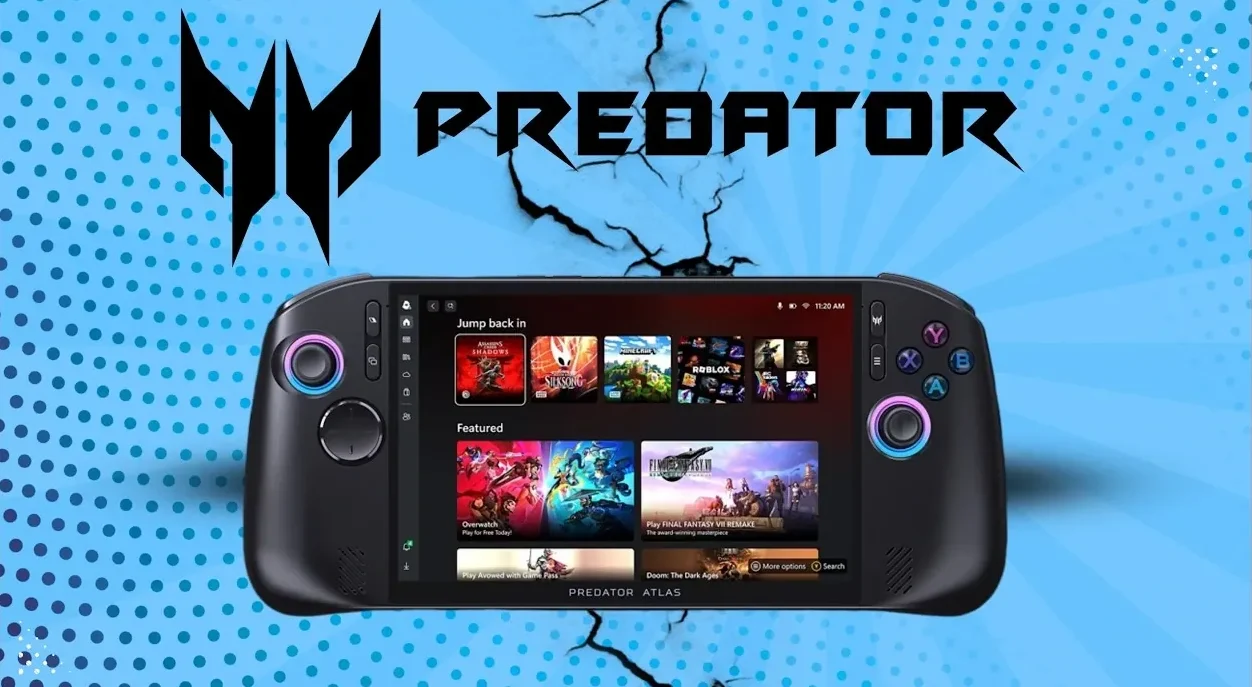
The Acer Predator Atlas 8 has arrived ahead of its planned November 1, 2026 release, entering the market as a mid-range handheld gaming device. Haviq Tech examines its unboxing and initial impressions, highlighting key specifications such as the G3 Extreme processor and 24GB of RAM, which aim to balance performance for demanding games. Notable design elements include ergonomic grips and customizable back buttons, while constraints like a 512GB storage limit and a soft D-pad may influence its appeal for certain users.
Explore how the Atlas 8 stacks up against competitors like the MSI Claw EX and ROG Ally X20, with attention to heat management, display quality, and overall functionality. Learn about the included accessories, such as the matte screen protector and 65W charging cable, and assess their role in enhancing the device’s usability. This feature also evaluates its gaming performance and durability to provide a clearer understanding of its potential fit for your gaming needs.
Balancing Performance and Cost
TL;DR Key Takeaways :
- The Acer Predator Atlas 8 is a mid-range handheld gaming device priced at $1,299, offering a balance between affordability and performance compared to premium competitors like the MSI Claw EX.
- Key specifications include a G3 Extreme processor, 24GB of RAM, 512GB of storage and an 8-inch display, with trade-offs in storage capacity and RAM compared to higher-end models.
- The device emphasizes portability and ergonomics with a lightweight design, ergonomic grip, TMR sticks, Hall effect triggers and customizable back buttons, though the D-pad has received mixed feedback.
- Heat management is addressed with heat dissipation chambers and the unboxing experience includes thoughtful accessories like a matte screen protector, cleaning kit and 65W charging cable.
- While the Atlas 8 offers a strong value proposition for budget-conscious gamers, further testing is needed to evaluate its gaming performance, durability and ability to compete in the growing handheld gaming market.
The Predator Atlas 8 is powered by the G3 Extreme processor, a chip designed specifically for portable gaming. This is paired with 24GB of RAM, which provides solid multitasking capabilities, though it falls short of the 32GB offered by the MSI Claw EX. Storage is limited to 512GB, half the capacity of some premium competitors, which may require users to manage their game library more carefully.
The device features an 8-inch display, matching the screen size of the MSI Claw EX. However, further testing is needed to evaluate its resolution, brightness, and color accuracy, which are critical for an immersive gaming experience. While these specifications may not dominate the high-end market, they represent a calculated trade-off between performance and cost, making the Atlas 8 an appealing option for gamers seeking a budget-friendly handheld device without sacrificing too much functionality.
Design and Build: Comfort Meets Functionality
The design of the Atlas 8 emphasizes portability and ergonomics, making it well-suited for extended gaming sessions. Its compact and lightweight build ensures ease of use, while the ergonomic grip provides a secure and comfortable hold, enhancing overall usability.
The gaming controls include TMR sticks and Hall effect triggers, which deliver precise input and smooth responsiveness. However, the D-pad has been described as “squishy” during initial testing, which could be a drawback for certain types of games, particularly those that rely heavily on directional inputs. Customizable back buttons add an extra layer of versatility, allowing users to tailor the controls to their preferences.
Heat management is another area of focus. The device incorporates heat dissipation chambers designed to keep it cool during intensive gameplay. While this feature appears promising, its real-world effectiveness will require further testing to determine if it can handle prolonged gaming sessions without performance throttling.

Take a look at other insightful guides from our broad collection that might capture your interest in gaming handhelds.
- MSI Claw 8 EX Hits 61% Higher Frame Rates vs ROG Ally X20
- MSI Claw 8EX Ai+ Costs $1800 but Hits 70 FPS in Cyberpunk 2077
- Lenovo Legion C700 Pairs MediaTek Dimensity 7400 with Android 16
- ONEXPLAYER 3 Beats ROG Ally X with Intel Arc G3 Extreme
- GPD Win Max 3 Cooling Module Enables 120W Desktop Gaming
- Acer Just Revealed Two Gaming Handhelds with Wildly Different Specs
- Build a 1440P PC with a Lenovo Legion Go 2 and RTX 5060 eGPU
- AYN Odin 2 Portal 7 inch OLED Handheld Games Console Outshining the Competition
- Retroid Pocket 5: Game Emulation Performance and Features Tested
- Mini DIY ESP32-S3 Handheld Games Console Emulates Nintendo and Sega Games
Unboxing and Accessories: A Premium Presentation
Acer has clearly invested effort into creating a thoughtful unboxing experience. The Predator Atlas 8 comes with a selection of practical accessories that enhance its usability and maintenance:
- A matte screen protector to minimize glare and fingerprints
- A cleaning kit to help maintain the device’s appearance
- A 65W charging cable for fast and efficient recharging
The packaging itself is sleek and visually appealing, standing out from the more utilitarian designs of competitors like the MSI Claw EX. This attention to detail suggests Acer’s intent to deliver a product that feels more premium than its price tag might indicate, adding to the overall value proposition of the Atlas 8.
Price Comparison: Affordable with Considerations
Priced at $1,299, the Predator Atlas 8 is significantly more affordable than the MSI Claw EX, which retails for $1,799. This $500 price difference makes the Atlas 8 an attractive choice for gamers who want a capable handheld device without overspending. However, the lower price comes with trade-offs, such as reduced RAM, smaller storage capacity and some compromises in design elements like the D-pad.
For gamers who prioritize affordability over innovative specifications, the Atlas 8 offers a compelling option. However, those who require top-tier performance or additional storage may find the trade-offs less acceptable. Ultimately, the decision will depend on individual gaming needs and priorities.
Initial Impressions: A Solid Start
The Predator Atlas 8 makes a strong first impression with its responsive controls, lightweight design, and customizable back buttons that enhance gameplay flexibility. The inclusion of a heat dissipation system further adds to its appeal, though its long-term effectiveness remains to be seen.
While the build quality appears solid, Acer’s reputation for quality control may raise concerns for some potential buyers. The company’s track record with consistency will be a key factor in determining whether the Atlas 8 can maintain its initial promise over time. Comprehensive reviews and extended testing will be essential to assess its durability and performance under heavy use.
Looking Ahead: Testing and Market Position
Further evaluation of the Atlas 8 will focus on its gaming performance, including benchmarks and real-world usability. Comparisons with other Windows-based handheld devices, such as the ROG Ally X20, will provide additional context for its position in the market. These tests will help determine whether the Atlas 8 can deliver on its promise of affordability without compromising too much on quality or performance.
As the handheld gaming market continues to grow, the Predator Atlas 8 has the potential to carve out a niche for itself as a mid-range option that balances cost and functionality. Whether it can truly compete with premium devices will depend on its ability to meet the expectations of gamers seeking a reliable and versatile portable gaming solution.
Media Credit: Haviq Tech
Disclosure: Some of our articles include affiliate links. If you buy something through one of these links, Geeky Gadgets may earn an affiliate commission. Learn about our Disclosure Policy.
