
What if the future of artificial intelligence wasn’t just faster or smarter, but fundamentally more sustainable? Picture this: a world where the energy demands of AI no longer threaten to outpace our power grids, where computational systems mimic the effortless efficiency of nature itself. This isn’t science fiction, it’s the promise of thermodynamic computing, a new paradigm that reimagines how machines process information. By drawing inspiration from the natural world, thermodynamic computing offers a bold solution to one of AI’s most pressing challenges: its insatiable appetite for energy. Could this be the key to unlocking a future where innovation and sustainability coexist?
Below Extropic explain how thermodynamic computing is poised to transform the way we think about energy and intelligence. From probabilistic bits (PITS) that defy the rigidity of traditional binary systems to specialized processors like Thermodynamic Sampling Units (TSUs), this emerging field combines innovative hardware with nature-inspired principles to achieve unparalleled energy efficiency. Along the way, you’ll discover the tools, prototypes, and real-world applications that are driving this shift, and why the stakes couldn’t be higher. As we stand at the crossroads of technological progress and environmental responsibility, thermodynamic computing offers a glimpse into a future where AI evolves not at the expense of our planet, but in harmony with it.
Thermodynamic Computing Overview
TL;DR Key Takeaways :
- Thermodynamic computing offers a innovative approach to AI by optimizing intelligence generation per unit of energy, addressing the growing energy crisis in computational systems.
- Inspired by nature, this paradigm uses probabilistic states instead of binary states, allowing energy-efficient computations and opening new possibilities for AI and machine learning.
- Key innovations include Probabilistic Bits (PITS) and Thermodynamic Sampling Units (TSUs), which redefine computation and enable significant energy savings while maintaining high performance.
- Prototypes like the X0 chip, XTR0 testing kit, and the “Thermal” Python library are accelerating the development and adoption of thermodynamic computing technologies.
- The Z1 TSU chip, featuring 4 million interconnected PITS, and denoising thermodynamic models demonstrate the potential for up to 10,000 times energy savings in machine learning, paving the way for sustainable AI development.
The Growing Energy Crisis in AI
As AI systems continue to evolve in complexity, their energy consumption is increasing at an alarming rate. Current AI models rely heavily on scaling computational power and processing vast amounts of data, which significantly drives up energy costs and strains global energy resources. Projections indicate that the energy requirements of AI could soon exceed the capacity of existing power grids, creating a critical bottleneck for innovation. This unsustainable trajectory underscores the urgent need for alternative approaches. Thermodynamic computing offers a promising solution by fundamentally reimagining how energy is used to generate computational intelligence.
Understanding Thermodynamic Computing
Thermodynamic computing draws inspiration from nature, where processes operate with remarkable energy efficiency. Unlike traditional binary computing, which depends on deterministic states of 0s and 1s, thermodynamic computing uses probabilistic states to perform calculations. This probabilistic approach allows processors to handle complex computations while consuming significantly less energy. By focusing on energy efficiency, thermodynamic computing not only reduces power consumption but also opens up new possibilities for AI and machine learning applications.
This paradigm shift introduces a novel way of thinking about computation, emphasizing the importance of energy as a resource. By aligning computational processes with the principles of thermodynamics, this approach seeks to maximize output while minimizing energy input, creating a foundation for sustainable technological advancement.
Hello Thermo World : Extropic

Explore further guides and articles from our vast library that you may find relevant to your interests in AI computing.
- How the NVIDIA DGX Spark Redefines Local AI Computing Power
- Edge AI Computing New ASUS IoT’s New Tinker Board 3
- The Role of Cloud Computing in Shaping Edge AI Technology
- Artificial Intelligence vs Quantum Computing
- How Data Centers Are Driving AI and Cloud Computing Growth
- NVIDIA DGX Spark : Compact AI Mini Supercomputer Unboxing
- Orange Pi RV2 Review: Affordable RISC-V Computing for IoT & AI
- Google’s Willow Chip Sets a New Standard in Quantum Computing
- Firefly dual-lens AI camera module now available from $89
- Spacetop G1 a laptop designed for the spatial computing era
Core Innovations: Probabilistic Computing and Advanced Hardware
The foundation of thermodynamic computing lies in two key innovations: probabilistic bits (PITS) and Thermodynamic Sampling Units (TSUs). These technologies redefine how computations are performed and pave the way for energy-efficient processing.
- Probabilistic Bits (PITS): Unlike traditional binary bits, which represent fixed states of 0 or 1, PITS exist in programmable probabilistic states. This flexibility allows for more efficient and adaptive computation, particularly in tasks involving uncertainty or complex probability distributions.
- Thermodynamic Sampling Units (TSUs): These specialized processors are designed to harness the capabilities of PITS. TSUs enable energy-efficient calculations that are beyond the reach of conventional processors, making them ideal for advanced machine learning and optimization tasks.
Together, PITS and TSUs form the backbone of thermodynamic computing, offering a fantastic approach to computational efficiency. By integrating these technologies, researchers and developers can achieve significant energy savings while maintaining high levels of performance.
Prototypes and Tools Accelerating Development
To demonstrate the practicality of thermodynamic computing, Extropic has developed a suite of tools and prototypes that showcase its potential. These resources are designed to make the technology accessible to researchers, developers, and industry leaders.
- X0 Prototype Chip: This chip operates at room temperature and serves as a proof of concept for thermodynamic computing. It demonstrates the feasibility of energy-efficient computation in real-world scenarios.
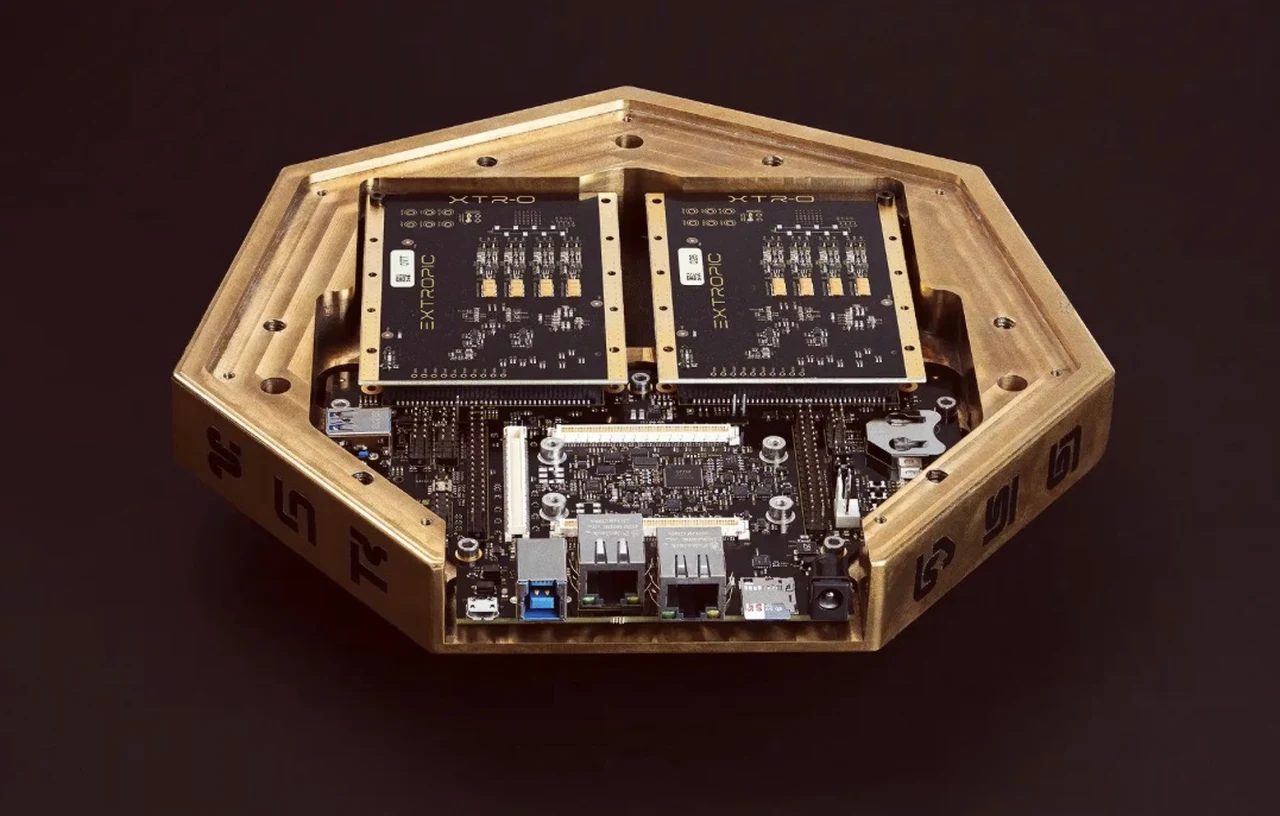
- XTR0 Testing Kit: Designed for researchers, this kit enables experimentation with hybrid algorithms that combine traditional processors with TSUs. It provides a platform for exploring the integration of thermodynamic computing into existing systems.
- “Thermal” Python Library: An open source tool that allows developers to simulate TSUs on GPUs. This library assists the exploration of new algorithmic possibilities and accelerates the adoption of thermodynamic computing in AI research.
These tools are instrumental in driving the development and adoption of thermodynamic computing, providing a foundation for future advancements in the field.
Scaling Up: The Z1 TSU Chip and Its Potential
Building on the success of its prototypes, Extropic is now focusing on the development of the Z1 TSU chip, a commercial-scale processor featuring 4 million interconnected PITS. This chip is designed to model complex probability distributions with unprecedented energy efficiency, making it particularly well-suited for advanced machine learning tasks.
The Z1 TSU chip represents a significant milestone in the journey toward mainstream adoption of thermodynamic computing. Its ability to perform high-level computations while consuming minimal energy positions it as a fantastic option in the field of AI. By addressing the energy challenges associated with scaling AI, the Z1 TSU chip offers a practical solution for sustainable innovation.
Transforming Machine Learning with Thermodynamic Models
One of the most promising applications of thermodynamic computing lies in the field of machine learning. Extropic has developed denoising thermodynamic models optimized for TSUs, which have demonstrated remarkable energy savings. Simulations reveal that these models consume up to 10,000 times less energy compared to traditional GPU-based algorithms. This level of efficiency has the potential to transform AI development, making it more accessible and environmentally sustainable.
By using the unique capabilities of thermodynamic computing, researchers can tackle complex machine learning challenges with significantly reduced energy requirements. This approach not only enhances the scalability of AI but also aligns with global efforts to minimize energy consumption and reduce environmental impact.
A Vision for Sustainable AI Development
Thermodynamic computing represents a bold step toward sustainable AI development. By prioritizing energy efficiency in both hardware and algorithms, this technology addresses the growing energy demands of AI without compromising the planet’s finite resources. Extropic’s vision aligns with global sustainability goals, offering a path forward that balances technological progress with environmental responsibility.
As the field of thermodynamic computing continues to evolve, its potential to reshape AI and machine learning becomes increasingly evident. By embracing this innovative approach, researchers and developers can unlock new possibilities for energy-efficient computation, making sure that advancements in intelligence remain compatible with the challenges of a rapidly changing world.
Media Credit: Extropic
Disclosure: Some of our articles include affiliate links. If you buy something through one of these links, Geeky Gadgets may earn an affiliate commission. Learn about our Disclosure Policy.
