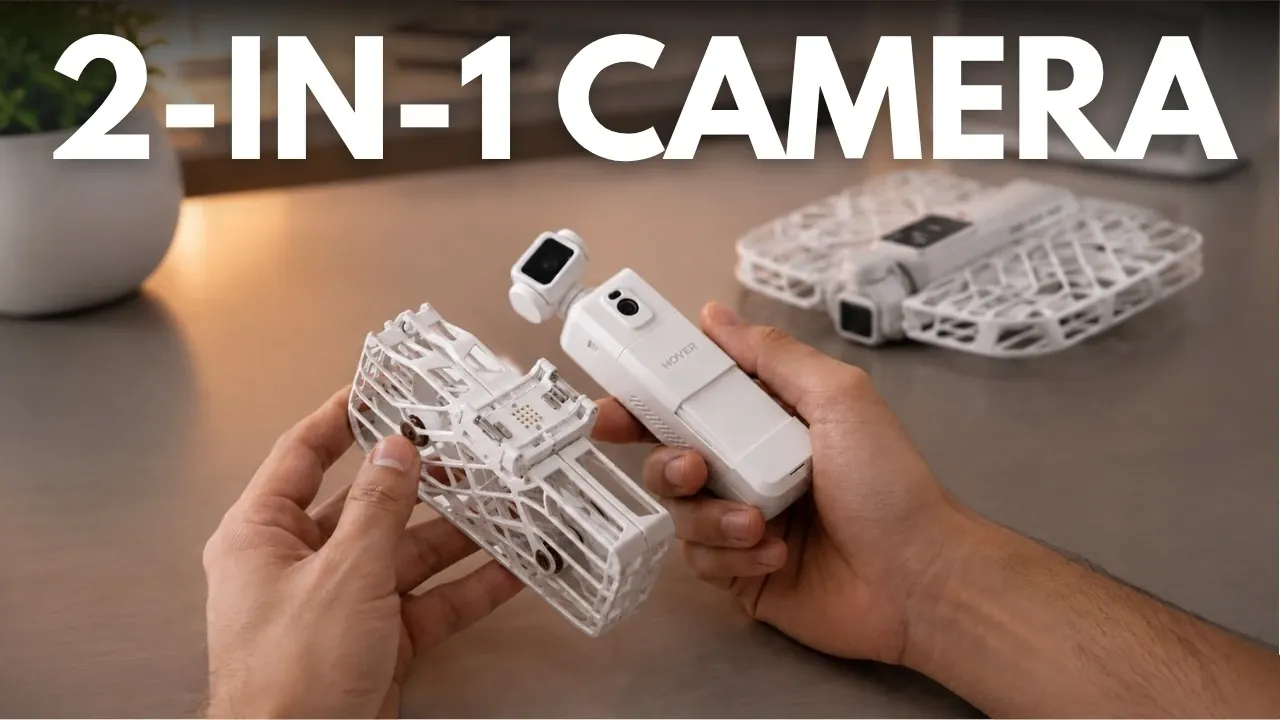
The HoverAir Versa introduces a compact hybrid device that combines the functionality of a pocket gimbal camera and a self-flying drone. Designed with modularity in mind, this system allows users to switch seamlessly between handheld and aerial modes, offering stabilized footage through a three-axis gimbal or autonomous flight with subject tracking. As highlighted by Tech Court, the Versa’s standout features include AI-assisted framing and 3D scene reconstruction, which aim to enhance creative workflows. However, its success hinges on addressing challenges such as battery life, durability and maintaining consistent performance across both modes.
In this breakdown, you’ll explore how the HoverAir Versa’s modular design supports diverse shooting scenarios, from vlogging to dynamic aerial shots. Gain insight into its AI-driven features that simplify framing and spatial mapping and understand the engineering hurdles that could impact its usability. By the end, you’ll have a clear understanding of how this hybrid device fits into the evolving creator camera market and the potential it holds for content creators seeking efficiency and versatility.
What Sets the HoverAir Versa Apart?
TL;DR Key Takeaways :
- The HoverAir Versa is a modular camera system that functions as both a handheld pocket camera with a three-axis gimbal and a self-flying drone, designed to streamline workflows for content creators.
- Its standout feature is the ability to seamlessly switch between handheld and aerial modes, offering creative flexibility and reducing the need for multiple devices.
- Advanced features like AI-assisted framing, 3D scene reconstruction and autonomous flight capabilities enhance its usability for capturing dynamic and immersive content.
- Key challenges include balancing performance in both modes, making sure durability in its modular design and addressing battery life limitations for extended use.
- The HoverAir Versa has the potential to reshape the creator camera market by prioritizing convenience, versatility and innovation, but its success depends on overcoming engineering hurdles and meeting user expectations.
At its core, the HoverAir Versa combines two distinct functionalities into a single, compact system. In handheld mode, it operates as a pocket gimbal camera, offering stabilized footage through a three-axis mechanical gimbal. When switched to aerial mode, it transforms into a self-flying drone by attaching to a lightweight wing assembly. This dual-purpose design enables autonomous flight and subject tracking, opening up creative possibilities that were previously difficult to achieve with a single device.
The modular design is the standout feature, allowing users to seamlessly switch between handheld and aerial modes based on their needs. This versatility reduces the burden of carrying separate devices while enhancing creative flexibility. Advanced features, such as AI-assisted framing and 3D scene reconstruction, further elevate its capabilities, making it a powerful tool for capturing dynamic and immersive content. By integrating these technologies, the HoverAir Versa positions itself as a forward-thinking solution for creators seeking efficiency and innovation.
How the HoverAir Versa Works
The HoverAir Versa’s dual-purpose design is powered by innovative technology, allowing it to perform effectively in both handheld and aerial modes.
- Handheld Mode: The three-axis mechanical gimbal ensures smooth, stable footage, even during movement. This makes it ideal for vlogging, action shots, or cinematic sequences, allowing creators to capture professional-quality visuals with ease.
- Aerial Mode: The device uses autonomous flight capabilities, including subject tracking and intelligent flight modes. These features enable users to capture complex shots without the need for manual piloting, making aerial photography more accessible to a wider audience.
AI-assisted framing ensures that subjects remain in focus, while 3D scene reconstruction enables the creation of detailed spatial maps or immersive visual content. These features work together to make the HoverAir Versa a versatile and efficient tool for creators aiming to produce high-quality results with minimal effort.

Browse through more resources below from our in-depth content covering more areas on drones.
- 8+ Big drones capable of carrying large payloads and heavy equipment
- DJI Neo auto-follow drone for effortless content creation $199
- The Drone Dog Walker is the ideal accessory for your Pet
- How the Half-Priced DJI Lito X1 Drone Outperforms the Mini 5 Pro
- How to build a drone tracking radar from scratch
- DJI Osmo 360 II Leaks Reveal a Larger 2150mAh Battery
- DJI Air 4 Leads 2026 Lineup with Upgraded Low-Light Camera
- DJI Mini 6 Pro Launch is Highly Unlikely Before Late 2026
- Spherical Flying Drone Inspired By The Movies
- DJI Lito X1 Drone Review: 4K Video, Lidar Avoidance, and 26-Minute Flight Time
Challenges and Limitations
While the HoverAir Versa’s design is undeniably innovative, it faces several engineering and practical challenges that could impact its performance and market adoption.
- Performance Balance: Achieving consistent image quality and stabilization in both handheld and aerial modes is a significant challenge, particularly given the constraints of size and weight in a compact device.
- Durability: The modular design must ensure secure connections during flight while allowing for quick and reliable transitions between modes. Any compromise in durability could undermine user confidence in the product.
- Battery Life: Powering both the camera and drone components without overheating or compromising performance is a critical hurdle. Limited battery life could restrict the device’s usability, especially during extended shoots.
These challenges highlight the complexity of creating a hybrid device that performs equally well in both modes. Addressing these issues will be crucial for the HoverAir Versa to deliver on its promises and meet the expectations of its target audience.
The HoverAir Versa in the Creator Camera Market
The HoverAir Versa reflects a growing trend in the creator camera market toward integrated systems that prioritize convenience and workflow efficiency. Competing products, such as DJI’s Pocket 3 and Insta360’s modular cameras, have demonstrated the demand for compact, versatile devices that deliver high-quality results. However, the Versa’s hybrid design sets it apart by combining the functionality of a pocket gimbal camera and a self-flying drone into a single device.
This approach aligns with the increasing importance of software-driven innovation in the creator space. Features like AI-assisted framing and intelligent flight modes underscore the role of advanced software in enhancing usability and creative potential, complementing hardware improvements. By addressing the need for streamlined workflows, the HoverAir Versa positions itself as a forward-looking solution for creators who value both convenience and performance.
Market Implications and Future Potential
The HoverAir Versa has the potential to reshape the creator camera market by addressing a key pain point: the need for convenience without sacrificing flexibility. By merging two devices into one, it offers a unique value proposition for content creators, vloggers and filmmakers who are constantly seeking tools that simplify their workflows.
This innovation also signals a shift in market priorities. As creators demand tools that integrate multiple functionalities, the focus is moving away from incremental hardware upgrades toward more holistic solutions that deliver seamless performance. If successful, the HoverAir Versa could influence future product development, encouraging competitors to explore similar hybrid designs that prioritize versatility and user experience.
Unanswered Questions and Considerations
Despite its promise, several questions remain about the HoverAir Versa’s practicality and market viability. These uncertainties will play a significant role in determining its appeal to its target audience:
- How does its camera quality compare to dedicated devices in both handheld and aerial modes?
- Is the subject tracking technology reliable enough for professional use, particularly in dynamic environments?
- What is the flight duration and how does the system’s weight impact portability and ease of use?
- Will the pricing strike the right balance between affordability and perceived value, especially in a competitive market?
These considerations highlight the challenges that the HoverAir Versa must address to establish itself as a viable option for creators. Its ability to deliver consistent performance and meet the diverse needs of its users will ultimately determine its success in the market.
The HoverAir Versa’s Role in Shaping the Future
The HoverAir Versa represents a bold step forward in creator technology, offering a unique combination of portability, versatility and advanced functionality. If it can deliver on its promises, it could set a new standard for hybrid devices and influence the future direction of the industry. However, its success will depend on overcoming engineering challenges and meeting the high expectations of content creators. As the market evolves, the HoverAir Versa’s performance and reception will serve as key indicators of what’s next for creator gear, potentially paving the way for more integrated and innovative solutions.
Media Credit: Tech Court
Disclosure: Some of our articles include affiliate links. If you buy something through one of these links, Geeky Gadgets may earn an affiliate commission. Learn about our Disclosure Policy.
