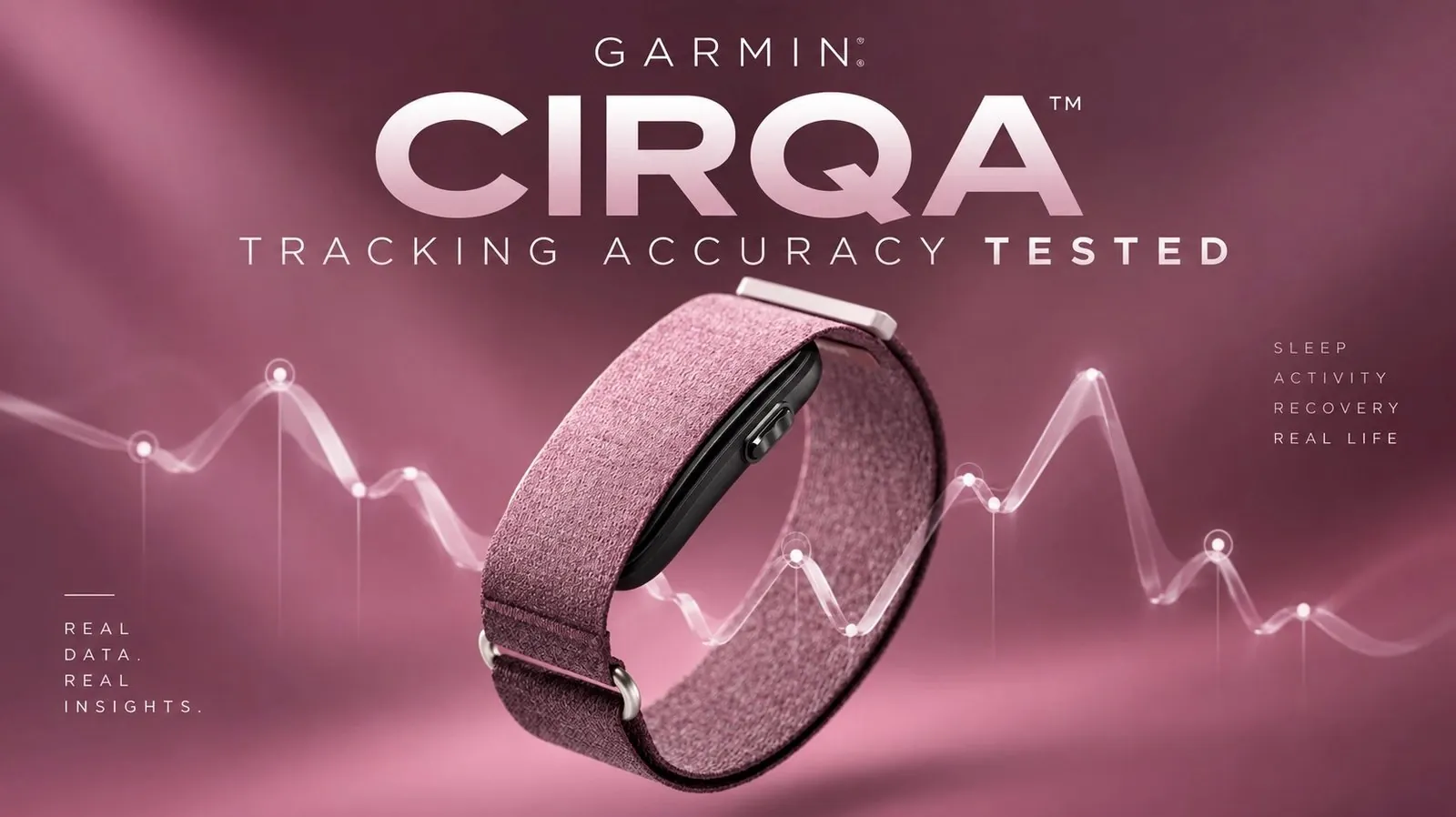
The Garmin CIRQA has garnered attention for its focus on fitness tracking precision, particularly in heart rate monitoring and recovery metrics. In a detailed evaluation by The Quantified Scientist, the CIRQA’s performance is analyzed across various activities, highlighting the importance of placement for accuracy. For example, during high-intensity exercises like running, the device achieves a remarkable 0.98 correlation when worn on the biceps, compared to 0.89 on the wrist. This distinction underscores how placement significantly impacts data reliability, especially for users aiming to optimize their training.
Explore how the CIRQA measures up in areas like sleep stage tracking, where its performance varies depending on placement and HRV monitoring, which stands out as one of its strongest features. You’ll also gain insight into its usability, including the practical benefits of its physical button controls and the trade-offs of its bulkier design. By the end of this breakdown, you’ll have a clear understanding of the CIRQA’s capabilities, limitations and how it compares to competitors in the fitness tracking landscape.
TL;DR Key Takeaways :
- The Garmin CIRQA excels in heart rate tracking, particularly when worn on the biceps, delivering superior accuracy across various activities like cycling, running and strength training.
- Sleep tracking performance is adequate but falls short in REM stage accuracy compared to competitors like Fitbit and Whoop, with biceps placement offering better results than the wrist.
- Heart Rate Variability (HRV) and nighttime monitoring are standout features, providing reliable recovery insights and actionable data for health-conscious users.
- The device prioritizes functionality with physical button controls and automatic activity detection, though its bulkier design and inconsistent auto-tracking may impact user experience.
- While the CIRQA is a strong contender for fitness enthusiasts focused on exercise and recovery metrics, its higher accessory costs and limited sleep tracking accuracy may deter some users.
Heart Rate Tracking: Precision in Placement
The Garmin CIRQA delivers highly accurate heart rate tracking, with performance varying based on placement and activity type. The device demonstrates its best results when worn on the biceps, as outlined below:
- Indoor Cycling: Near-perfect accuracy was achieved, with a 1.0 correlation on the biceps and 0.99 on the wrist.
- Running: The biceps placement excelled with a 0.98 correlation, significantly outperforming the wrist’s 0.89. High-intensity intervals caused noticeable deviations when worn on the wrist.
- Biking: The wrist achieved a solid 0.92 correlation, while the biceps improved this to 0.96, showcasing its superior tracking capabilities.
- Strength Training: The wrist struggled with a 0.73 correlation, whereas the biceps delivered better accuracy at 0.91, particularly during dynamic movements.
These findings highlight the critical role of placement in achieving optimal performance. For users engaging in high-intensity or dynamic activities, wearing the CIRQA on the biceps ensures more reliable data, making it a preferred choice for serious athletes.
Sleep Stage Tracking: Adequate but Room for Growth
Sleep tracking is a key feature of the CIRQA, though its performance varies depending on placement. While the wrist provides moderate reliability, the biceps placement offers improved accuracy, as shown below:
- Wrist Accuracy: Agreement rates for deep sleep (81%), light sleep (67%), and REM sleep (45%) indicate moderate reliability, with some inconsistencies in REM detection.
- Biceps Accuracy: Deep sleep agreement improves to 91%, light sleep to 69%, and REM sleep to 58%, suggesting reduced signal interference and better overall performance.
Despite these improvements, the CIRQA’s REM sleep tracking lags behind competitors such as Fitbit and Whoop, which offer higher accuracy in this area. For users prioritizing detailed sleep insights, this limitation may be a consideration.

Here is a selection of other guides from our extensive library of content you may find of interest on Garmin CIRQA.
- Everything You Need to Know About Garmin’s New Screenless Wearable
- FCC Filings Suggest Garmin CIRQA May Launch Around July 19th 2026
- Why Garmin is Ditching Screens for Its Next Big Wearable
- Garmin CIRQA vs WHOOP 5.0: Which Fitness Tracker Should You Buy?
- Leak Suggests Garmin CIRQA Fitness Tracker Could Feature EDA Sensors
- Garmin CIRQA vs Google Fitbit Air: Which Fitness Tracker Suits You Best?
- Garmin CIRQA Trademarks Hint at EDA Stress Tracking
- Garmin CIRQA Locks Heart Rate Graphs Behind a Paid Subscription
- Garmin CIRQA Accuracy Tested Against Whoop and Fitbit
- Hands-on with New Garmin CIRQA Fitness Tracker: 10-Day Battery and No Screen
Heart Rate Variability (HRV) and Nighttime Monitoring
The CIRQA excels in nighttime HRV and heart rate monitoring, delivering consistent and reliable data from both wrist and biceps placements. This makes it a valuable tool for users focused on recovery metrics and long-term health tracking. Its ability to capture subtle physiological changes during sleep adds significant value for those seeking to optimize recovery and overall wellness.
For fitness enthusiasts who prioritize recovery insights, the CIRQA’s HRV tracking stands out as one of its strongest features. The device’s ability to provide actionable data on stress levels and recovery trends makes it a reliable companion for health-conscious individuals.
Design and Usability: Functionality Over Form
The Garmin CIRQA prioritizes functionality in its design, though its bulkier size may not appeal to all users. Compared to sleeker competitors like the Fitbit Air, the CIRQA feels less streamlined. However, its physical button controls are a standout feature, simplifying activity tracking by allowing users to start and stop workouts with ease. This tactile interface is particularly useful during intense workouts when touchscreens may be less responsive.
Another notable feature is the device’s automatic activity detection, which adds convenience for users who frequently switch between activities. However, this feature can be inconsistent, particularly when the device is worn on the biceps, where it occasionally fails to recognize certain activities. While this is a minor drawback, it may impact the overall user experience for those relying heavily on automatic tracking.
Optimizing Wearable Placement
Placement plays a pivotal role in the CIRQA’s performance, influencing both accuracy and comfort. For exercise, the biceps is the recommended position due to its superior accuracy, particularly during high-intensity activities. This placement minimizes signal interference and ensures reliable data collection, making it ideal for users focused on precise performance metrics.
For nighttime use, the wrist offers greater comfort and reliable HRV data, making it a practical choice for sleep monitoring. By understanding and optimizing placement, users can maximize the CIRQA’s potential and tailor its functionality to their specific needs.
How It Stacks Up Against Competitors
The Garmin CIRQA competes with popular devices like the Fitbit Air, Whoop Strap and Amazfit Helio Strap. While it excels in heart rate tracking when worn on the biceps, its sleep tracking performance falls slightly short of Fitbit and Whoop, particularly in REM stage accuracy. Additionally, the cost of official biceps bands (~$60) and their limited availability may deter some users. However, the growing market for third-party accessories could address this limitation in the future, offering more affordable and accessible options.
In terms of design, the CIRQA’s bulkier build contrasts with the sleek aesthetics of competitors like Fitbit, which may appeal more to users seeking a discreet and stylish wearable. Despite these differences, the CIRQA’s robust performance in exercise tracking and recovery metrics makes it a compelling option for fitness enthusiasts.
Performance Ratings
The CIRQA’s performance across key metrics is summarized below, highlighting its strengths and areas for improvement:
- Heart Rate Tracking: Excellent on biceps (98/100), good on wrist (93/100).
- Sleep Stage Tracking: Good on biceps (73/100), moderate on wrist (64/100).
- HRV and Nighttime Monitoring: Consistently reliable across both placements, making it a strong choice for recovery-focused users.
The CIRQA’s ratings reflect its strong performance in exercise tracking and recovery metrics, while also identifying opportunities for improvement in sleep tracking accuracy and design.
A Strong Contender for Fitness Enthusiasts
The Garmin CIRQA stands out as a robust fitness tracker that excels in heart rate tracking, particularly when worn on the biceps. Its sleep tracking capabilities, while adequate, leave room for improvement, especially in REM stage accuracy. The device’s intuitive button controls and reliable HRV monitoring enhance its appeal, though its bulkier design and costly accessories may be drawbacks for some users.
For fitness enthusiasts prioritizing exercise accuracy and recovery insights, the CIRQA is a compelling option. However, those seeking advanced sleep tracking or a more compact design may find better alternatives among its competitors. By understanding its strengths and limitations, users can make an informed decision about whether the CIRQA aligns with their fitness goals and lifestyle.
Media Credit: The Quantified Scientist
Disclosure: Some of our articles include affiliate links. If you buy something through one of these links, Geeky Gadgets may earn an affiliate commission. Learn about our Disclosure Policy.
