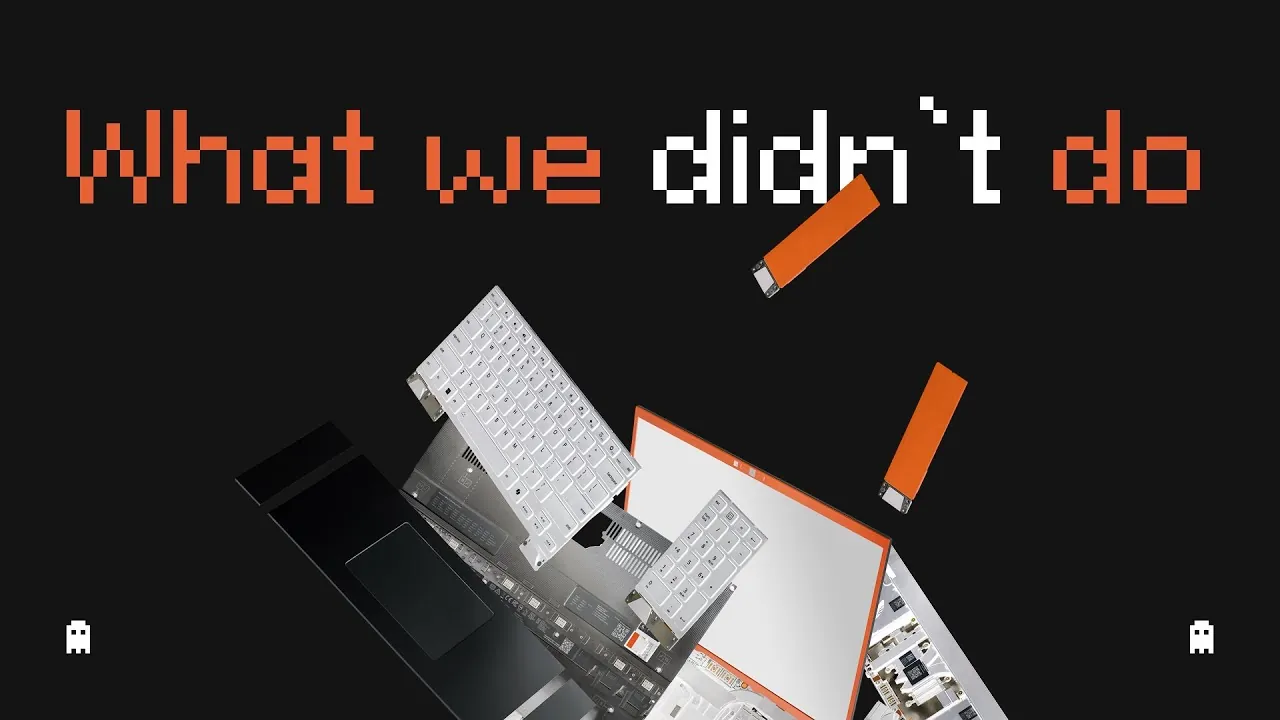
What if your laptop could evolve alongside your needs, adapting to your preferences and staying relevant for years to come? The Framework Laptop 16 promises just that, redefining what modular design can achieve in a world of disposable tech. But innovation isn’t always a straight path, behind every breakthrough lies a graveyard of scrapped ideas and ambitious prototypes that didn’t make the cut. From translucent bezels that shattered under pressure to ultra-wide haptic touchpads that stumbled on practicality, the journey of the Framework Laptop 16 is as much about bold experimentation as it is about refinement. This breakdown dives into the untold stories of these designs, offering a rare glimpse into the challenges and triumphs of creating a truly modular laptop.
Below Framework uncover how the team balanced innovative innovation with real-world usability, why some ideas were abandoned, and how others evolved into the standout features of the Laptop 16. Whether it’s the pursuit of DIY-friendly solutions or the quest for sustainable design, each decision reflects a deeper philosophy of empowering users while pushing the boundaries of what laptops can do. But not every concept survived the rigorous testing and user feedback that shaped this device. What does it take to turn a bold vision into a practical reality? Let’s explore the lessons hidden in the prototypes and the possibilities they hint at for the future.
Framework Laptop 16 Overview
TL;DR Key Takeaways :
- The Framework Laptop 16 emphasizes modularity and user-centric design, showcasing iterative innovation while balancing practicality and innovative features.
- Key design challenges included scrapped ideas like a single extra-wide haptic touchpad and translucent bezels due to technical and cost constraints, but refined alternatives were implemented.
- Framework is addressing user demands with advancements like customizable input modules, high-capacity memory solutions, and DIY-friendly eGPU designs.
- Efforts to integrate features like a pointing stick faced space and durability challenges, but the company continues exploring low-profile solutions for diverse user needs.
- Framework prioritizes sustainability by allowing modular upgrades, reducing electronic waste, and extending product lifespans, reinforcing its commitment to eco-friendly technology.
Touchpad Design: Balancing Innovation with Usability
One of the most ambitious early concepts for the Framework Laptop 16 was a single, extra-wide haptic touchpad. This design aimed to support customizable keyboard layouts, offering greater flexibility for users with non-standard preferences. However, the concept encountered significant obstacles, including difficulties with palm rejection and high production costs. These challenges ultimately made the design impractical for mass production.
Instead, Framework refined its existing touchpad design. The updated touchpad features improved flatness specifications and introduces a DIY-friendly, 3D-printed single-piece solution. These enhancements ensure a smoother and more reliable user experience while maintaining affordability, demonstrating Framework’s commitment to balancing innovation with practicality.
Translucent Bezels: Aesthetic Appeal Meets Technical Challenges
Framework explored the idea of translucent bezels made from polycarbonate to give the laptop a distinctive visual identity. While the concept was visually striking, the material’s brittleness and manufacturing complexities posed significant challenges. These issues ultimately led to the exclusion of translucent bezels from the final design.
Despite this setback, Framework remains committed to exploring alternative materials and manufacturing techniques. The company continues to seek ways to incorporate visually appealing features without compromising durability or functionality, reflecting its dedication to both aesthetics and practicality.
Redefining Modular Laptop Design for the Future

Gain further expertise in modular laptop design by checking out these recommendations.
- Framework Laptop 16 a truly modular laptop design demonstrated
- Framework modular Laptop 16 pre-orders open from $1,399
- RISC-V Mainboard for Framework Laptop 13: Features & Benefits
- XO-Infinity Modular Laptop Design For Children Officially Unveiled
- MNT Reform open hardware laptop with modular design
- Framework Laptop 12 : Modular, Repairable and Sustainable
- Framework modular laptop CEO Nirav Patel interview
- Framework Laptop 16 modular laptop connectors explained
- Framework Laptop 13 barebones modular laptop B-stock from $499
- Framework modular laptop transformed into tablet
Memory Expansion: Meeting the Demand for High-Capacity Solutions
As user needs evolve, the demand for laptops with larger memory capacities has grown. Framework tested 128GB memory modules to address this demand. However, compatibility issues with CSO DIMs on Ryzen processors created a significant hurdle. To resolve this, the company is validating non-CSO DIM alternatives that promise to deliver high-capacity memory solutions without sacrificing performance or reliability.
This ongoing effort highlights Framework’s proactive approach to addressing user needs. By prioritizing compatibility and performance, the company aims to provide solutions that meet the demands of power users and professionals alike.
Pointing Stick Integration: Overcoming Space and Durability Constraints
Framework also explored the integration of a pointing stick, such as a TrackPoint, to enhance navigation options. While this feature could appeal to certain users, it presented challenges related to space constraints and the potential for screen damage during use. These limitations made it difficult to incorporate the feature without compromising the laptop’s overall design.
Despite these challenges, Framework continues to investigate low-profile solutions that could make pointing stick integration feasible. This ongoing exploration underscores the company’s commitment to offering diverse input options while maintaining durability and usability.
Custom Input Modules: Personalization at the Forefront
Personalization is a core principle of Framework’s design philosophy. The company has made significant progress in developing customizable input modules, including a “one-key” module that allows users to create unique keyboard layouts. While this feature is moving toward mass production, efforts are underway to reduce manufacturing costs and make these modules more accessible.
By empowering users to tailor their laptops to their specific needs, Framework reinforces its commitment to modularity and personalization. This approach ensures that the Framework Laptop 16 can adapt to a wide range of use cases and preferences.
eGPU Development: Expanding Graphics Capabilities
Framework is actively refining its external GPU (eGPU) solution to enhance the laptop’s graphics performance. By repurposing graphics modules, the company is developing a cost-effective, DIY-friendly design that aligns with its modular philosophy. Rather than focusing on a polished consumer product, Framework prioritizes accessibility and user empowerment, allowing users to expand their laptop’s capabilities on their own terms.
This approach not only enhances performance but also reinforces Framework’s commitment to providing flexible and sustainable solutions for its users.
Advancements and Sustainability: A Holistic Approach
In addition to these major developments, Framework has introduced several enhancements to improve the overall user experience. These include:
- Advancements in graphics modules and display outputs for better performance and versatility.
- Improved keyboard firmware to enhance typing accuracy and responsiveness.
- CNC-machined top covers for increased durability and a premium feel.
Framework’s dedication to sustainability is evident in its efforts to reduce electronic waste. By allowing modular upgrades and extending product lifespans, the company actively contributes to a more sustainable tech ecosystem. This approach not only benefits the environment but also provides users with long-term value, reinforcing Framework’s position as a leader in sustainable technology.
Innovation Through Iteration: The Framework Philosophy
The Framework Laptop 16 exemplifies the company’s commitment to iterative innovation and user-centric design. By addressing user needs and refining prototypes, Framework continues to push the boundaries of modular laptop technology. While some ideas remain unrealized, they serve as a foundation for future advancements, making sure that Framework’s products evolve alongside the needs of its users. This dedication to practicality, personalization, and sustainability positions Framework as a pioneer in the modular laptop space.
Media Credit: Framework
Disclosure: Some of our articles include affiliate links. If you buy something through one of these links, Geeky Gadgets may earn an affiliate commission. Learn about our Disclosure Policy.
