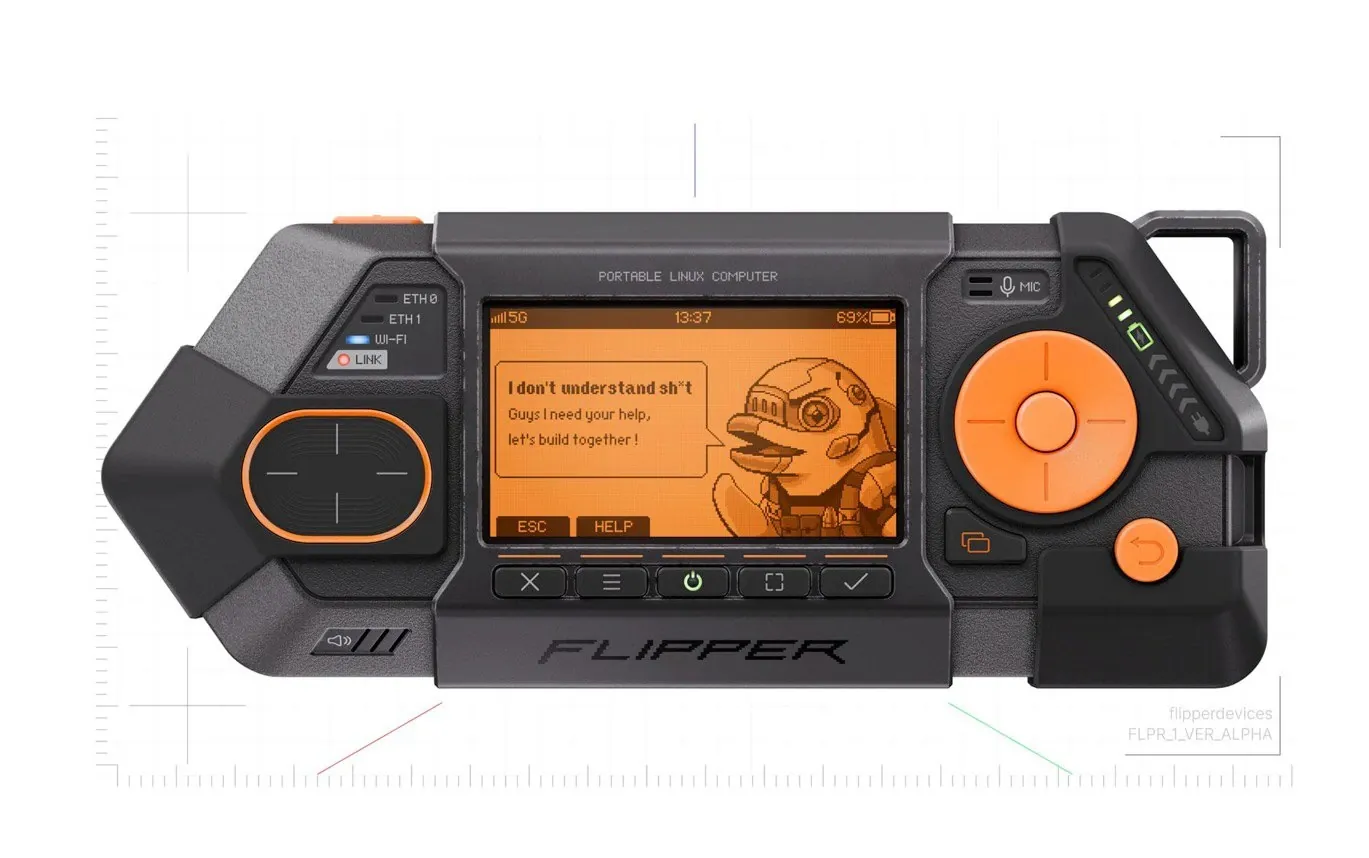
The Flipper One is a compact Linux-based device designed for network engineers, penetration testers and tech enthusiasts, offering advanced capabilities for IP-connected environments. Unlike the Flipper Zero, which focused on offline protocols, the Flipper One includes features such as dual gigabit Ethernet ports, Wi-Fi 6E and an M.2 slot for modular expandability. These additions make it suitable for tasks like network analysis and hardware prototyping. As outlined by Hacking Modern Life, the device balances portability with functionality, providing a flexible platform for both professional and personal projects.
Discover how the Flipper One’s modular design allows for hardware upgrades, including 5G modems and SSDs, to meet specific needs. Learn about its open source software ecosystem, featuring Flip OS for customizable system profiles and the Flip Ctl framework for simplified management. Additionally, explore real-world applications, such as using the device as a portable media center or a Linux workstation, to understand its versatility across various scenarios.
What Makes the Flipper One Unique?
TL;DR Key Takeaways :
- The Flipper One is a Linux-based, portable cyber tool designed for advanced networking, penetration testing and high-performance computing, building on the Flipper Zero’s foundation but focusing on IP-connected environments.
- Its hardware features include a powerful Rockchip RK3576 processor, dual gigabit Ethernet ports, Wi-Fi 6E, modular expandability via an M.2 slot and GPIO connectors for prototyping, making it highly versatile and customizable.
- The device runs on open source software, featuring innovations like Flip OS for task-specific system profiles and the Flip Ctl Framework for an intuitive user interface, making sure adaptability and ease of use.
- Practical applications include use as a portable media center, advanced router, Linux workstation and offline AI processing tool, catering to both professional and hobbyist needs.
- Community collaboration is central to its development, with extensive documentation and resources available, while efforts to overcome proprietary firmware challenges aim to create a fully open source platform for customization and innovation.
The Flipper One is not just another portable Linux device; it is a versatile cyber deck that combines robust functionality with portability. Unlike the Flipper Zero, which specializes in offline access control protocols, the Flipper One is tailored for IP-connected environments. It supports a wide array of connectivity options, including Wi-Fi, Ethernet, 5G and even satellite communication. This versatility makes it an invaluable tool for tasks such as network analysis, penetration testing and advanced computing.
What sets the Flipper One apart is its ability to bridge the gap between portability and high performance. By integrating innovative hardware with open source software, the device offers a flexible platform for professionals and hobbyists to tackle complex technical challenges. Whether you’re analyzing network traffic, prototyping hardware, or configuring advanced systems, the Flipper One is designed to deliver.
Hardware Features: Power and Flexibility
The Flipper One’s hardware is carefully designed to handle demanding technical tasks while maintaining a compact and portable form factor. Its standout features include:
- High-Performance Processing: Equipped with a Rockchip RK3576 processor featuring eight cores, a Mali G52 GPU and 8GB of RAM, the device delivers exceptional computing power for multitasking and resource-intensive applications.
- Low-Power Operations: A Raspberry Pi RP2350 microcontroller ensures efficient power usage and GPIO integration, making it ideal for custom projects and extended use.
- Advanced Networking: Dual gigabit Ethernet ports and Wi-Fi 6E provide seamless connectivity, allowing high-speed data transfer and reliable network performance.
- Modular Expandability: An M.2 expansion slot supports upgrades such as 5G modems, SSDs and SDR modules, allowing users to customize the device for specific needs and applications.
- Media Capabilities: A full-size HDMI 2.1 port supports 4K/120Hz video output, making it suitable for media streaming, presentations and even gaming.
- Prototyping Support: GPIO connectors enable custom hardware integration and prototyping, catering to developers, engineers and hobbyists.
This robust hardware configuration positions the Flipper One as a powerful and adaptable tool capable of addressing a wide range of technical requirements. Its modular design ensures that users can tailor the device to their specific needs, whether for professional or personal projects.

Deep dive into the latest in Flipper Zero by exploring our other resources and articles.
- Build a DIY Open-Source Flipper Zero Using a ESP32-DIV
- BFFB for Flipper Zero : The Ultimate Upgrade to Supercharge Your Flipper
- Flipper One Gets a BIG Update : Flipper One vs Flipper Zero
Software Innovations: Open source at Its Core
The Flipper One’s software ecosystem is built on open source principles, aiming to minimize reliance on proprietary firmware. However, the ARM Linux ecosystem presents challenges, such as the dependence on closed-source components. To overcome these obstacles, the development team has introduced two key innovations:
- Flip OS: A modular operating system designed for streamlined configuration management. Users can create system profiles tailored to specific tasks, enhancing the device’s versatility and ease of use.
- Flip Ctl Framework: A user-friendly interface optimized for the device’s small screen, making sure accessibility without compromising functionality. This framework simplifies complex tasks, making the device approachable for users of varying skill levels.
These software advancements not only enhance the Flipper One’s functionality but also ensure that it remains intuitive and adaptable. By prioritizing open source development, the team fosters a collaborative environment where users can contribute to and benefit from ongoing improvements.
Practical Applications of the Flipper One
The combination of advanced hardware and innovative software makes the Flipper One suitable for a wide range of real-world applications. Some of the most compelling use cases include:
- Portable Media Center: Use its HDMI output to stream 4K video, transforming the device into a compact entertainment hub for movies, presentations, or gaming.
- Advanced Portable Router: Integrate 5G, Wi-Fi and Ethernet to create a seamless connectivity solution for diverse environments, from remote work setups to field operations.
- Linux Desktop Environment: Connect external monitors, keyboards and other peripherals to use the Flipper One as a full-fledged Linux workstation, ideal for coding, system administration, or general computing tasks.
- Offline AI Processing: Perform tasks such as network analysis, configuration generation and data processing without relying on cloud services, making sure privacy and efficiency.
These use cases demonstrate the Flipper One’s potential to serve both professional and hobbyist needs. Its flexibility and performance make it a valuable tool for anyone seeking a portable yet powerful computing solution.
Community Collaboration and Development
The Flipper One’s development process emphasizes collaboration with the tech community. The team has made extensive documentation, 3D models and other resources publicly available, encouraging contributions from developers, engineers and enthusiasts. This open approach not only accelerates innovation but also fosters a sense of community ownership.
To address the challenges posed by proprietary firmware, reverse engineering efforts are underway. The ultimate goal is to create a fully open source platform that enables users to modify and enhance the device according to their needs. Additionally, the team is exploring crowdfunding options, such as a Kickstarter campaign, to secure the resources needed for mass production. This initiative would not only fund the project but also strengthen the bond between the creators and the community.
Overcoming Challenges and Looking Ahead
Despite its promising features, the Flipper One faces several challenges. Overcoming the limitations of proprietary firmware remains a significant hurdle, as does creating a user-friendly platform that caters to both developers and network professionals. The team’s commitment to open source principles and community collaboration is central to addressing these issues.
Looking ahead, the Flipper One aims to set a new standard for portable Linux-based computing. By combining innovative hardware, innovative software and a community-driven approach, it has the potential to empower users to tackle advanced technical applications with ease. As the project evolves, it will be exciting to see how the Flipper One continues to meet the diverse needs of its growing user base.
Media Credit: Hacking Modern Life
Disclosure: Some of our articles include affiliate links. If you buy something through one of these links, Geeky Gadgets may earn an affiliate commission. Learn about our Disclosure Policy.
