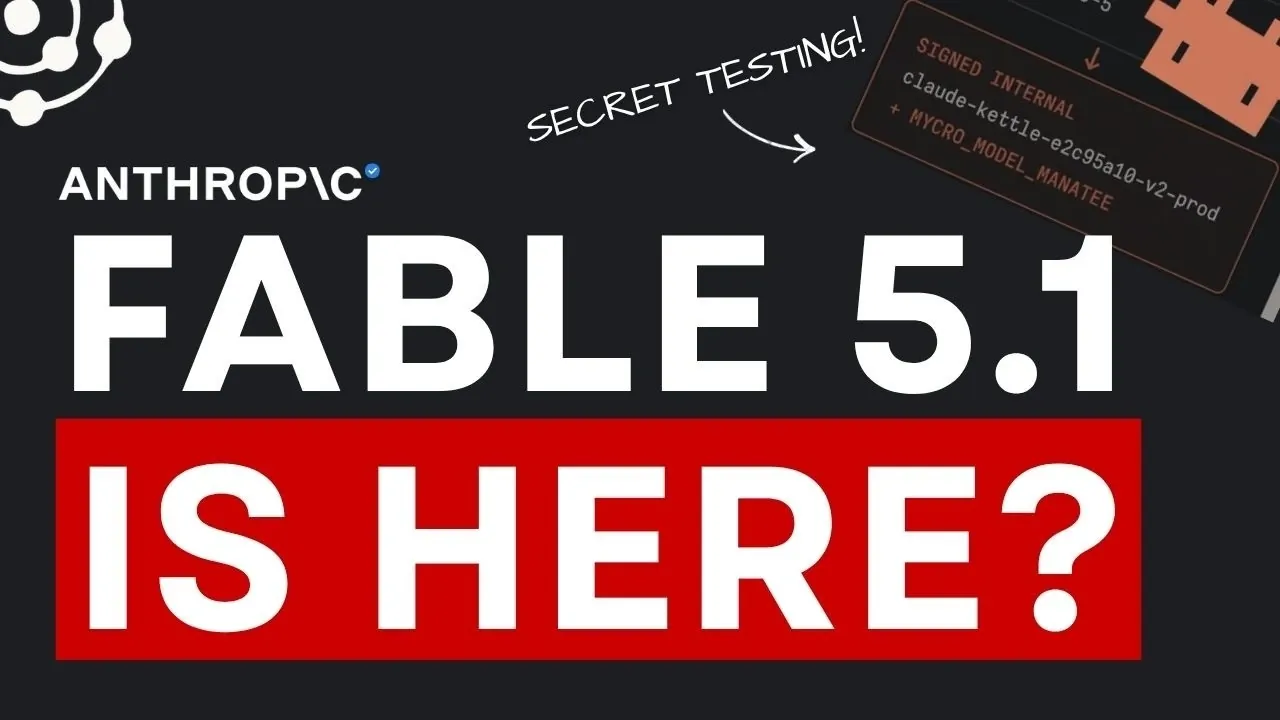
Enthropic and OpenAI are making headlines with their latest AI developments, Fable 5.1 and GPT Astra. According to Universe of AI, Enthropic has begun discreetly testing Fable 5.1 by routing select users from its existing system, allowing the company to gather performance data without disrupting its broader user base. Meanwhile, OpenAI’s GPT Astra is fully developed but remains on hold due to cybersecurity concerns, with the company prioritizing the integration of advanced safeguards before release. These contrasting strategies highlight the growing complexity of balancing innovation with responsibility in the competitive AI landscape.
Explore how Enthropic’s silent testing approach is shaping Fable 5.1’s refinement process, including its potential improvements in contextual understanding and efficiency. Learn about OpenAI’s focus on security protocols for GPT Astra and the broader implications of delaying a fully developed system. This explainer also provide more insights into how these decisions reflect larger trends in AI development, offering insight into the evolving priorities of leading companies in this rapidly advancing field.
Fable 5.1: Quiet Testing in Progress
TL;DR Key Takeaways :
- Enthropic is selectively testing its Fable 5.1 model, focusing on enhanced processing efficiency and contextual understanding, with a tentative launch planned for late August 2026.
- OpenAI’s GPT Astra is fully developed but delayed due to critical cybersecurity concerns, emphasizing safety and ethical considerations before deployment.
- The competition between Enthropic and OpenAI is reshaping the AI landscape, with both companies closely monitoring each other’s progress and preparing for potential IPOs.
- Silent testing and backend updates are becoming standard practices in AI development, reflecting a broader industry trend toward iterative improvement and risk minimization.
- Both companies are expected to release more advanced AI models by the end of 2026, with significant implications for industries like healthcare, finance and education.
Enthropic has opted for a low-profile approach in testing its Fable 5.1 model. Instead of making public announcements, the company is discreetly routing a select group of Fable 5 users to the updated system. This strategy enables Enthropic to gather real-world performance data while minimizing disruptions for its existing user base. Internally, the model has undergone rigorous testing and early reports suggest that employees are confident in its enhanced capabilities.
Although Enthropic has not disclosed specific details about the improvements in Fable 5.1, early feedback indicates advancements in processing efficiency and contextual understanding. These enhancements could make the system more adept at handling complex tasks and delivering more accurate outputs. Pricing is expected to remain consistent with Fable 5, though official pricing details have yet to be revealed. Enthropic is tentatively targeting a late August 2026 launch, but this timeline may shift depending on OpenAI’s plans for GPT Astra. The company’s calculated and discreet testing approach reflects its commitment to refining the model while maintaining a competitive edge.
GPT Astra: Ready but Held Back
OpenAI’s GPT Astra is fully developed and ready for deployment, but its release has been postponed to address critical cybersecurity concerns. The company is prioritizing the implementation of advanced safeguards, including robust monitoring systems and alignment protocols, to ensure the model’s safe and responsible use. This cautious approach underscores OpenAI’s recognition of the growing risks associated with deploying powerful AI systems.
While OpenAI has not provided a specific release date, industry experts anticipate that GPT Astra will launch in the near future. The delay highlights the increasing emphasis on security and ethical considerations in AI development, particularly as these systems become more integrated into sensitive applications. OpenAI’s decision to prioritize safety over speed reflects a broader industry trend of balancing innovation with responsibility, a move that could set a precedent for future AI releases.

Unlock more potential in Claude Fable 5 by reading previous articles we have written.
- Claude Fable 5 Returns After Government Security Scare
- Fable 5 is Expected to Return Soon With New Enterprise Features
- The Hidden Trade-Offs in Anthropic’s New Mythos 5 and Claude Fable 5 Release
- Claude Fable 5 Halves Coding Time Compared to Opus 4.8
- 6 Simple Rules That Change How Claude Fable 5 Works
- Why Anthropic’s Fable 5 Marks the End of Free AI Services
- Stricter AI Oversight is Coming After the Sudden Claude Fable 5 Shutdown
- ChatGPT 5.6 vs Claude Fable 5: Which AI Actually Comes Out on Top?
- Fable 5 and Mythos 5 Return Together with New Claude Sonnet 5
- GPT-5.6 Beats Claude Fable 5 with Faster Output and Lower Costs
The Competitive AI Landscape
The rivalry between Enthropic and OpenAI is shaping the strategies and timelines of both companies. Each organization is closely monitoring the other’s progress, with potential delays or adjustments aimed at gaining a competitive advantage. This competition is further intensified by their preparations for initial public offerings (IPOs), which could significantly influence the timing and impact of their model launches.
The broader AI industry is also watching closely. The outcomes of this race could establish new benchmarks for performance, safety, and market adoption. Silent testing, backend updates and strategic timing are becoming standard tactics as companies strive to outpace one another in this rapidly evolving field. The stakes are high and the decisions made by Enthropic and OpenAI could have far-reaching implications for the future of artificial intelligence.
Trends in AI Development
The strategies employed by Enthropic and OpenAI reflect a larger trend in AI innovation. Silent testing, as demonstrated by Fable 5.1 and backend updates, such as those implemented for GPT Astra, are becoming increasingly common practices. These methods allow companies to refine their models before public release, making sure higher quality and reliability while minimizing potential risks.
Other major players in the AI industry, including Google DeepMind and Anthropic, are adopting similar approaches. For instance, Gemini, another high-profile AI system, has reportedly undergone comparable testing phases. This industry-wide focus on iterative improvement highlights the competitive and fast-paced nature of AI development. Companies are not only racing to release the most advanced models but also striving to ensure that these systems meet the highest standards of safety and functionality.
What Lies Ahead
Looking ahead, both Enthropic and OpenAI are expected to unveil even more advanced models by the end of 2026. These systems could surpass current offerings, such as GPT 5.6 Soul and Fable 5, in terms of capabilities and application potential. The accelerating pace of AI innovation suggests that significant advancements are on the horizon, with potential impacts across industries such as healthcare, finance, and education.
As these technologies continue to evolve, users can anticipate the development of more sophisticated tools and applications. However, the rapid pace of innovation also underscores the importance of transparency, security, and ethical considerations in AI deployment. With Enthropic and OpenAI leading the charge, the coming months are likely to be pivotal in shaping the future of artificial intelligence. Their decisions and advancements will not only influence their own trajectories but also set the direction for the broader AI industry.
Media Credit: Universe of AI
Disclosure: Some of our articles include affiliate links. If you buy something through one of these links, Geeky Gadgets may earn an affiliate commission. Learn about our Disclosure Policy.
