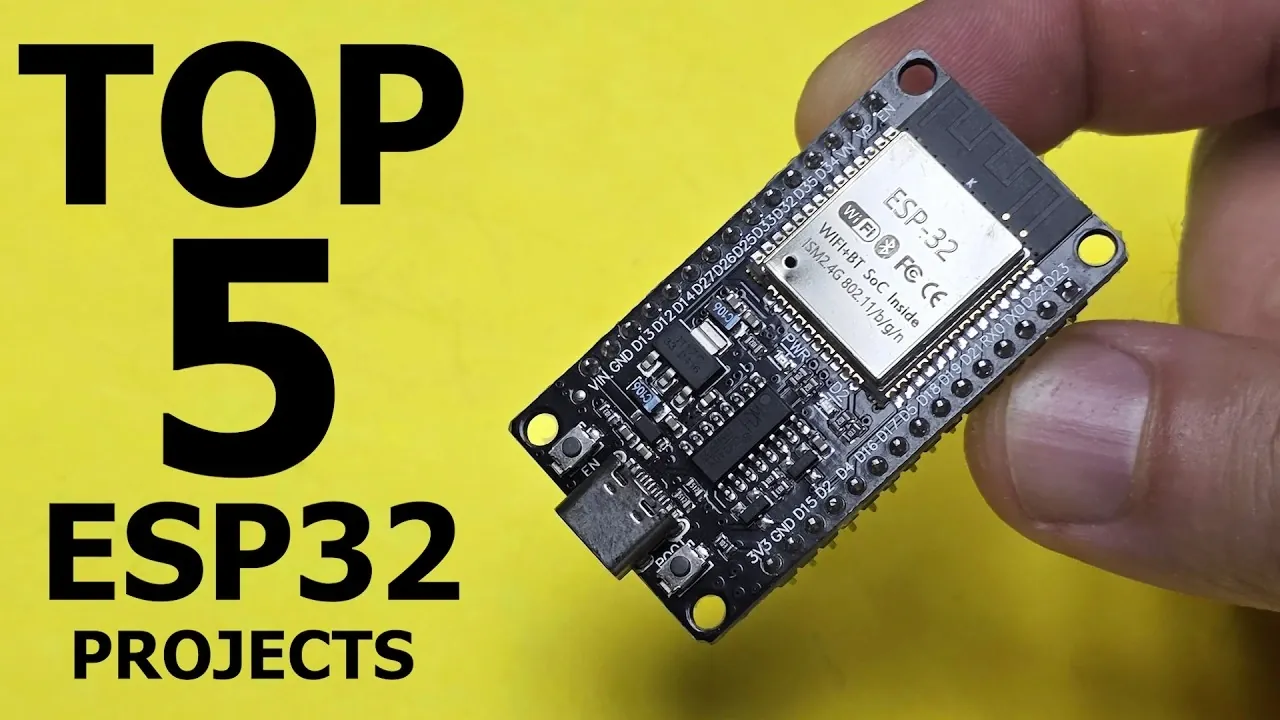
The ESP32 microcontroller has become a cornerstone for electronics enthusiasts and professionals, offering a balance of performance and versatility. Hacktuber explores five distinct projects that showcase the ESP32’s capabilities, including a gas detection system using the MQ2 sensor. This setup not only measures gas concentrations between 300 and 10,000 ppm but also integrates an OLED display for real-time monitoring and visual alerts. Such applications highlight the ESP32’s role in creating practical solutions for safety and environmental monitoring.
Through this guide, you’ll gain insight into how the ESP32 can assist wireless communication networks without relying on Wi-Fi routers, enable real-time cryptocurrency tracking on compact displays and power energy-efficient e-paper devices for long-term use. Additionally, the CYD board is introduced as a multi-functional platform ideal for prototyping advanced IoT projects. Each example underscores the microcontroller’s adaptability across diverse domains, providing inspiration for your next project.
5 Awesome ESP32 Projects
TL;DR Key Takeaways :
- The ESP32 microcontroller is highly versatile, offering robust processing power, wireless connectivity and compatibility with various sensors and displays, making it ideal for innovative projects.
- Gas detection systems using the ESP32 and MQ2 sensor provide real-time monitoring of combustible gases and smoke, enhancing safety in homes and industries.
- The ESP32’s wireless communication capabilities, including Wi-Fi, Bluetooth and ESP-NOW, enable seamless data exchange and decentralized networks for IoT applications.
- Integration with e-paper displays and cryptocurrency tracking showcases the ESP32’s ability to drive energy-efficient, portable and real-time data-driven devices.
- The CYD board, featuring an ESP32 module, combines multiple functionalities like Wi-Fi, Bluetooth, RFID and GPS, simplifying the development of advanced IoT and smart home projects.
1. Gas Detection with MQ2 Sensor
Gas detection is critical for making sure safety in homes, industries and other environments. By pairing the ESP32 with an MQ2 gas sensor, you can create a reliable system capable of detecting combustible gases and smoke within a range of 300 to 10,000 ppm. This project integrates the sensor with an OLED display to provide real-time gas concentration readings, making it a practical tool for monitoring air quality. Key features of this project include:
- Calibration options to enhance the accuracy of gas concentration measurements.
- LED indicators that provide visual alerts when gas levels exceed a predefined safety threshold.
- Applications in smart home safety systems, industrial monitoring and environmental protection.
This project underscores the ESP32’s ability to enhance safety by delivering real-time data and alerts, making it indispensable in critical environments where gas monitoring is essential.
2. Wireless Communication with ESP32
The ESP32’s robust wireless communication capabilities make it a standout choice for Internet of Things (IoT) applications. Supporting protocols such as Wi-Fi, Bluetooth and ESP-NOW, the ESP32 enables seamless data exchange between devices. One notable project involves using ESP-NOW for direct communication between multiple ESP32 modules without relying on a Wi-Fi router, creating a decentralized communication network. Applications of this project include:
- Remote environmental monitoring of parameters like temperature, humidity and pressure in isolated locations.
- Building a wireless control dashboard for devices such as LEDs, relays, or motors.
This project highlights the ESP32’s ability to function as a standalone communication hub, making it ideal for remote monitoring, automation and control systems in both urban and rural settings.
Learn more about ESP32 with other articles and guides we have written below.
- $5 ESP32-S3 Super Mini Packs Wi-Fi and Bluetooth
- How an $8 ESP32 S3 Microcontroller Runs a 28.9M Parameter Local LLM
- $4 ESP32 Module Brings Wi-Fi and Bluetooth to IoT Projects
- ESP32 S31 Devkit Hands-on: 320 MHz RISC-V Chip Adds Wi-Fi 6
- $4 ESP32-S3 Super Mini Packs a 0.96-Inch IPS TFT Screen
- Build a DIY Open source Flipper Zero Using a ESP32-DIV
- $9 CYD ESP32 Module Includes a 2.88-Inch LCD Screen
- ESP32-S3 Automation System Packs 16 Relays for Smart Homes
- $5 ESP32 S3 Board Packs a 240 MHz Dual-Core Chip
- Optimize ESP32 Battery Life Using 10 Lesser-Known Features
3. Real-Time Cryptocurrency Ticker
For cryptocurrency enthusiasts, the ESP32 can be transformed into a real-time crypto ticker. By connecting the microcontroller to a 1.8-inch TFT LCD screen, you can display live cryptocurrency prices fetched via Wi-Fi. This compact and portable device is perfect for keeping track of market trends in real time. Key components of this project include:
- Integration with APIs to fetch dynamic, real-time cryptocurrency price data.
- A simple and portable design with minimal wiring for ease of assembly.
- Customizable display options to track multiple cryptocurrencies simultaneously.
This project demonstrates how the ESP32 bridges the gap between hardware and online data, offering a visually appealing and functional solution for tracking cryptocurrency prices on the go.
4. E-Paper Display Applications
E-paper displays are renowned for their low power consumption and excellent readability, making them an ideal companion for the ESP32. These displays are particularly suited for projects that prioritize energy efficiency and require minimal maintenance. By integrating an e-paper display with the ESP32, you can create devices that are both functional and sustainable. Potential applications include:
- Digital clocks or calendars that update content remotely via Wi-Fi.
- Message boards for displaying notifications, reminders, or announcements.
- Graphic displays for outdoor signage or battery-powered devices.
This project showcases the ESP32’s ability to drive energy-efficient displays, making it a perfect choice for long-term, low-maintenance applications in both personal and professional settings.
5. CYD Board: A Multi-Feature Platform
The CYD board, which integrates an ESP32 module, is a versatile platform that combines multiple features into a single, compact design. This all-in-one board is ideal for prototyping and developing complex projects, offering a wide range of functionalities. Key features of the CYD board include:
- A 2.8-inch TFT screen for clear and dynamic visual output.
- Support for Wi-Fi, Bluetooth, RFID, GPS and SD cards, allowing diverse connectivity options.
- Programmable RGB LEDs and built-in battery charging capabilities for enhanced usability.
- Compatibility with modular sensors, allowing for flexible and scalable prototyping.
The CYD board simplifies the development of advanced projects such as portable data loggers, smart home control panels and multifunctional IoT devices. Its comprehensive feature set makes it a valuable tool for both hobbyists and professionals seeking to streamline their development process.
Unlocking the Potential of ESP32
These five projects illustrate the versatility and power of the ESP32 microcontroller across a wide range of applications. Whether you’re designing a gas detection system to enhance safety, a wireless communication hub for remote monitoring, a cryptocurrency tracker for real-time updates, or an energy-efficient e-paper display, the ESP32 provides the tools and flexibility to bring your ideas to life. Its robust wireless capabilities, compatibility with diverse sensors and support for innovative designs make it an indispensable resource for modern electronics projects. With the ESP32, the possibilities for creating practical and impactful solutions are virtually limitless.
Media Credit: Hacktuber
Disclosure: Some of our articles include affiliate links. If you buy something through one of these links, Geeky Gadgets may earn an affiliate commission. Learn about our Disclosure Policy.
