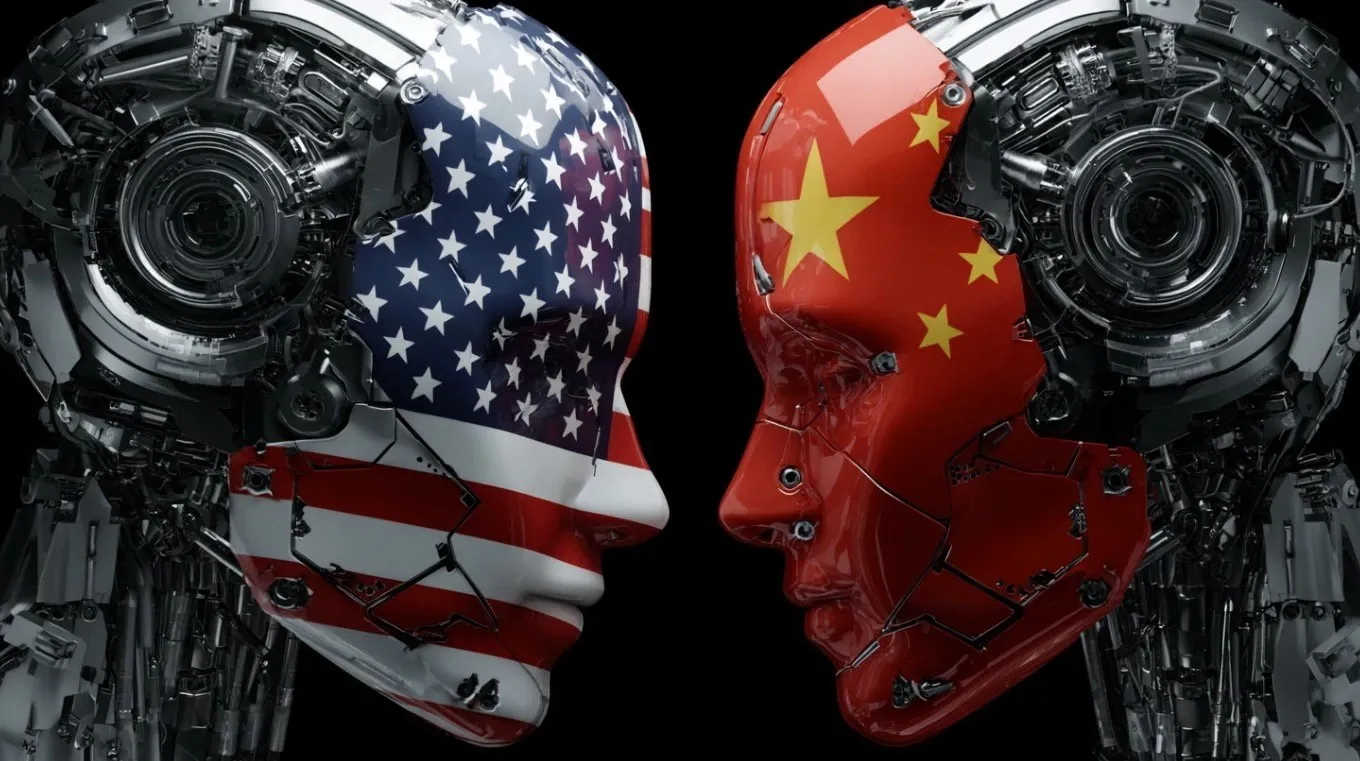
What if the United States’ dominance in artificial intelligence isn’t as unshakable as we’ve been led to believe? For years, America has been the undisputed leader in AI innovation, fueled by Silicon Valley giants and innovative chip manufacturing. But now, China’s meteoric rise in AI development is forcing a global recalibration. With its centralized approach, vast talent pool, and aggressive investments in semiconductor technology, China is no longer content to play catch-up, it’s aiming to lead. This shift is more than a technological rivalry; it’s a seismic challenge to the U.S.’s economic and geopolitical influence. Could it be that the American AI bubble is about to burst?
In this thought-provoking discussion below, Wes Roth, Dylan Curious and Cyrus Janssen uncover how China’s strategic strengths are reshaping the global AI landscape and what this means for industries, economies, and the balance of power. From the critical role of advanced chip manufacturing to the contrasting strategies of decentralized innovation versus centralized planning, this piece dives into the forces driving this high-stakes competition. But it’s not just about rivalry, there are opportunities for collaboration that could redefine the future of technology and diplomacy. As the dust settles, one question looms: will this race to AI supremacy unite or divide the world further?
The U.S. vs China AI Race: Contrasting Strategies
TL;DR Key Takeaways :
- The U.S. and China are the primary contenders in the global AI race, with contrasting strategies: the U.S. relies on private enterprise and innovation, while China adopts a centralized, government-driven approach.
- Advanced chip manufacturing is a critical factor in the AI race, with the U.S. currently leading but facing increasing competition from China’s domestic semiconductor development efforts.
- China’s strengths include a vast STEM talent pool, centralized planning, and significant infrastructure investments, which bolster its position in AI and global markets.
- The U.S.-China AI rivalry has far-reaching geopolitical implications, reshaping global trade, alliances, and the balance of power, while also highlighting opportunities for collaboration on shared challenges like climate change and public health.
- Challenges for the U.S. include bureaucratic hurdles, workforce shortages, and a short-term focus, which could hinder its ability to maintain leadership in AI innovation and development.
The United States and China are pursuing AI dominance through fundamentally different strategies, each reflecting their unique political and economic systems. In the U.S., innovation is largely driven by private enterprises such as Nvidia, OpenAI, and Google. These companies thrive in a decentralized, market-driven environment fueled by venture capital and entrepreneurial freedom. This model encourages creativity and rapid technological breakthroughs but can be slowed by regulatory hurdles and political uncertainties.
China, on the other hand, adopts a centralized approach where the government plays a pivotal role in steering AI development. By providing substantial funding, setting clear national priorities, and streamlining bureaucratic processes, the Chinese government enables major tech companies like Huawei, Tencent, and Alibaba to lead advancements in AI applications. These include natural language processing, autonomous systems, and healthcare innovations. China’s ambitious national AI strategy, which aims to establish global leadership by 2030, underscores its commitment to long-term goals and coordinated efforts.
Chip Manufacturing: The Heart of the AI Race
At the core of the AI race lies advanced chip manufacturing, a critical component for training and deploying sophisticated AI models. The United States currently holds a significant advantage in this domain, with companies like Nvidia and AMD leading the production of high-performance chips. These chips are essential for powering complex AI systems, from autonomous vehicles to advanced robotics.
However, this lead is under increasing pressure as China accelerates its domestic semiconductor development. In response to U.S. trade restrictions, China has intensified its investments in chip manufacturing to reduce reliance on foreign technology. For example, Nvidia’s decision to sell downgraded chips to China highlights the delicate balance between maintaining a technological edge and navigating economic interdependence. This dynamic underscores the complexities of the global chip supply chain and its pivotal role in shaping the future of AI.
China Just Popped America’s AI Bubble

Below are more guides on Artificial Intelligence (AI) from our extensive range of articles.
- Linus Torvalds shares thoughts on artificial intelligence (AI) in
- Learn how artificial intelligence AI actually works
- Machine Learning, Deep Learning and Generative AI explained
- Apple’s New AI Strategy for Artificial Intelligence Beyond 2025
- The Limitations of AI: Why Artificial Intelligence Still Needs Human
- New ZOTAC ZBOX Edge mini PCs accelerated with artificial
- AI vs Humans : Will Artificial Intelligence Surpass Human
- Artificial Intelligence vs Quantum Computing
- NVIDIA CEO Jensen Huang Declares AI a $100 Trillion Opportunity
China’s Strategic Strengths
China’s rapid ascent in AI and technology is supported by several key strengths that enhance its competitive position on the global stage:
- Talent Pool: With millions of STEM graduates entering the workforce annually, China features a vast reservoir of skilled professionals. This talent base is instrumental in driving innovation across sectors, from AI to renewable energy.
- Centralized Planning: The government’s ability to coordinate large-scale initiatives across provinces and industries enables efficient execution of ambitious projects, such as AI development and infrastructure expansion.
- Infrastructure Investments: Massive investments in infrastructure, including renewable energy projects like hydroelectric dams, position China as a leader in sustainable technologies while bolstering its global influence.
These advantages not only fuel domestic growth but also strengthen China’s position in international markets, challenging the traditional dominance of Western economies.
Geopolitical Ripple Effects
The U.S.-China AI rivalry extends beyond technology, shaping the geopolitical landscape in profound ways. China’s growing influence in regions such as Africa, Latin America, and Southeast Asia is evident through its Belt and Road Initiative, trade agreements, and infrastructure projects. These efforts challenge the U.S.’s traditional dominance and signal the emergence of a more multipolar world order.
Despite their competition, the U.S. and China remain deeply interconnected economically. Collaborative efforts in areas such as medical research, climate change, and public health demonstrate the potential for mutual benefit. However, the rivalry also highlights the need for careful management of tensions to prevent escalation and address shared global challenges effectively.
Technological and Cultural Transformations
China’s advancements in AI, robotics, and renewable energy are driving significant transformations across industries and consumer behavior. These developments are reshaping both domestic and global markets:
- Industrial Innovation: AI-powered technologies, such as flight simulators and robotic manufacturing systems, are enhancing efficiency and safety in sectors like aviation and production.
- Sustainability Leadership: Large-scale renewable energy projects, including solar farms and hydroelectric dams, underscore China’s commitment to combating climate change and achieving energy independence.
- Consumer Trends: A growing preference for domestic brands reflects rising national pride and challenges the dominance of Western companies in China’s consumer market.
Additionally, China’s development of open source AI models offers alternatives to proprietary systems, potentially disrupting the global software landscape and fostering greater innovation.
Challenges Facing the U.S.
While the United States remains a leader in many aspects of AI, it faces several challenges that could undermine its competitive edge:
- Bureaucratic Hurdles: Complex regulatory frameworks and political gridlock often slow the pace of technological progress and innovation.
- Workforce Shortages: A limited supply of skilled engineers and STEM professionals poses a significant barrier to sustaining leadership in AI development.
- Short-Term Focus: Political and corporate priorities frequently emphasize immediate gains over long-term investments in education, infrastructure, and research.
Addressing these challenges will require strategic planning, increased investment in STEM education, and policies that foster innovation while balancing regulatory oversight.
Opportunities for Collaboration
China’s approach to global leadership prioritizes economic growth and technological innovation over direct confrontation. This strategy creates opportunities for collaboration with the United States on pressing global issues, such as climate change, public health, and sustainable development. By identifying areas of mutual interest, both nations can work together to drive progress that benefits the global community.
The Road Ahead
The U.S.-China AI rivalry is shaping the trajectory of technological innovation and its broader societal impacts. While the United States continues to lead in areas like chip manufacturing and foundational research, China’s rapid advancements and strategic planning are redefining the competitive landscape. The outcome of this race will have profound implications for global trade, geopolitics, and the future of innovation.
As this competition evolves, fostering collaboration and addressing shared challenges will be essential. By using their respective strengths and finding common ground, the U.S. and China have the potential to usher in a new era of technological progress that benefits the world at large.
Media Credit: Wes Roth
Disclosure: Some of our articles include affiliate links. If you buy something through one of these links, Geeky Gadgets may earn an affiliate commission. Learn about our Disclosure Policy.
