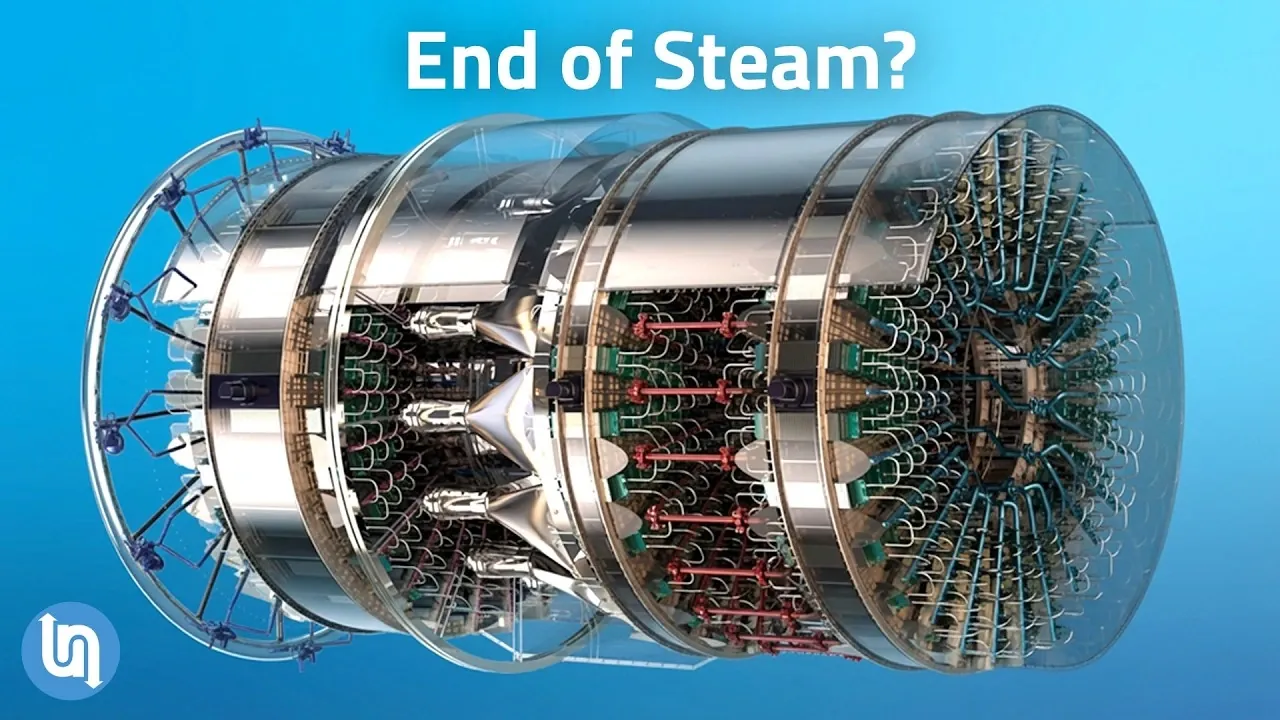
China’s recent deployment of the Chaotan One, the world’s first commercial supercritical CO₂ (sCO₂) turbine, marks a significant step forward in energy technology. Unlike traditional steam turbines, which average around 33% efficiency, sCO₂ systems can achieve rates as high as 50% while also eliminating the need for water-based cooling. This makes them particularly well-suited for arid regions or industries with limited space. As highlighted by Undecided with Matt Ferrell, the Chaotan One’s ability to use waste heat from industrial processes demonstrates its potential to enhance energy efficiency and sustainability on a global scale.
Explore how sCO₂ turbines could reshape the future of energy by addressing the limitations of conventional systems. Gain insight into their potential applications, from retrofitting existing power plants to optimizing renewable energy sources like concentrated solar power. Additionally, learn about the engineering challenges that must be overcome to ensure their reliability and scalability, as well as how global efforts, including the U.S. STEP program, are advancing this technology. Understanding these dynamics will provide a clearer picture of the role sCO₂ turbines could play in meeting rising energy demands.
Global Energy Demand and Emerging Challenges
TL;DR Key Takeaways :
- China’s Chaotan One is the world’s first commercial supercritical CO₂ (sCO₂) power generator, offering higher efficiency and sustainability compared to traditional steam turbines.
- sCO₂ turbines achieve up to 50% energy conversion efficiency, surpassing the 33% efficiency of conventional steam turbines and are compact, water-free and suitable for arid or space-constrained environments.
- The Chaotan One, launched in 2025, utilizes waste heat to achieve an 85% efficiency increase and 50% more power output, marking a breakthrough after 17 years of development.
- The U.S. is advancing sCO₂ technology through the STEP program, focusing on long-term performance and scalability, with commercial designs expected by the 2030s.
- Key challenges for sCO₂ technology include engineering issues like heat exchanger durability and maintenance costs, which must be resolved to ensure widespread adoption and long-term viability.
The global energy landscape is undergoing a profound transformation, driven by the rapid growth of industries such as artificial intelligence (AI), which require vast amounts of power. For example, in the United States, energy consumption by AI data centers is projected to increase by 165% by 2030, highlighting the urgent need for more efficient energy solutions. Traditional steam turbines, which currently generate approximately 80% of the world’s electricity, are becoming increasingly inadequate to meet these rising demands. Their reliance on water for cooling and relatively low efficiency, averaging just 33%—underscore the limitations of existing systems and the necessity for innovative alternatives like sCO₂ technology.
What Makes Supercritical CO₂ Technology Unique?
Supercritical CO₂ turbines operate by using carbon dioxide in a supercritical state, where it exhibits properties of both a liquid and a gas. This unique characteristic allows for significantly higher energy conversion efficiency, with rates reaching up to 50%, compared to the 33% efficiency of conventional steam turbines. Additionally, sCO₂ turbines are compact and do not require water for cooling, making them particularly suitable for arid regions or space-constrained environments. These advantages position sCO₂ technology as a promising alternative to traditional systems, offering a pathway to more sustainable and efficient energy production.

Advance your skills in energy by reading more of our detailed content.
- Z Pinch Fusion Costs Drop, Compact Reactor Skips Magnets & Lasers
- Useful Energy vs Primary Energy: Clearer Way to Measure Electrification Gains
- Kesterite Solar Cells vs Perovskite: Efficiency and Stability
- Solar Energy S 40,000 mAh retractable solar panel and power bank
- Best Battery Life Smartphones of 2025: OnePlus 15 Leads the Way
- Airnergy Havester Battery Charges From Thin Air
- Solid-State Battery Energy Density: Donut Labs Scrutiny
- Donut Lab Solid State Battery or Pseudo-Capacitor, Experts Weigh In
- Donut Labs Solid-State Battery Tests : VTT Data & Doubts
- Flywheel Energy Storage for Grid Inertia: Quint’s Approach in 2026
Chaotan One: A Breakthrough in Energy Innovation
The Chaotan One, launched in December 2025 at a steel plant in China, exemplifies the potential of sCO₂ technology. By using waste heat from industrial processes, the system achieves an 85% increase in efficiency and generates 50% more power than comparable steam turbines. This achievement is the result of 17 years of development, during which China navigated significant engineering and geopolitical challenges. The successful deployment of Chaotan One underscores China’s commitment to advancing sustainable energy technologies and positions the country as a leader in this emerging field.
U.S. Efforts and the STEP Program
While China has taken the lead in commercializing sCO₂ technology, the United States has been making steady progress through initiatives such as the Sandia National Laboratories’ STEP (Supercritical Transformational Electric Power) program. Since the late 2000s, the STEP program has focused on rigorous testing to ensure the reliability and scalability of sCO₂ systems. Unlike China’s rapid deployment approach, the U.S. emphasizes long-term performance and aims to deliver commercially viable designs by the 2030s. This methodical strategy reflects a commitment to making sure that sCO₂ turbines can meet the demands of large-scale applications while maintaining reliability and cost-effectiveness.
Engineering Challenges and Limitations
Despite its promise, sCO₂ technology faces several engineering challenges that must be addressed to ensure its widespread adoption. Key components, such as precision heat exchangers, are susceptible to wear, leaks and corrosion, which can compromise system performance. Additionally, contaminants from heat sources can exacerbate these issues, complicating maintenance and repair efforts. These challenges raise concerns about the long-term viability and cost-effectiveness of sCO₂ turbines, particularly for large-scale applications. Overcoming these obstacles will be critical to unlocking the full potential of this technology.
Applications and Future Potential
If the engineering challenges can be resolved, sCO₂ technology holds the potential to transform multiple industries. Its versatility makes it suitable for a wide range of applications, including:
- Retrofitting existing power plants to improve efficiency without requiring new construction.
- Enhancing nuclear energy systems by optimizing heat management and reducing waste.
- Boosting the efficiency of concentrated solar power plants, allowing more reliable renewable energy production.
- Supporting AI data centers, where effective waste heat management is critical to maintaining operational efficiency.
These diverse applications highlight the adaptability of sCO₂ turbines and their potential to address some of the most pressing energy challenges of the modern era.
Skepticism and the Road Ahead
Despite the optimism surrounding sCO₂ technology, skepticism remains. Critics question whether these systems can maintain their efficiency and avoid excessive maintenance costs over extended periods. The next five years will be crucial in determining whether sCO₂ turbines can deliver on their promises and scale effectively to meet global energy demands. Demonstrating reliability, scalability and cost-effectiveness will be essential to overcoming these doubts and making sure the long-term success of this technology.
The Future of Energy Innovation
China’s Chaotan One represents a pivotal advancement in the pursuit of sustainable energy solutions. With its ability to deliver higher efficiency, smaller physical footprints, and adaptability to diverse environments, sCO₂ turbines could play a vital role in addressing the world’s growing energy needs. However, their success will depend on overcoming technical hurdles and proving their long-term reliability. As global energy demand continues to rise, innovations like sCO₂ technology offer a promising pathway toward a more sustainable and efficient future.
Media Credit: Undecided with Matt Ferrell
Disclosure: Some of our articles include affiliate links. If you buy something through one of these links, Geeky Gadgets may earn an affiliate commission. Learn about our Disclosure Policy.
