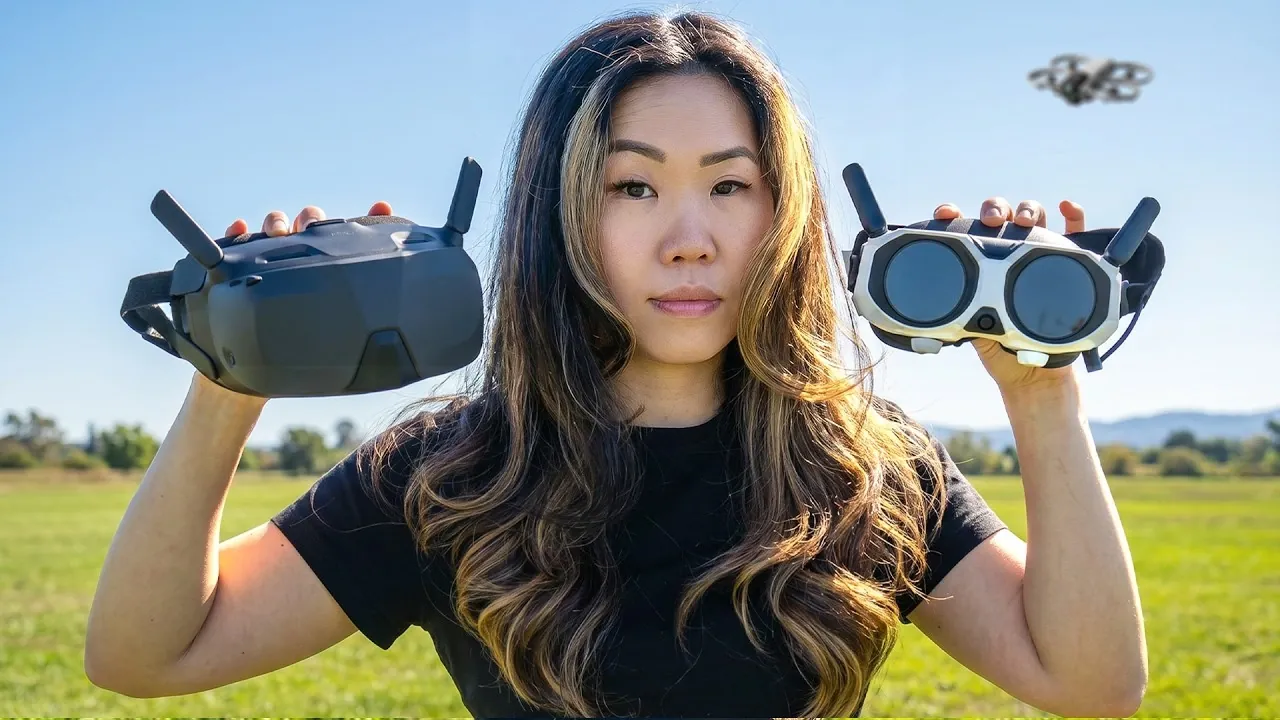
Drone goggles provide a direct connection to a drone’s camera, offering a live first-person view (FPV) of the skies that differs from the simulated environments of virtual reality headsets. As explored by Cas and Chary XR, these goggles often include features like dual micro OLED screens, which enhance clarity and detail. For example, the Antigravity Vision Goggles deliver a resolution of 2560×2560 per eye, making them suitable for both recreational and professional use.
Explore how drone goggles compare across models like the Antigravity Vision Goggles and DJI Goggles N3, focusing on factors such as image quality, latency and comfort. Learn how these devices pair with drones like the Antigravity A1 and DJI Avata 360 and gain insight into practical considerations, including battery performance and compliance with regulations. This feature will help you evaluate the options available and understand the capabilities of these systems.
How Drone Goggles Work
TL;DR Key Takeaways :
- Drone goggles provide an immersive first-person view (FPV) experience, offering real-time perspectives of the skies with features like 360-degree viewing and virtual cockpit modes.
- The Antigravity Vision Goggles excel in visual quality with dual micro OLED screens, customizable comfort and advanced features, making them ideal for creators and hobbyists.
- The DJI Goggles N3 offer a budget-friendly option with clear visuals, extended range and low latency, catering to professional pilots and DJI drone users.
- Compatibility with drone ecosystems is crucial: Antigravity goggles pair well with the lightweight A1 Drone, while DJI Goggles N3 integrate seamlessly with the feature-rich DJI Avata 360 Drone.
- Legal considerations, such as drone weight regulations and practical factors like battery life, should be evaluated to ensure compliance and optimal performance for your aerial activities.
Drone goggles function by delivering a live FPV feed directly from your drone’s camera, allowing you to see the world from a bird’s-eye view in real time. Unlike VR headsets, which simulate artificial environments, these goggles immerse you in the real world, offering a dynamic and interactive flying experience. The 360-degree viewing capability enables you to look in any direction while flying, enhancing situational awareness and control. This cockpit-like experience is particularly valuable for navigating complex environments or capturing cinematic footage. By bridging the gap between technology and real-world immersion, drone goggles provide a unique perspective that improves aerial exploration.
Antigravity Vision Goggles: Immersion Redefined
The Antigravity Vision Goggles are designed for users who prioritize visual immersion and ease of use. These goggles offer a range of advanced features that cater to both casual users and professionals:
- High-resolution displays: Dual micro OLED screens with 2560×2560 resolution per eye and HDR10+ technology deliver sharp, vibrant visuals.
- Multiple viewing modes: Options such as immersive, comfort and wide-angle modes, along with a virtual cockpit mode, provide flexibility for various flying styles.
- Customizable comfort: Lightweight design with built-in diopter and interpupillary distance (IPD) adjustments ensures a personalized fit.
- Real-time sharing: External screen sharing allows others to watch your flight as it happens, enhancing collaborative experiences.
- Enhanced immersion: Built-in sound support adds an auditory dimension to your flights.
While these features deliver exceptional performance, they come at a premium price. The goggles start at $849, with a full setup costing $1,599. This makes them a top-tier choice for users who value high-quality visuals and user-friendly design.

Here are more detailed guides and articles that you may find helpful on drones.
- 8+ Big drones capable of carrying large payloads and heavy equipment
- DJI Air 4 Leads 2026 Lineup with Upgraded Low-Light Camera
- DJI Neo auto-follow drone for effortless content creation $199
- The Drone Dog Walker is the ideal accessory for your Pet
- How to build a drone tracking radar from scratch
- DJI Osmo 360 II Leaks Reveal a Larger 2150mAh Battery
- DJI Mini 6 Pro Launch is Highly Unlikely Before Late 2026
- Spherical Flying Drone Inspired By The Movies
- DJI Lito X1 Drone Review: 4K Video, Lidar Avoidance, and 26-Minute Flight Time
- Insta360 Patent Suggests Foldable Drone to Rival DJI Neo 2
DJI Goggles N3: Simplicity Meets Performance
For those seeking a more affordable yet reliable option, the DJI Goggles N3 offer a balance of simplicity and performance. These goggles are designed to meet the needs of users who prioritize functionality without unnecessary complexity:
- Clear visuals: A single 1080p LCD display with a 54° field of view provides straightforward and crisp imagery.
- Comfortable design: The goggles are designed to fit comfortably, even for users who wear glasses.
- Integrated battery: Built-in power ensures convenience and portability during use.
- Extended range: An impressive range of up to 13 kilometers and low latency of 130 milliseconds enable precise and responsive flying.
Priced at $229 for the goggles and $979 for a full setup, the DJI Goggles N3 are a budget-friendly choice for users who value dependable performance. Their straightforward design and compatibility with DJI drones make them an excellent option for both beginners and experienced pilots.
Comparing Performance: Antigravity vs DJI
When evaluating the Antigravity Vision Goggles and DJI Goggles N3, each model offers distinct advantages tailored to different user needs:
- Antigravity Vision Goggles: These goggles excel in visual quality, offering superior resolution and immersive features. Their user-friendly design makes them ideal for creators focused on cinematic content and seamless operation.
- DJI Goggles N3: With better range and lower latency, these goggles cater to users who prioritize precision and performance. They are particularly suited for professional applications and those who require compatibility within the DJI ecosystem.
The Antigravity goggles are intuitive and beginner-friendly, while the DJI Goggles N3 demand a steeper learning curve but reward users with greater control and advanced functionality.
Drone Ecosystems: Compatibility Matters
Choosing the right drone goggles often depends on the drone ecosystem they support. Compatibility plays a crucial role in making sure seamless integration and optimal performance:
- Antigravity A1 Drone: This lightweight, foldable drone is optimized for simplicity and 360-degree content creation, making it a great match for the Antigravity Vision Goggles.
- DJI Avata 360 Drone: A larger, feature-rich drone equipped with dual 1/1.7-inch sensors, offering enhanced image quality and advanced capabilities. It pairs seamlessly with the DJI Goggles N3 for professional-grade performance.
The Antigravity setup is ideal for creators seeking ease of use and immersive visuals, while the DJI ecosystem is better suited for users who require versatility and high-performance features.
Who Should Use These Goggles?
The choice between Antigravity Vision Goggles and DJI Goggles N3 depends on your specific goals and preferences:
- Antigravity Vision Goggles: Perfect for filmmakers and hobbyists focused on creating visually immersive content with minimal setup complexity.
- DJI Goggles N3: Designed for professional drone pilots and enthusiasts who need a cost-effective solution with robust performance and extended range.
Both options cater to distinct user needs, making sure that you can find a model that aligns with your aerial ambitions.
Legal and Practical Considerations
Before investing in drone goggles, it is essential to consider legal and practical factors. For example, many DJI drones exceed the 250-gram weight limit, which may require certification in certain regions. Additionally, both the Antigravity and DJI goggles offer similar battery life, averaging around 2.5 hours. This aligns with the typical flight duration of most drones, making sure that your goggles can keep up with your aerial activities. Understanding these considerations will help you make an informed decision and ensure compliance with local regulations.
Choosing the Right Goggles for Your Needs
Drone goggles offer an unparalleled flying experience, providing a level of immersion and control that VR headsets cannot match. The Antigravity Vision Goggles stand out for their exceptional visual quality and ease of use, making them a premium choice for creators willing to invest in high-quality technology. On the other hand, the DJI Goggles N3 offer a more affordable and versatile option, catering to users who value performance and compatibility within the DJI ecosystem. By assessing your specific needs, preferences and budget, you can select the right drone goggles to elevate your aerial adventures and unlock new creative possibilities.
Media Credit: Cas and Chary XR
Disclosure: Some of our articles include affiliate links. If you buy something through one of these links, Geeky Gadgets may earn an affiliate commission. Learn about our Disclosure Policy.
