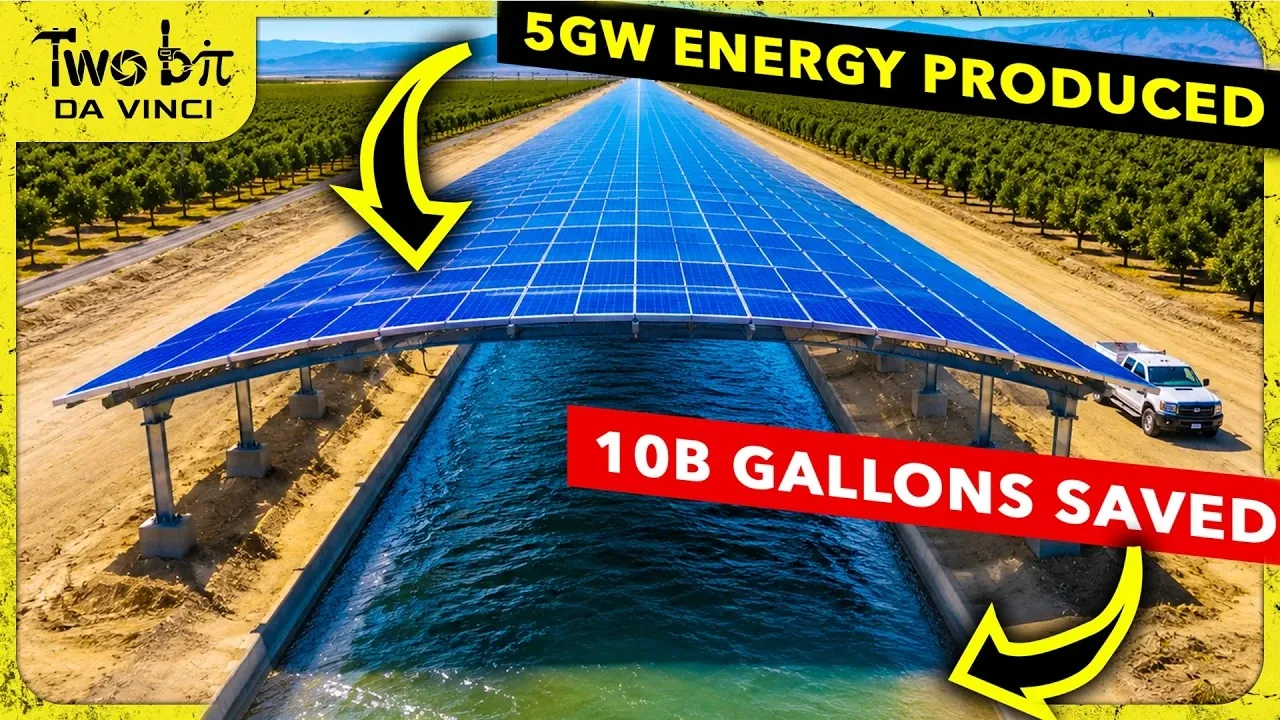
Solar energy has been a critical part of the renewable energy transition, but its implementation often faces challenges related to land use and efficiency. Two Bit da Vinci examines California’s Project Nexus, a pilot initiative that integrates solar panels with irrigation canals in the Central Valley. This approach generates 1.6 megawatts of electricity while reducing water evaporation by up to 82%, saving approximately 63 billion gallons annually. By using existing canal infrastructure, the project minimizes conflicts with agricultural land use and improves panel performance due to the cooling effects of nearby water.
Explore how canal-based solar installations address issues like water conservation and land-use optimization. Gain insight into the environmental impacts, including reduced greenhouse gas emissions and the economic implications, such as lower maintenance costs for irrigation systems. Understand the challenges of scaling this model, from installation expenses to the complexities of aligning interests among stakeholders.
What is Project Nexus?
TL;DR Key Takeaways :
- Project Nexus in California combines solar energy production with water conservation by installing solar panels over irrigation canals, reducing water evaporation by up to 82% and saving an estimated 63 billion gallons annually.
- The initiative generates 1.6 megawatts of electricity, reduces algae growth and silt accumulation and avoids land-use conflicts by using existing canal infrastructure, preserving valuable farmland.
- Canal-based solar installations improve air quality by replacing diesel-powered pumps, enhance solar panel efficiency due to cooler environments and support agricultural sustainability by lowering operational costs.
- Challenges to scaling include high installation costs, misaligned financial incentives between irrigation districts and utilities and technical engineering requirements to ensure durability over water.
- California leads in renewable energy innovation, with Project Nexus serving as a scalable model for addressing water scarcity, land-use conflicts and clean energy needs, despite economic and logistical hurdles.
Project Nexus is a pilot program launched in California’s Central Valley, a region known for its agricultural productivity and water scarcity. The initiative involves placing solar panels over irrigation canals to achieve multiple benefits. The project currently generates 1.6 megawatts of electricity and reduces water evaporation by up to 82%, saving an estimated 63 billion gallons of water annually. This is particularly vital in California, where drought conditions are a recurring challenge.
In addition to water conservation, the solar panels help reduce algae growth and silt accumulation in the canals, which lowers maintenance costs for irrigation districts. The design also addresses a common issue in renewable energy development: land-use conflicts. By using existing canal infrastructure, Project Nexus avoids encroaching on valuable farmland, making sure that agricultural production remains unaffected. Furthermore, the cooler environment above water enhances the efficiency of the solar panels, making them more productive compared to ground-mounted systems.
Key Environmental and Economic Benefits
The advantages of canal-based solar installations extend beyond clean energy generation, offering a multifaceted solution to pressing environmental and economic issues. These benefits include:
- Improved Air Quality: By replacing diesel-powered irrigation pumps with solar energy, the project reduces greenhouse gas emissions and contributes to cleaner air.
- Water Conservation: The significant reduction in evaporation helps preserve water resources in regions prone to drought, making sure a more sustainable water supply.
- Land-Use Efficiency: Unlike traditional solar farms, which often compete with agriculture for space, canal solar installations make use of existing infrastructure, avoiding the need to repurpose farmland.
- Enhanced Agricultural Sustainability: By integrating solar panels with irrigation systems, the project supports long-term agricultural productivity while reducing operational costs for farmers.
This innovative approach demonstrates how renewable energy solutions can address multiple challenges simultaneously, offering a scalable model for sustainable development in water-stressed regions.

Here are additional guides from our expansive article library that you may find useful on energy.
- iNNOPOWER 200w solar panel charging system
- Soliz smartphone solar charging case
- DIY Solar Charger Bag Battery Boost Project
- DIY Solar Generator Inspired by NASA Tech : Save Money and the Planet
- Solar Energy S 40,000 mAh retractable solar panel and power bank
- EcoFlow DELTA Pro portable power station passes $9 million in funding
Challenges to Scaling Canal Solar Installations
While the potential of canal solar installations is significant, several challenges must be addressed to enable widespread adoption:
- High Installation Costs: Building solar panels over canals is nearly twice as expensive as traditional solar farms. The need for specialized structural engineering to ensure wind resistance and durability over water adds to the overall cost.
- Misaligned Incentives: Irrigation districts benefit from water savings and reduced maintenance costs, but the revenue from electricity generation typically goes to utilities. This misalignment complicates the financial viability of such projects.
- Technical and Engineering Challenges: Solar panels installed over canals must withstand high winds, fluctuating temperatures and other environmental factors, requiring advanced engineering solutions to maintain structural integrity.
Addressing these challenges will require a combination of innovative policy measures, targeted funding and advancements in engineering. Collaboration between government agencies, utilities and irrigation districts will be essential to create a financially and technically viable model for canal solar installations.
Global and National Context
The concept of installing solar panels over canals is not entirely new. India pioneered this idea in 2012, but high costs and logistical challenges limited its adoption. In the United States, Arizona completed the first canal solar project in 2024, setting the stage for California’s more ambitious Project Nexus. Federal funding has since supported additional pilot programs in states like Oregon and Utah, reflecting a growing interest in this innovative approach.
California, a leader in renewable energy, now generates 33.9% of its electricity from solar power, surpassing natural gas as the state’s primary energy source. Projects like Nexus underscore California’s commitment to clean energy innovation while highlighting the need for continued research and policy support to expand such initiatives. By addressing water scarcity and land-use conflicts, canal solar installations offer a unique opportunity to enhance sustainability on a broader scale.
The Path Forward
The future of canal solar installations depends on overcoming the economic and logistical barriers that currently limit their scalability. Ongoing research is focused on identifying the most suitable canal sites for solar installations and developing cost-effective engineering solutions to reduce construction expenses. Aligning incentives between irrigation districts and utilities will also be critical to ensure that all stakeholders benefit from these projects.
Although canal solar installations remain a niche solution, their potential to address water scarcity, land-use conflicts and renewable energy needs makes them a compelling option for sustainable development. With sustained innovation, policy backing and collaborative efforts, projects like Nexus could serve as a blueprint for integrating renewable energy with resource management. By using existing infrastructure and addressing multiple challenges simultaneously, canal solar installations could play a pivotal role in shaping a more sustainable future for water-stressed regions worldwide.
Media Credit: Two Bit da Vinci
Disclosure: Some of our articles include affiliate links. If you buy something through one of these links, Geeky Gadgets may earn an affiliate commission. Learn about our Disclosure Policy.
