
What if your next pair of glasses could do more than just correct your vision or shield your eyes from the sun? Imagine lightweight eyewear that lets you record your surroundings, interact with virtual objects, or even game on a massive virtual screen, all without needing a bulky headset or additional devices. The rise of standalone smart glasses has turned this vision into reality, and two standout contenders are vying for your attention: the Inmo Air 3 and the Viture Luma Ultra + Neckband. Each offers a unique take on wearable tech, but which one truly delivers on its promise to transform your daily life?
In this head-to-head comparison, Steven Sullivan explores the defining features of these two devices, from the Inmo Air 3’s sleek portability and POV recording capabilities to the Viture Luma Ultra’s immersive AR experience tailored for gaming and entertainment. Whether you’re a multitasker seeking practical, all-day functionality or a tech enthusiast craving innovative augmented reality, this overview will help you weigh the trade-offs and decide which smart glasses align with your lifestyle. The future of wearable tech is here, how will you choose to see it?
Inmo Air 3 vs Viture Luma Ultra
TL;DR Key Takeaways :
- The Inmo Air 3 is lightweight, portable, and versatile, featuring dual Sony micro OLED displays, a 16 MP camera for POV recording, and up to 7 hours of battery life, making it ideal for multitasking and content creation.
- The Viture Luma Ultra + Neckband focuses on immersive AR experiences with a 1200p resolution, 52° field of view, and 6 Degrees of Freedom (DOF), but its 3-hour battery life and reliance on the neckband reduce portability.
- The Inmo Air 3 excels in practicality with intuitive controls via the Ring 3 accessory and the ability to add prescription lenses, while the Viture Luma Ultra’s hand tracking is less reliable.
- For gaming and media consumption, the Viture Luma Ultra offers a more immersive experience, but the Inmo Air 3 stands out with its POV photo and video recording capabilities, absent in the Viture Luma Ultra.
- The choice between the two depends on priorities: the Inmo Air 3 is better for portability and everyday use, while the Viture Luma Ultra is ideal for stationary, entertainment-focused AR experiences.
Inmo Air 3: Lightweight, Practical, and Versatile
The Inmo Air 3 is designed with portability and ease of use in mind, making it an excellent choice for users who want smart glasses that integrate seamlessly into their daily routines. Its lightweight frame and clear lenses give it the appearance of regular eyewear, making sure it feels natural in both public and outdoor settings. For those requiring vision correction, the option to add clip-in prescription lenses enhances its practicality.
Key features of the Inmo Air 3 include:
- Display: Equipped with dual Sony micro OLED displays, the glasses deliver a crisp 1080p resolution and a 36° field of view. With refresh rates ranging from 60 Hz to 120 Hz, the visuals remain smooth, whether you’re using AR applications or watching media content.
- Camera: A standout feature is the 16 MP camera, capable of 1080p, 30fps point-of-view (POV) photo and video recording. This functionality, along with screen recording, makes the Inmo Air 3 particularly appealing to content creators.
- Battery Life: The 660mAh battery supports up to 7 hours of continuous use, making sure all-day functionality without frequent interruptions for recharging.
- Controls: Interaction is intuitive, thanks to a side touch bar, Bluetooth connectivity, and the innovative Ring 3 accessory, which mimics hand-tracking functionality for precise control.
Priced at $899, the Inmo Air 3 strikes a balance between practicality and performance, making it ideal for multitasking, outdoor activities, and creative endeavors.
Viture Luma Ultra Immersive AR for Gaming and Entertainment
The Viture Luma Ultra takes a different approach, focusing on delivering immersive AR experiences tailored for gaming and media consumption. Its sleek, sunglass-style design is visually appealing, but its standalone functionality depends on the neckband accessory. While the neckband enhances performance, it also adds bulk, reducing overall portability. Notable features of the Viture Luma Ultra include:
- Display: The dual micro OLED displays offer a higher 1200p resolution and a 52° field of view, creating a larger and more immersive virtual screen. This makes it particularly suited for stationary use, such as gaming or watching movies.
- Spatial AR: With 6 Degrees of Freedom (DOF), the glasses allow users to interact with virtual objects in their environment, enhancing the realism of gaming and media experiences.
- Battery Life: The neckband provides only 3 hours of use, which may necessitate frequent recharging or reliance on an external power source for extended sessions.
- Controls: The Space Walker app offers trackpad and laser pointer modes, while built-in hand tracking provides additional interaction options. However, the hand tracking is less reliable compared to the Inmo Air 3’s Ring 3 accessory.
With a combined price of $998 ($599 for the glasses and $399 for the neckband), the Viture Luma Ultra is best suited for users who prioritize immersive AR experiences over portability and extended battery life.
Standalone Smart Glasses Compared
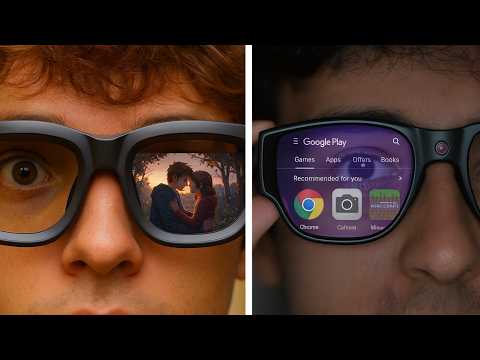
Here are more guides from our previous articles and guides related to smart glasses that you may find helpful.
- Xiaomi AI Smart Glasses Review: Features, Price & Performance
- Meta Ray-Ban Smart Glasses: Features, Price, and Performance
- Top 5 Smart Glasses Transforming Wearable Technology in 2025
- Android XR Smart Glasses Updates and News for November 2025
- Xiaomi AI Smart Glasses : Honest Review After 3 Weeks of Use
- Olympus EyeTrek El-10 Open Source Smart Glasses
- INMO Air 3 Smart Glasses Review, Android 14 Standalone
- Samsung’s Smart Glasses Will Transform Wearable Technology
- Rokid Glasses vs Ray-Ban Meta : Which Smart Glasses Are Right for
- Meta Display Smart Glasses Review: Are They Worth the $800 Price
Key Comparison Highlights
To help you make an informed decision, here’s a side-by-side comparison of the two devices:
- Portability: The Inmo Air 3 is compact and easy to carry, while the Viture Luma Ultra requires the neckband for standalone use, making it less portable.
- Immersion: The Viture Luma Ultra offers a larger field of view and higher resolution, delivering a more immersive experience for gaming and media consumption.
- Battery Life: The Inmo Air 3 outperforms the Viture Luma Ultra in this category, offering up to 7 hours of battery life compared to just 3 hours with the neckband.
- Recording Capabilities: The Inmo Air 3 stands out with its POV photo and video recording features, which are absent in the Viture Luma Ultra.
- Control Experience: The Inmo Air 3’s Ring 3 provides more intuitive and reliable controls, while the Viture Luma Ultra’s hand tracking can be inconsistent.
Choosing the Right Smart Glasses for Your Needs
The decision between the Inmo Air 3 and the Viture Luma Ultra + Neckband ultimately depends on your priorities and intended use. If you value a lightweight, portable device with long battery life, intuitive controls, and versatile features like POV recording, the Inmo Air 3 is the better choice. It excels in everyday usability, making it a practical option for multitaskers and content creators.
On the other hand, if your primary focus is on immersive AR experiences for gaming and media consumption in stationary settings, the Viture Luma Ultra offers superior screen quality and spatial capabilities. While its reliance on the neckband reduces portability, it delivers a more engaging AR experience for entertainment enthusiasts.
Both devices highlight the exciting potential of standalone smart glasses, showcasing how wearable technology can cater to diverse lifestyles and preferences. By carefully evaluating your needs, you can select the smart glasses that best complement your daily activities and embrace the future of augmented reality.
Media Credit: Steven Sullivan
Disclosure: Some of our articles include affiliate links. If you buy something through one of these links, Geeky Gadgets may earn an affiliate commission. Learn about our Disclosure Policy.
