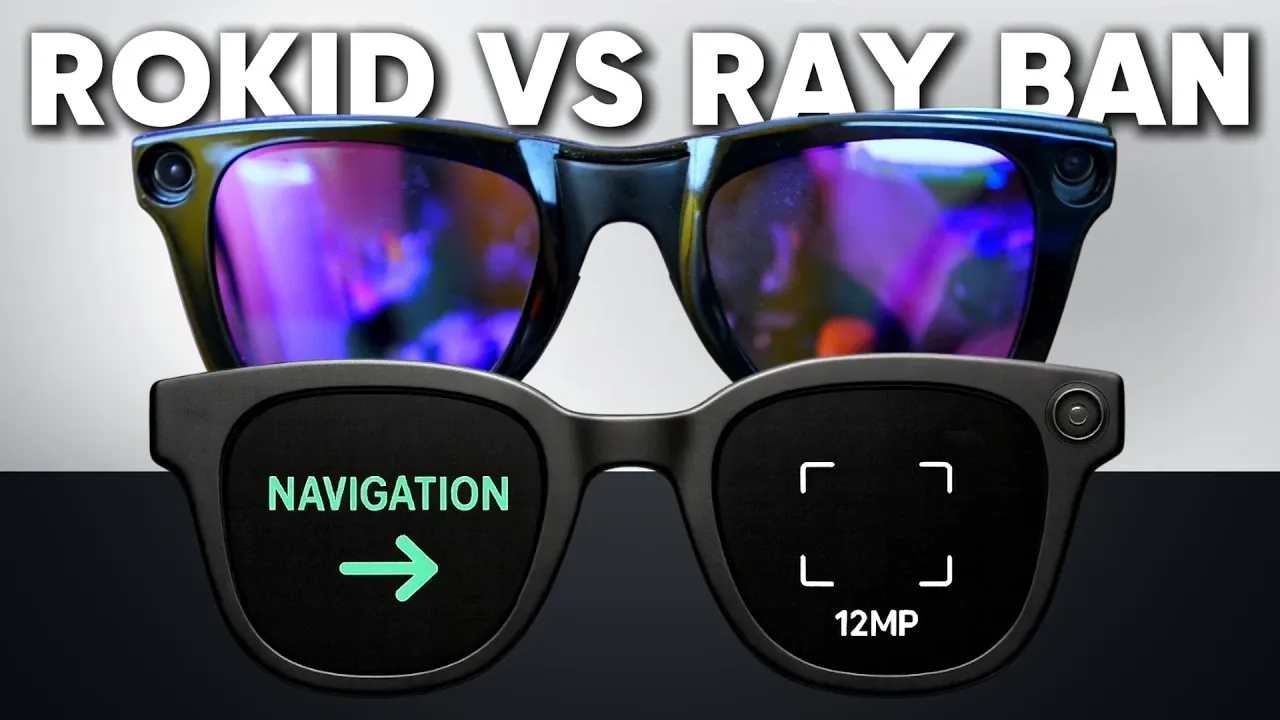
What if the future of wearable tech wasn’t just about style or convenience, but about making the right choice for your lifestyle? With smart glasses becoming more than just a novelty, the competition between brands like Rokid Glasses and Ray-Ban Meta is heating up. These two contenders promise to redefine how we interact with the world, but their differences go far beyond aesthetics. Whether you’re a content creator chasing innovative features or someone who values iconic design and simplicity, picking the wrong pair could leave you frustrated, or worse, stuck with a product that doesn’t fit your needs. So, how do you ensure you’re not settling for less?
In this comprehensive breakdown, Steven Sullivan explores the key distinctions that make these smart glasses stand out, or fall short. From AI-powered innovation and camera capabilities to comfort, battery life, and even translation technology, this coverage will help you uncover which pair aligns with your priorities. Are you ready to discover whether Rokid’s futuristic versatility or Ray-Ban’s stylish practicality is the better fit for your lifestyle? The answer may surprise you, and it just might change how you see the world, literally.
Rokid vs Ray-Ban Comparison
TL;DR Key Takeaways :
- Rokid Glasses prioritize advanced features like a dual-lens HUD, customizable AI integration, and superior translation technology, making them ideal for tech-savvy users and content creators.
- Ray-Ban Meta offers a stylish design and affordability, but lacks advanced features like in-lens displays and robust AI capabilities, making them better suited for casual users prioritizing style and simplicity.
- Battery life is a key differentiator: Rokid Glasses provide up to 9 hours of usage, while Ray-Ban Meta only lasts 4 hours, limiting its utility for extended use.
- Rokid Glasses excel in audio and display technology, offering customizable audio modes and high-brightness HUD, whereas Ray-Ban Meta focuses on bass performance but lacks display functionality.
- Pricing varies significantly, with Ray-Ban Meta being more affordable ($239-$400) and Rokid Glasses requiring a higher investment ($479), justified by their advanced features and customization options.
Design and Comfort
The design and comfort of smart glasses play a crucial role in their usability, particularly for extended wear. Both Rokid Glasses and Ray-Ban Meta weigh 49 grams, but their structural differences significantly impact user experience:
- Rokid Glasses: Featuring a slim profile and integrated nose pads, these glasses are designed for a balanced fit. Their lightweight build ensures comfort during prolonged use, making them particularly suitable for active users or those who wear glasses throughout the day.
- Ray-Ban Meta: While these glasses boast a stylish and iconic design, they are slightly front-heavy. This weight distribution can lead to discomfort during extended wear or physical activities, especially for users who prioritize comfort over aesthetics.
Camera and Content Creation
For content creators, the camera capabilities of smart glasses are a critical factor. Both models cater to this need, but their features differ in terms of performance and versatility:
- Rokid Glasses: Equipped with 1680p Ultra HD video recording, these glasses offer customizable aspect ratios and a heads-up display (HUD) for real-time feedback. Their low-light performance and teleprompter feature make them a versatile tool for creators looking to produce high-quality content in various conditions.
- Ray-Ban Meta: These glasses provide 1080p video recording with enhanced stabilization for smoother footage. However, they lack aspect ratio customization and perform less effectively in low-light environments, which may limit their appeal for professional content creators.
Rokid Glasses vs Ray Ban Meta Comparison 2025
Enhance your knowledge on smart glasses by exploring a selection of articles and guides on the subject.
- Xiaomi AI Smart Glasses Review: Features, Price & Performance
- Meta Ray-Ban Smart Glasses: Features, Price, and Performance
- Samsung’s Smart Glasses Will Transform Wearable Technology
- Top 5 Smart Glasses Transforming Wearable Technology in 2025
- Xiaomi AI Smart Glasses Hands On First Impressions Review 2025
- Are Meta’s Ray-Ban Glasses Worth $800? We Take a Closer Look
- Xiaomi AI Smart Glasses : Honest Review After 3 Weeks of Use
- Meta Ray-Ban Display AI Glasses : The Future of Smart Eyewear?
- Meta Display Dual Screen Smart Glasses : Set to Launch in 2026
- Olympus EyeTrek El-10 Open Source Smart Glasses
Battery Life
Battery life is a key consideration for users who rely on their smart glasses throughout the day. The two models differ significantly in this area:
- Rokid Glasses: Offering up to nine hours of battery life, these glasses are well-suited for long days, travel, or intensive use. Additional features like standby mode and optional external battery packs further enhance their practicality, making sure they remain functional even during extended periods of use.
- Ray-Ban Meta: With a battery life of only four hours, these glasses are better suited for shorter, casual use. Their limited battery capacity may be a drawback for users who require consistent performance over longer durations.
AI Integration and Smart Features
Artificial intelligence (AI) integration is a defining feature of modern smart glasses, offering enhanced functionality and user interaction:
- Rokid Glasses: These glasses support multiple AI models, including ChatGPT, providing customizable responses and continuous interaction. Features like live AI descriptions and real-time HUD feedback enhance accessibility and functionality, making them a powerful tool for users seeking advanced AI capabilities.
- Ray-Ban Meta: Powered by Meta AI, these glasses deliver shorter, less customizable responses. While functional, their AI features lack the depth and adaptability of Rokid’s system, which may limit their appeal for users seeking more advanced smart features.
Audio Technology
Audio quality is another important factor to consider, particularly for users who rely on their smart glasses for music, podcasts, or calls:
- Rokid Glasses: Offering three distinct audio modes, Rhythm, Podcast, and Loud, these glasses cater to diverse listening preferences. Their louder volume settings are especially beneficial for hearing-impaired users, and the HUD displays song details during playback, adding an extra layer of convenience.
- Ray-Ban Meta: These glasses excel in bass performance, making them a strong choice for music enthusiasts. However, they lack the customizable audio modes found in Rokid Glasses, which may limit their versatility for users with varied audio needs.
Translation Technology
For multilingual users or frequent travelers, translation capabilities can greatly enhance the utility of smart glasses:
- Rokid Glasses: Supporting six offline languages with auto-detection and directional microphone focus, these glasses ensure accurate translations even in noisy environments. The visual feedback provided on the HUD further enhances usability, making them a reliable tool for communication in diverse settings.
- Ray-Ban Meta: While supporting five languages, these glasses lack directional microphone technology. This limitation reduces their effectiveness in noisy environments, which may be a concern for users who frequently require translation assistance.
Accessories and Customization
The availability of accessories and customization options can significantly enhance the user experience:
- Rokid Glasses: Native accessories include clip-on sunglasses, prescription lens compatibility, and compact external batteries. Additionally, developers can create tailored applications using Rokid’s SDK, offering a high degree of customization for tech-savvy users.
- Ray-Ban Meta: With a longer market presence, these glasses benefit from a wide range of third-party accessories. This broader ecosystem may appeal to users who value variety and compatibility with existing products.
Display Technology
Display capabilities are a standout feature for Rokid Glasses, setting them apart from Ray-Ban Meta:
- Rokid Glasses: Featuring a dual-lens HUD with customizable brightness levels up to 1,000 nits, these glasses ensure visibility in various lighting conditions. Intuitive navigation further enhances the user experience, making them a strong choice for users who prioritize display functionality.
- Ray-Ban Meta: These glasses lack an in-lens display, which limits their functionality in this area. Users seeking advanced display features may find Rokid Glasses to be the better option.
Pricing
Cost is often a deciding factor when choosing between smart glasses:
- Ray-Ban Meta: Priced between $239 and $400, depending on the condition and frame type, these glasses are a more affordable option. Their lower price point may appeal to users who prioritize cost over advanced features.
- Rokid Glasses: With a price of $479 during their Kickstarter pre-order phase, these glasses represent a higher initial investment. However, their advanced features and ongoing updates may justify the cost for tech enthusiasts and users seeking innovative technology.
Making the Right Choice
Selecting between Rokid Glasses and Ray-Ban Meta ultimately depends on your individual priorities and preferences:
- Rokid Glasses: Best suited for content creators, visually or hearing-impaired users, and those seeking advanced technology with robust customization and AI features.
- Ray-Ban Meta: A more established product with a broader accessory ecosystem, ideal for users who value simplicity, style, and affordability.
By carefully evaluating the differences in design, functionality, and features, you can choose the smart glasses that best align with your needs and lifestyle.
Media Credit: Steven Sullivan
Disclosure: Some of our articles include affiliate links. If you buy something through one of these links, Geeky Gadgets may earn an affiliate commission. Learn about our Disclosure Policy.
